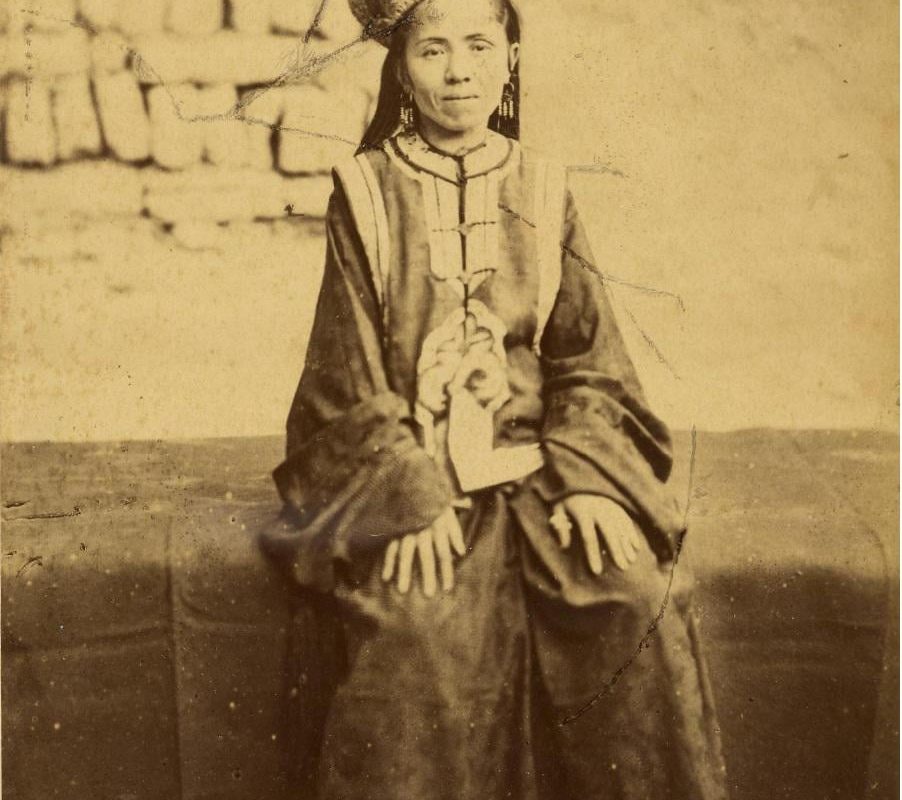
Lady in traditional clothes from Xinjiang, China, 1875,
Title: The Timeless Elegance of a Xinjiang Lady: Traditional Attire in 1875 China
Meta Description: Explore the rich cultural heritage of Xinjiang through the lens of traditional clothing worn by women in 1875. Discover the history, symbolism, and artistry behind these iconic garments.
Introduction: A Glimpse into Xinjiang’s Cultural Tapestry
In 1875, as the Qing Dynasty consolidated its rule over China’s vast territories, the remote and culturally diverse region of Xinjiang stood as a crossroads of civilizations. A lady adorned in traditional Xinjiang attire during this era embodied more than just fashion—her clothing was a vibrant testament to the region’s Silk Road heritage, ethnic diversity, and artisanal mastery. This article delves into the intricate details of her garments, unraveling stories of identity, craftsmanship, and resilience.
Historical Context: Xinjiang in the Late 19th Century
Xinjiang, meaning “New Frontier” in Chinese, was a melting pot of Uyghur, Kazakh, Tajik, and Han cultures in the 1800s. By 1875, the Qing Dynasty had formally integrated the region into its empire, though local traditions thrived amid shifting political tides. The area’s strategic location along the Silk Road infused its textiles with Persian, Turkic, and Mongol influences, creating a unique sartorial language that reflected both beauty and practicality.
The Anatomy of Traditional Xinjiang Women’s Attire (1875)
The clothing worn by Xinjiang women in this period was designed for the region’s harsh climates and rich cultural expression. Key elements included:
1. Layered Robes & Tunics (Chapan or Koynek)
- Silk and Cotton Fabrics: Wealthier women wore robes of locally woven silk (atlas), dyed in bold hues like crimson, indigo, and gold. Cotton was common among working-class women.
- Ikat Patterns: Distinctive “abr” (tie-dye) textiles featured swirling geometric motifs, symbolizing nature and spirituality.
- Fitted Silhouettes: Long, loose-fitting robes provided modesty and mobility, often paired with embroidered vests for colder months.
2. Iconic Headdresses & Accessories
- Doppa (Skullcap): A staple for both genders, women’s doppas were intricately embroidered with floral or vine patterns, sometimes embellished with silver threads or beads.
- Headdress Variations: Brides and married women wore elaborate turbans or velvet hats adorned with pearls, sequins, and feathers.
- Jewelry: Silver or gold earrings, necklaces with lapis lazuli or jade, and ornate hairpins signaled social status and marital status.
3. Embroidery: A Language of Symbols
Needlework was a revered skill, with motifs like pomegranates (fertility), cypress trees (longevity), and tulips (passion) embroidered onto collars, cuffs, and hems. Each stitch preserved stories and ancestral wisdom.
Social & Cultural Significance
- Identity Markers: Clothing distinguished ethnic groups—Uyghur women favored bright atlas fabrics, while Kazakh women wore woolen dresses with conical hats.
- Craftsmanship as Heritage: Garments were handwoven and dyed using natural ingredients like pomegranate rinds (red) and walnut husks (brown), showcasing sustainable practices.
- Women as Cultural Keepers: The creation of textiles was a communal act, with elder women passing techniques to younger generations, ensuring cultural continuity.
Daily Life in 1875 Xinjiang
Beyond aesthetics, clothing served practical needs:
- Agrarian Lifestyle: Durable cotton robes shielded women during farming or animal husbandry.
- Trade & Ceremony: Festive attire featured heavier embroidery for markets, weddings, or religious festivals like Nowruz (Persian New Year).
Legacy & Modern Interpretations
While contemporary Xinjiang fashion has evolved, the 1875 style remains a touchstone for cultural pride. Today, designers revive ikat weaving and embroidery in haute couture, celebrating Xinjiang’s legacy on global runways.
Conclusion: Weaving History into the Present
The traditional attire of a Xinjiang lady in 1875 was more than fabric—it was a canvas of history, resilience, and intercultural dialogue. By honoring these garments, we preserve the voices of artisans and the spirit of a region that has long been a bridge between worlds.
Keywords for SEO:
Xinjiang traditional clothing 1875, Uyghur ethnic dress, Silk Road fashion, Qing Dynasty attire, Xinjiang cultural heritage, 19th-century Central Asian clothing, atlas silk ikat, traditional Uyghur embroidery.
Engage Further:
- Visit Xinjiang’s regional museums to see preserved 19th-century textiles.
- Explore documentaries on Silk Road textile trade for deeper insights.
This SEO-optimized article combines historical depth with cultural analysis, inviting readers to appreciate Xinjiang’s sartorial legacy through a timeless lens.