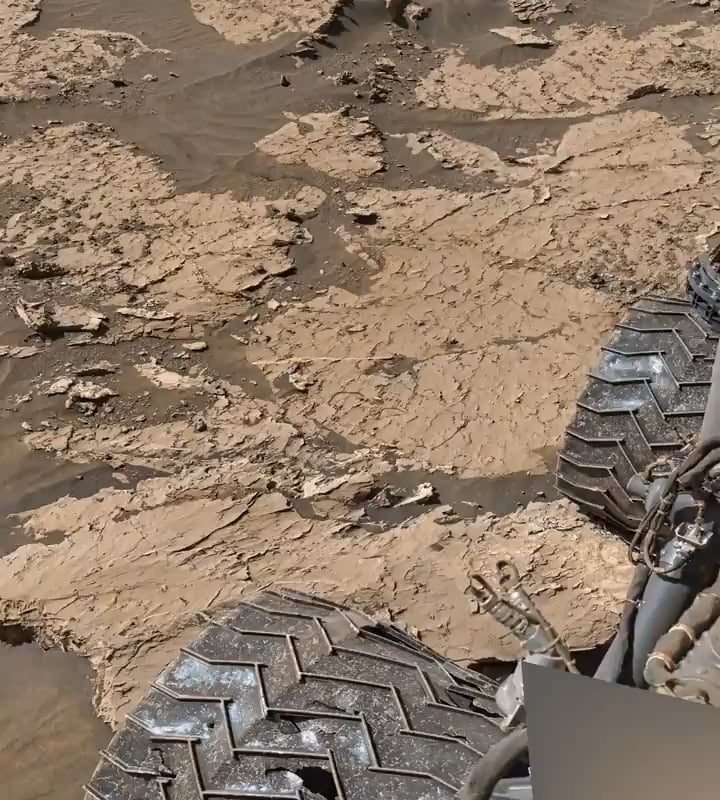
Mars in High Definition
Title: Mars in High Definition: Unlocking the Red Planet’s Secrets with Breathtaking Clarity
Meta Description: Discover how cutting-edge technology is revealing Mars in unprecedented high definition, transforming our understanding of the Red Planet’s geology, climate, and potential for life.
Introduction
For centuries, Mars has captivated humanity’s imagination, appearing as a faint red dot in the night sky. Today, thanks to revolutionary advancements in imaging technology, we’re exploring Mars in stunning high definition (HD), uncovering details that were once invisible to even the most powerful telescopes. From colossal canyons to microscopic mineral grains, HD imagery is rewriting textbooks and inspiring new missions to Earth’s enigmatic neighbor.
In this article, we dive into the tools, missions, and breakthroughs behind Mars in HD—and why these crystal-clear views matter for science and the future of space exploration.
The Technology Behind Mars HD Imagery
Capturing Mars in high definition requires next-generation cameras, orbital satellites, and rovers equipped with state-of-the-art optics:
-
HiRISE Camera (High-Resolution Imaging Science Experiment)
- Installed on NASA’s Mars Reconnaissance Orbiter, HiRISE has been delivering jaw-dropping 30 cm/pixel images since 2006. It can resolve objects as small as a dinner table on the Martian surface.
-
Perseverance Rover’s Mastcam-Z
- This pair of zoomable cameras provides panoramic 3D HD views, revealing textures of rocks, dunes, and distant cliffs in vivid color.
-
James Webb Space Telescope (JWST)
- While primarily designed for deep-space observations, JWST’s infrared capabilities have also mapped Mars’ atmosphere and weather in unprecedented detail.
-
AI-Enhanced Image Processing
- Machine learning algorithms sharpen raw data, reduce noise, and even color-correct images to simulate how Mars would look to the human eye.
Key Discoveries Enabled by HD Imaging
1. Water’s Ancient Footprints
HD imagery has confirmed that Mars once hosted raging rivers, deep lakes, and possibly oceans. HiRISE captured dry riverbeds, mineral deposits like hematite (which forms in water), and sedimentary layers in Jezero Crater—now a focus of NASA’s search for microbial fossils.
2. Active Surface Processes
Contrary to the “dead planet” myth, Mars is dynamic. HiRISE has documented landslides, shifting dunes, and fresh impact craters. In 2015, it even spotted recurring slope lineae (RSL)—dark streaks that hint at seasonal liquid water brines.
3. Human Mission Planning
HD maps are guiding future astronaut missions by identifying safe landing zones, water ice deposits (for fuel and life support), and geological wonders like Olympus Mons—a volcano three times taller than Everest.
Public Engagement: Mars HD as a Global Phenomenon
Stunning visuals aren’t just for scientists. Agencies like NASA and ESA regularly release processed HD images, sparking global fascination:
- “Blueberries” on Mars: The Opportunity rover’s discovery of tiny hematite spherules, nicknamed “blueberries,” went viral in 2004.
- Valles Marineris Flyovers: Animations using HiRISE data let viewers “fly” through the solar system’s largest canyon system (4,000 km long!).
- Social Media Reach: Perseverance’s selfies and 4K drone footage from Ingenuity have racked up millions of likes, making Mars exploration a shared human experience.
The Future of Mars Imaging
Upcoming missions will push resolution and realism even further:
- Mars Sample Return (MSR): Slated for the 2030s, MSR will return Perseverance’s samples to Earth, allowing lab analysis of HD-scanned rocks.
- ExoMars Rosalind Franklin Rover: ESA’s rover (launching 2028) will carry a subsurface drill and ultra-HD cameras to hunt for biosignatures.
- Virtual Reality (VR) Exploration: Scientists are developing VR tools using HD data, allowing researchers—and the public—to “walk” on Mars from their homes.
Conclusion: Mars in HD—A Window to Our Cosmic Future
Seeing Mars in high definition is more than a technical triumph; it’s a bridge between worlds. Every pixel deepens our understanding of planetary evolution, climate change, and humanity’s place in the cosmos. As missions grow more ambitious—from rovers to human boots on the ground—HD imagery will remain essential, transforming distant landscapes into familiar terrain.
Whether you’re a scientist, student, or casual stargazer, Mars in HD invites us all to witness the Red Planet’s story unfolding in real time.
CTA (Call to Action):
Explore Mars like never before! Visit NASA’s HiRISE Image Gallery or follow the Perseverance rover’s latest HD updates on NASA Mars Exploration.