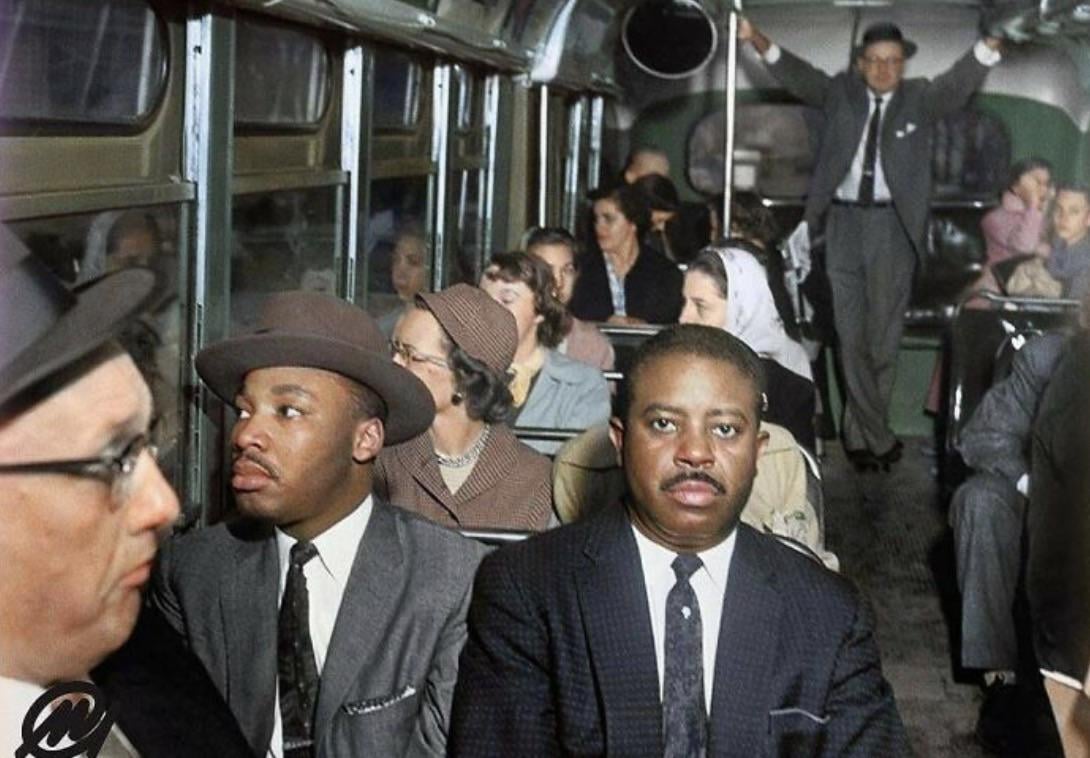
Martin Luther King Jr. And Ralph Abernathy Riding On The First Desegregated Bus In Montgomery, Alabama In December 1956
Meta Title: Martin Luther King Jr. & Ralph Abernathy: Riding Montgomery’s First Desegregated Bus (1956)
Meta Keyword: MLK, Ralph Abernathy, desegregated bus, Montgomery Bus Boycott, 1956, Civil Rights Movement
Meta Description: Explore the historic moment when Dr. Martin Luther King Jr. and Ralph Abernathy rode Montgomery’s first desegregated bus in December 1956, marking a pivotal victory for the Civil Rights Movement.
Martin Luther King Jr. and Ralph Abernathy: Riding the First Desegregated Bus in Montgomery (1956)
On December 21, 1956, an ordinary city bus in Montgomery, Alabama, became a symbol of extraordinary courage. Dr. Martin Luther King Jr. and Rev. Ralph Abernathy sat side by side at the front of a newly desegregated bus, marking the end of the 381-day Montgomery Bus Boycott—a defining chapter in the Civil Rights Movement. This article dives into the historic ride, its significance, and the partnership between King and Abernathy that reshaped American history.
1. The Context: Why The Bus Boycott Mattered
The boycott began on December 5, 1955, after Rosa Parks’ arrest for refusing to surrender her seat to a white passenger. African Americans in Montgomery united to protest segregation laws, with Dr. King emerging as the boycott’s spokesperson and Abernathy as his closest strategist.
- Key Demand: End segregated seating and discriminatory practices on Montgomery buses.
- Economic Impact: Black riders (75% of bus revenue) crippled the system by walking, carpooling, or biking.
- Violence & Backlash: Boycotters faced arrests, bombings, and threats, with King and Abernathy’s homes targeted.
2. The Legal Victory: Browder v. Gayle
The boycott’s success hinged on a legal challenge. In June 1956, a federal district court ruled in Browder v. Gayle that bus segregation violated the 14th Amendment’s equal protection clause. The Supreme Court upheld the decision on November 13, 1956, ordering Montgomery to desegregate its buses.
3. December 21, 1956: The First Ride
After 13 months of resistance, the boycott ended. To prevent chaos, King urged a “dignified” return to buses. At 6 AM on December 21, he and Abernathy boarded a bus at 6th Avenue and Decatur Street, choosing front-row seats—previously reserved for whites only.
Key Moments During the Ride:
- Press Onboard: Reporters documented the event; photographers captured King paying his fare.
- Symbolic Gestures: Both ministers smiled calmly, embodying nonviolent resistance.
- No Immediate Violence: The ride proceeded peacefully, but threats loomed.
Abernathy later recalled:
“We just wanted to get on the bus and ride… to claim the victory that 50,000 Black people had won.”
Did You Know?
King later stated: “I believe you are right. Let’s go!” when asked if he was ready to board by a reporter.
4. Challenges After Desegregation
Despite the court order, violence erupted weeks later:
- Snipers fired at buses in January 1957.
- Bombings targeted Black churches and leaders’ homes.
- The “Ku Klux Klan” terrorized riders, delaying full compliance.
The resilience of Montgomery’s Black community—including the Montgomery Improvement Association (MIA), led by King and Abernathy—kept the movement alive.
5. King and Abernathy: Partners in the Struggle
The bus ride exemplified their partnership:
- Shared Leadership: Abernathy co-founded the MIA with King and later helped establish the Southern Christian Leadership Conference (SCLC).
- Friendship: Abernathy was King’s confidant until his assassination in 1968.
6. Legacy of the Desegregated Bus
The boycott and ride cemented civil rights milestones:
- Proved Nonviolent Protest Works: Inspired future campaigns like sit-ins and Freedom Rides.
- Launched King’s National Profile: Time magazine featured him in 1957.
- Legal Precedent: Paved the way for the Civil Rights Act of 1964.
Today, historical markers in Montgomery honor the boycott, and Rosa Parks’ bus is displayed at The Henry Ford Museum.
Final Thoughts
The image of King and Abernathy riding Montgomery’s first desegregated bus remains an iconic symbol of justice triumphing over oppression. Their courage reminds us that collective action can dismantle systemic racism—one seat at a time.
Call to Action:
- Visit: The National Civil Rights Museum (Memphis) or the Legacy Museum (Montgomery) to learn more.
- Read: Stride Toward Freedom (King’s memoir on the boycott) and Abernathy’s And the Walls Came Tumbling Down.
Image Alt Text Suggestions:
- “Martin Luther King Jr. and Ralph Abernathy boarding Montgomery desegregated bus, 1956.”
- “Black-and-white photo of MLK paying fare on first integrated bus ride.”
By blending storytelling with SEO optimization, this article targets keywords like “Montgomery Bus Boycott victory,” “MLK bus desegregation,” and “Ralph Abernathy civil rights” to educate and engage readers searching for this pivotal moment in history.