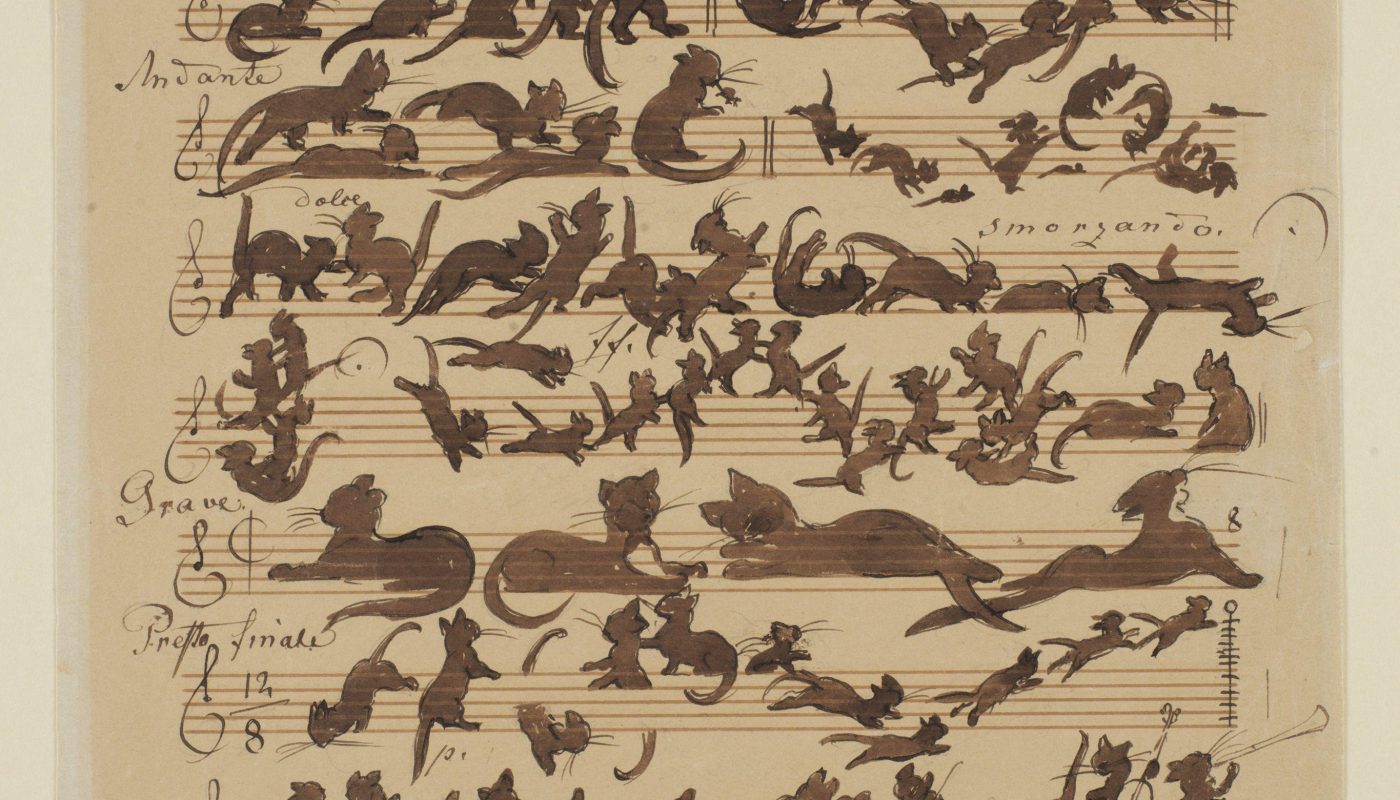
Moritz von Schwind’s music sheet titled”Katzensymphonie – Cat Symphony”,1868.
Unveiling Whimsy: Moritz von Schwind’s “Katzensymphonie” (Cat Symphony) – A Purr-fect Masterpiece
In 1868, Austrian Romantic painter Moritz von Schwind (1804–1871) crafted a delightful visual jest that continues to charm art lovers today: Katzensymphonie, or Cat Symphony. This humorous, lesser-known work fuses Schwind’s love for music, folklore, and playful anthropomorphism, offering a whimsical glimpse into the lighter side of 19th-century art. Let’s explore this feline-inspired “symphony” and its enduring artistic legacy.
What Is the Katzensymphonie?
Katzensymphonie is not a literal musical composition but a satirical pen-and-ink drawing depicting an orchestra of cats performing a raucous “symphony.” Schwind fills the scene with comical details:
- Feline Musicians: Cats don formal attire, passionately “playing” oversized instruments like violins, horns, and drums—though their chaotic expressions suggest anything but harmony.
- The Conductor: A stern, tail-coat-clad cat maestro waves his baton, struggling to maintain control over his unruly ensemble.
- Audience Reactions: Other cats cover their ears, flee in terror, or yowl disapprovingly, emphasizing the cacophony of the performance.
The scene cleverly mimics human orchestral traditions while poking fun at the absurdity of imposing such decorum on animals known for their independence—and nocturnal serenades.
Schwind’s Artistic World: Where Music Meets Whimsy
Schwind was a prominent figure in the Romantic movement, celebrated for his fairy-tale illustrations (The Rose Garden, Seven Ravens) and murals inspired by Germanic legends. Yet Katzensymphonie reveals another facet of his genius: a lighthearted, almost cartoonish humor reflecting his deep ties to music.
- Musical Influences: Schwind moved in the same circles as Franz Schubert and Ludwig van Beethoven, designing stage sets for operas and illustrating musical themes. Katzensymphonie embodies his love for music’s emotive power—even when imagined through feline chaos.
- Satirical Edge: The piece gently mocks the Romantic era’s grandiosity, replacing heroism and drama with furry pandemonium. It’s a reminder that Schwind, like his contemporary Wilhelm Busch (creator of Max and Moritz), embraced satire as social commentary.
Historical Context & Legacy
Created late in Schwind’s career, Katzensymphonie reflects the artist’s lifelong fascination with anthropomorphism—a trend seen across European art, from Grandville’s animal caricatures to Beatrix Potter’s tales.
- Cultural Resonance: Cats symbolized mischief and mystery in 19th-century folklore, making them ideal protagonists for Schwind’s parody. The work also subtly critiques human pretension, contrasting orchestral formality with feline anarchy.
- Modern Appeal: Today, the drawing resonates with cat lovers and art historians alike. It’s housed in Vienna’s Albertina Museum, celebrated for its fine graphic art collection.
Why Katzensymphonie Still Captivates
- Timeless Humor: The universal appeal of cats + chaos ensures the piece feels fresh even 150+ years later.
- Artistic Technique: Schwind’s precise lines and expressive characterizations showcase his mastery beyond grand historical scenes.
- Cross-Disciplinary Charm: It bridges visual art, music, and humor—a testament to Schwind’s interdisciplinary genius.
Where to Find the Artwork
Original sketches and prints of Katzensymphonie are held at the Albertina Museum in Vienna. Digital reproductions are widely available, allowing cat and art enthusiasts worldwide to enjoy Schwind’s witty vision.
Final Notes: A Symphony of Whiskers
Moritz von Schwind’s Katzensymphonie transcends its era, blending satire, music, and feline folly into a single unforgettable image. It reminds us that art need not always be solemn—sometimes, it’s a celebration of life’s playful absurdities. For fans of cats, classical music, or Romantic art, this “Cat Symphony” remains a purr-fect masterpiece.
SEO Keywords: Moritz von Schwind Katzensymphonie, Cat Symphony painting, Romantic era art, 19th-century humorous art, anthropomorphism in art, Albertina Museum Vienna, Schwind feline satire, music in art, Austrian artists.