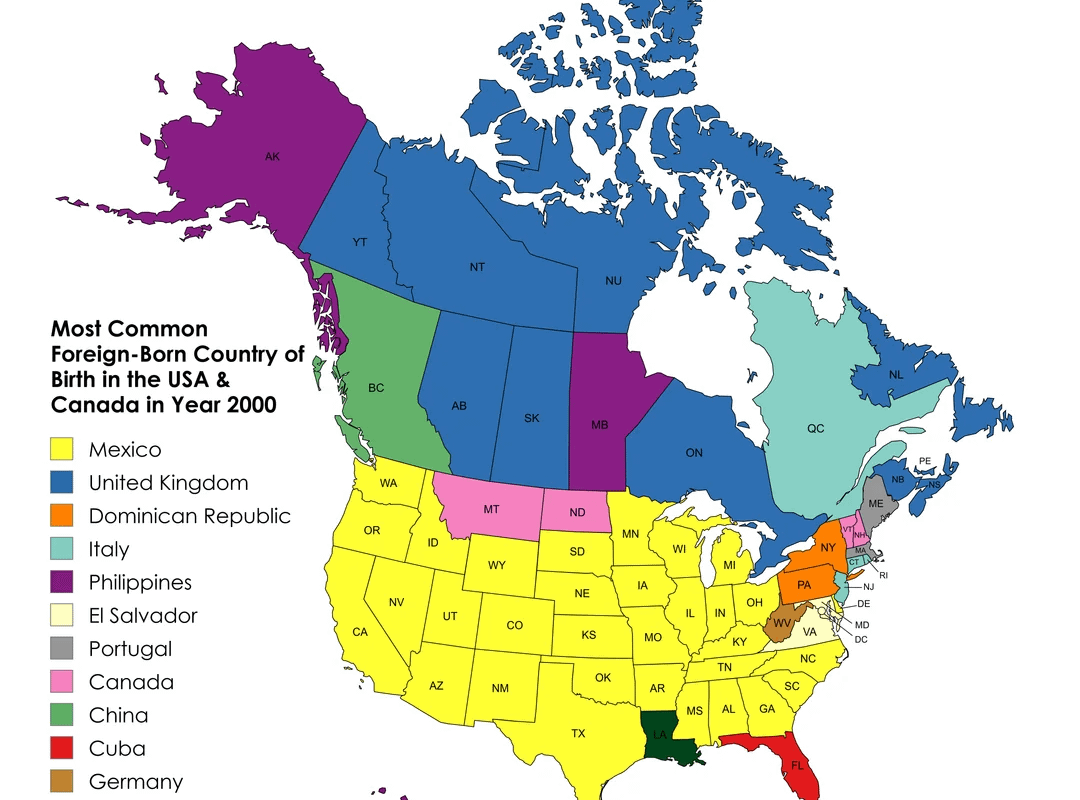
Most Common Foreign Country of Birth in the USA & Canada in Year 2000
Title: Most Common Foreign Countries of Birth in the USA & Canada in 2000: A Demographic Snapshot
Meta Description: Discover which countries were the top sources of foreign-born populations in the USA and Canada in the year 2000. Explore key trends, data insights, and historical context.
Introduction
Understanding immigration patterns is key to analyzing cultural and economic landscapes. In 2000, both the United States and Canada were shaped significantly by foreign-born residents, many of whom arrived as workers, students, or family-sponsored immigrants. This article examines the most common foreign countries of birth in the USA and Canada during this pivotal year, using census data to highlight demographic trends.
USA: Top Foreign Countries of Birth in 2000
According to the U.S. Census Bureau’s 2000 Decennial Census, approximately 31.1 million foreign-born individuals lived in the United States. Here’s the breakdown of the top five countries of origin:
-
Mexico
- Total immigrants: 9.18 million
- % of foreign-born population: 29.5%
Mexico dominated as the largest source of immigrants, driven by economic opportunities, geographic proximity, and family reunification.
-
Philippines
- Total immigrants: 1.37 million
- % of foreign-born population: 4.4%
Skilled workers (especially nurses and engineers) and U.S. military ties fueled Filipino immigration.
-
**China***
- Total immigrants: 1.19 million
- % of foreign-born population: 3.8%
(Includes mainland China, Hong Kong, and Taiwan)
Political and educational migration played significant roles in this influx.
-
India
- Total immigrants: 1.03 million
- % of foreign-born population: 3.3%
Tech-sector demand (e.g., H-1B visas) attracted skilled professionals during the dot-com boom.
-
Cuba
- Total immigrants: 952,000
- % of foreign-born population: 3.1%
Political refugees fleeing the Castro regime and special U.S. policies shaped Cuban migration.
Other Notable Countries: Vietnam, El Salvador, Korea, Canada, Germany.
Canada: Top Foreign Countries of Birth in 2000
Per Statistics Canada’s 2001 Census (reflecting 2000 data), 5.4 million Canadians were foreign-born—about 18% of the total population. Canada’s immigration prioritized skilled labor and family reunification, resulting in a more diverse top 5:
-
China
- % of foreign-born population: 10.6%
- Key Drivers: Arrivals from Hong Kong ahead of the 1997 handover, plus students and skilled workers.
-
India
- % of foreign-born population: 8.3%
- Key Drivers: Tech talent and family sponsorship under Canada’s Points-Based System.
-
Philippines
- % of foreign-born population: 4.9%
- Key Drivers: Healthcare workers and caregivers via the Live-In Caregiver Program.
-
United Kingdom
- % of foreign-born population: 3.9%
- Key Drivers: Historical ties and skilled professionals.
-
Italy
- % of foreign-born population: 3.3%
- Key Drivers: Post-WWII migration, though numbers declined by 2000.
Other Notable Countries: Hong Kong (distinct from China in Canadian data), Poland, United States, Germany.
Key Takeaways: USA vs. Canada in 2000
-
Geographic Influence:
- USA: Neighbors like Mexico dominated due to proximity and labor demand.
- Canada: Stronger Asian representation due to targeted immigration policies.
-
Policy Impact:
- The U.S. prioritized family reunification, while Canada emphasized economic skills.
-
Tech Boom:
India emerged as a top source in both nations, reflecting global demand for STEM talent.
FAQs: Foreign-Born Populations in 2000
Q1: Why was Mexico #1 in the USA but not in Canada?
A: Geographic proximity, NAFTA, and U.S. labor needs (e.g., agriculture, services) made Mexico the top source. Canada’s smaller Mexican diaspora grew post-2000 via temporary worker programs.
Q2: Were European countries still significant in 2000?
A: Yes—Germany, Italy, and the UK remained in the top 10 for both countries, but Asian and Latin American nations rose due to policy shifts.
Q3: How has the data changed since 2000?
A: By 2020, China and India surged further in the U.S., while Canada saw greater diversity from Syria, Nigeria, and the Philippines.
Conclusion
The year 2000 marked a turning point in North American immigration. While the U.S. saw heavy Latin American influence, Canada’s deliberate recruitment of skilled workers from Asia set the stage for modern multicultural identities. Understanding these patterns helps policymakers and businesses address labor needs, integration, and diversity today.
Keywords: Foreign-born population USA 2000, Canada immigration 2000, Top immigrant countries, US Census 2000, Statistics Canada 2001.
Internal Links (if applicable):
- [Trends in U.S. Immigration Since 2000]
- [Canada’s Points-Based Immigration System Explained]
Sources: U.S. Census Bureau 2000, Statistics Canada 2001.