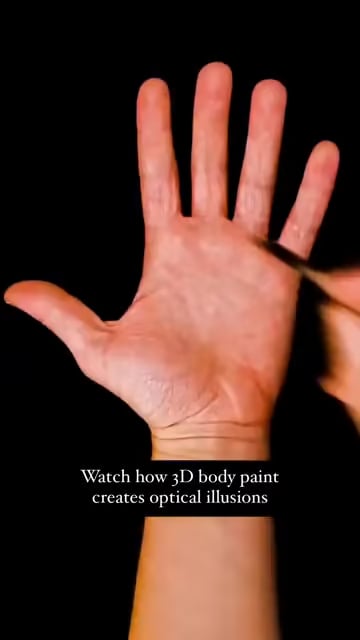
My brain cant handle these illusions
Title: “My Brain Can’t Handle These Illusions: Why Your Mind Struggles With Optical Tricks”
Meta Description: Feeling like your brain is short-circuiting? Dive into the science of optical illusions and discover why your mind can’t handle these visual deceptions.
Introduction
We’ve all been there: staring at an optical illusion that seems to warp reality, making us question our own eyes (and sanity!). Whether it’s a static image that appears to spin, shapes that vanish into thin air, or colors that shift before our very gaze, optical illusions exploit the gaps in how our brains process information. If you’ve ever thought, “My brain can’t handle these illusions!”, you’re not alone—and there’s fascinating science behind why these mind-bending tricks work.
In this article, we’ll break down:
- Why optical illusions hijack your brain.
- The neuroscience of perception (and deception).
- Classic illusions that mess with everyone’s mind.
- Tips to “train” your brain against visual trickery.
Why Your Brain Can’t Process These Illusions
Your brain is a prediction machine. It constantly interprets sensory data to create a cohesive view of reality, but it relies on shortcuts, past experiences, and assumptions to do this efficiently. Optical illusions exploit these shortcuts, feeding your brain conflicting signals it struggles to resolve.
Key reasons illusions overwhelm your mind:
- Sensory Overload: When an illusion presents competing visual cues (e.g., conflicting depths or motion), your brain gets stuck in a loop trying to reconcile them.
- Neural Adaptation: Staring at patterns or colors fatigues specific neurons, causing afterimages or false perceptions (like the classic “stare at red, see green” effect).
- Context & Contrast: Your brain interprets colors and shapes based on their surroundings. Illusions like the Checker Shadow or Café Wall exploit this, making identical shades look wildly different.
- Evolutionary Glitches: Humans evolved to detect edges, movement, and threats quickly—illusions like the “Snake Illusion” (static circles that seem to writhe) trigger false alarms in this primal system.
The Science of Visual Deception
Neurologists and psychologists have studied illusions for decades, uncovering how they reveal the brain’s wiring:
-
The “Two Systems” Conflict:
Daniel Kahneman’s research highlights two brain systems: System 1 (fast, instinctive) and System 2 (slow, analytical). Illusions trap System 1, forcing System 2 to intervene—which is why you might gasp at first, then laugh once you “figure it out.” -
Predictive Coding Theory:
Your brain doesn’t process every pixel it sees. Instead, it predicts reality based on expectations. Illusions violate these predictions, creating dissonance (e.g., the impossible Penrose Stairs). -
Cultural Influences:
Studies show people from different cultures perceive illusions differently! For example, those raised in “carpentered” environments (with right angles) are more susceptible to the Müller-Lyer illusion.
Top 5 Illusions That Break Brains (and Why)
-
The Dress (Blue/Black or White/Gold?)
- Why it breaks brains: Lighting ambiguity causes retinal cells to interpret colors based on assumed context.
- Lesson: Perception is subjective—even viral!
-
Rotating Snakes (Akiyoshi Kitaoka)
- Why it breaks brains: Peripheral drift illusion tricks motion-detecting neurons with asymmetric patterns.
- Stare at one spot—it stops!
-
Rubin’s Vase (Two Faces or a Vase?)
- Why it breaks brains: Figure-ground reversal overloads your brain’s object-segregation system.
-
The Spinning Dancer (Clockwise or Counterclockwise?)
- Why it breaks brains: Lack of depth cues lets your brain “choose” a perspective—revealing if you’re left- or right-brain dominant (a myth, but fun!).
-
Hermann Grid (Ghostly Gray Dots)
- Why it breaks brains: Lateral inhibition in retinal cells creates phantom spots at grid intersections.
Can You Train Your Brain to “Beat” Illusions?
While you can’t fully “immunize” your brain (illusions exploit hardwired processes), you can sharpen your awareness:
- Slow Down: Pause and analyze contradictions in the image.
- Change Context: Cover parts of the illusion or alter lighting/angles.
- Learn the Tricks: Knowing how illusions work reduces their power (e.g., realizing the Adelson Checkerboard relies on shadows).
Conclusion: Embrace the Brain Melt!
Optical illusions aren’t flaws—they’re windows into the brain’s brilliant, imperfect machinery. The next time you think, “My brain can’t handle this!”, remember: you’re witnessing neuroscience in action. Share these illusions with friends, and join the global club of pleasantly baffled humans!
CTA (Call to Action)
Which illusion broke YOUR brain? Share your favorite mind-benders in the comments—or challenge a friend to stare at the Rotating Snakes without flinching!
SEO Keywords: Optical illusions, visual tricks, brain perception, neuroscience of illusions, mind-bending illusions, why illusions trick the brain.
Internal Linking Suggestions:
- “How Your Brain Processes Reality”
- “10 Psychology Tricks That Hack Your Mind”
External Links for Authority:
Note to Editors: Optimize images with alt-text (e.g., “Rotating Snakes Illusion by Akiyoshi Kitaoka”) and ensure mobile-responsive formatting for video/content embeds.