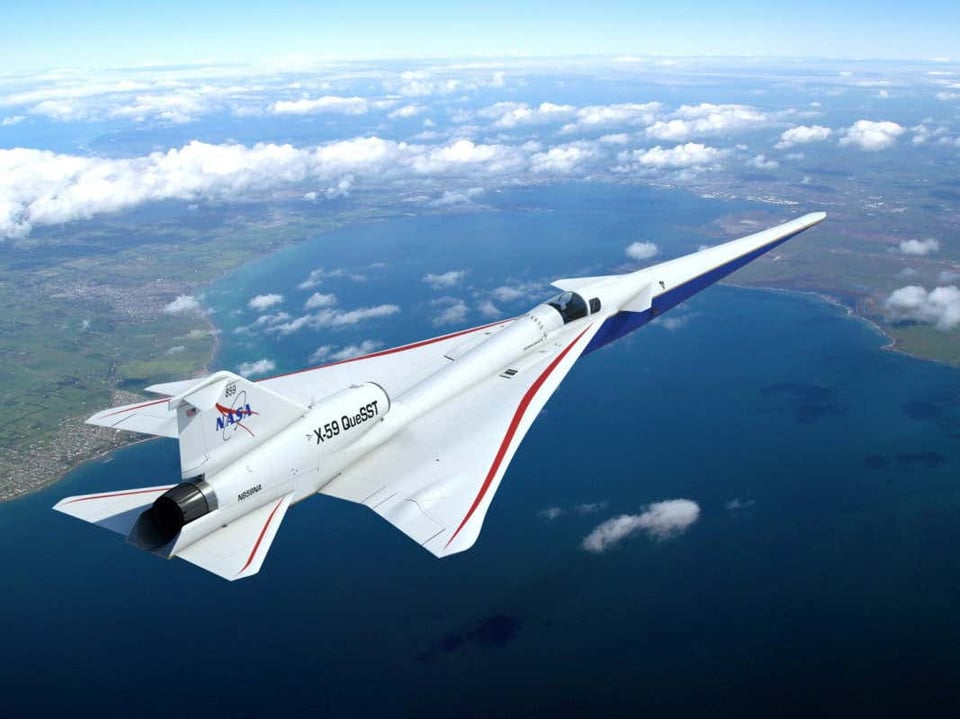
NASA’s experimental Lockheed Martin X-59 QueSST has just taken off for the first time. Designed to separate shockwaves and quiet the disruptive sonic boom that has long limited supersonic travel, the X-59 is shaping the future of aviation.
Title: NASA’s X-59 “Son of Concorde” Takes Flight: Revolutionizing Supersonic Travel by Silencing Sonic Booms
On [insert date], aviation history soared into a new era as NASA’s experimental X-59 Quiet SuperSonic Technology (QueSST) aircraft, built by Lockheed Martin, completed its first successful flight. This landmark achievement marks a giant leap toward transforming supersonic air travel by tackling the biggest barrier to its widespread use: the thunderous sonic boom that has banned commercial jets from breaking the sound barrier over land for over 50 years.
A Sonic Revolution Takes Off
The X-59 took to the skies from Lockheed Martin’s Skunk Works facility in Palmdale, California, in a mission designed to test its airworthiness and handling capabilities. While this initial flight was subsonic (below Mach 1), future tests will push the aircraft beyond Mach 1.4 (over 1,000 mph) to demonstrate its revolutionary noise-reduction technology.
Why the X-59 Matters:
Since the retirement of the Concorde in 2003, supersonic travel has been largely grounded due to regulatory bans over populated areas. Traditional supersonic jets create a deafening double-bang shockwave when they exceed Mach 1, shaking buildings and disturbing communities below. The X-59’s needle-like design and advanced aerodynamics are engineered to reshape these shockwaves into a barely audible “thump” – no louder than a car door closing (around 75 perceived loudness decibels, down from 105+ dB for Concorde).
How the X-59 “Disarms” the Sonic Boom
NASA and Lockheed Martin’s genius lies in the X-59’s unique airframe design:
- Needle-Nose Profile: A 38-foot-long nose disrupts airflow, preventing shockwaves from merging into a single, violent boom.
- Asymmetrical Engine Placement: The single F414-GE-100 engine is mounted atop the fuselage, shielding ground observers from noise.
- “Shaped” Shockwaves: The aircraft’s contours spread shockwaves across its length, weakening their intensity before they reach the ground.
This Quiet SuperSonic Technology (QueSST) could persuade regulators like the FAA to lift bans on overland supersonic flight, unlocking commercial routes (e.g., New York to Los Angeles in 2 hours) without disturbing communities.
The Road to Silent Speed: What’s Next?
The successful maiden flight is just phase one. NASA’s Quesst Mission will now focus on:
- Supersonic Testing: Pilots will push the X-59 to Mach 1.4 (at ~55,000 feet) to validate its quiet boom profile.
- Community Surveys: In 2026, NASA plans to fly the X-59 over select U.S. cities to gather public feedback on the noise level.
- Data for Regulators: Results will be submitted to the International Civil Aviation Organization (ICAO) with the goal of rewriting supersonic noise standards by 2027.
The Future of Supersonic Travel
If successful, the X-59 could reignite a supersonic renaissance:
- Commercial Jets: Airlines like United, Boom Supersonic, and Aerion are already eyeing QueSST-inspired designs for faster-than-sound passenger flights by the 2030s.
- Global Connectivity: 5-hour flights between Tokyo and San Francisco or 3.5-hour transatlantic journeys could become routine.
- Environmental Challenges: Critics highlight fuel efficiency concerns, but NASA’s tech could inspire greener next-gen engines.
Conclusion: The Sound of Progress
“This first flight is a mission for the thousands of people who shaped this aircraft into reality,” said NASA’s Bob Pearce, Associate Administrator for Aeronautics. The X-59 isn’t just a plane – it’s a key to democratizing supersonic speed while balancing innovation with responsibility. As testing progresses, the dream of silent, sustainable supersonic travel inches closer to becoming a roar heard not on the ground, but in the history books.
For real-time updates, follow NASA’s Quesst Mission: NASA.gov/Quesst
SEO Tags: NASA X-59, Lockheed Martin QueSST, X-59 first flight, supersonic travel future, silent sonic boom, QueSST technology, faster-than-sound flight, noise reduction aviation, Concorde replacement.
Meta Description: NASA & Lockheed Martin’s X-59 completes its first flight, pioneering silenced supersonic technology to replace sonic booms with a “thump.” Discover how it could redefine air travel.
Let me know if you’d like adjustments to tone, keywords, or additional sections!