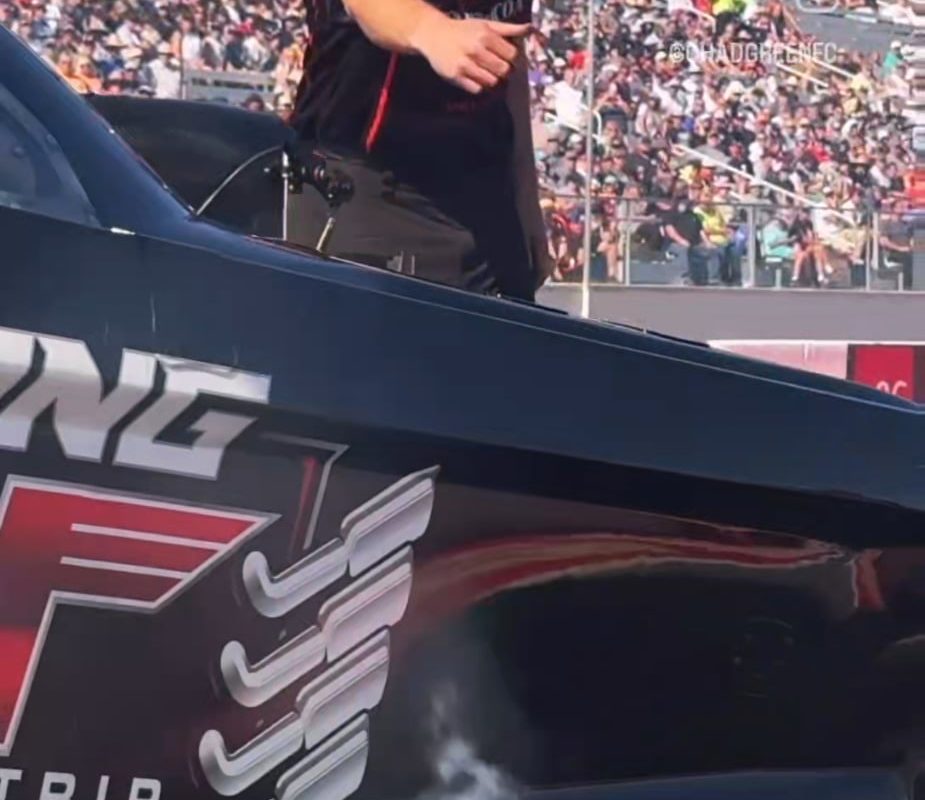
Nitro Funny Car racecars have their engines rebuilt after each run due to the intense wear from just a 4ish second race
Title: Why Nitro Funny Cars Require a Full Engine Rebuild After Just 4 Seconds of Racing
Meta Description: Discover why Nitro Funny Cars undergo complete engine rebuilds after every 4-second run. Learn about the extreme stress of nitromethane fuel, explosive power, and the engineering behind these drag racing beasts.
Introduction
Nitro Funny Cars are among the most jaw-dropping spectacles in motorsport, capable of accelerating from 0 to 330+ mph in under 4 seconds. But behind the smoke, fire, and ear-splitting noise lies a startling reality: their engines are rebuilt from scratch after every single run. This extreme maintenance ritual isn’t optional—it’s a necessity driven by the unparalleled brutality of nitromethane fuel and the demands of 11,000-horsepower competition. Here’s why these machines endure “engine homicide” after just four seconds of action.
The 4-Second War: How Nitro Funny Cars Destroy Engines
Nitro Funny Cars run on nitromethane, a volatile fuel packed with oxygen molecules that allow it to burn explosively compared to gasoline. This “nitro” mix generates 10-15× more power per combustion cycle, but it also subjects engines to catastrophic stress:
-
Cylinder Pressure Overload:
Each cylinder sees pressures exceeding 2,500 psi (pounds per square inch)—enough to bend steel. Regular gasoline engines typically operate at 150–200 psi. -
Temperatures Beyond Limits:
Combustion chambers reach 2,600°F+, melting pistons, valves, and cylinder heads. Without specialized materials like titanium and aluminum alloys, engines would disintegrate mid-run. -
Mechanical Carnage:
Crankshafts twist, connecting rods stretch, and bearings liquefy under forces equivalent to 7x Earth’s gravity. Even hardened components fracture under the strain. -
Fuel Corrosion:
Nitromethane’s chemical makeup eats away at seals, gaskets, and internal surfaces, leaving engines dangerously compromised after a single pass.
Anatomy of a Post-Run Engine Rebuild
A Nitro Funny Car team’s pit crew is a well-oiled machine—literally. The rebuild process starts immediately after the car crosses the finish line:
Step 1: Tear-Down & Inspection
- The engine is removed and fully disassembled.
- Critical parts like pistons, blower belts, and bearings are always discarded—they’re single-use items.
- Cracks, warping, or micro-fractures in the block or heads are inspected under magnification.
Step 2: Replacement of Key Components
- New Pistons & Rings: Melted or shattered pistons (common due to detonation) are swapped out.
- Fresh Bearings & Rods: Even unscathed bearings are replaced to avoid catastrophic failure.
- Valve Train Overhaul: Valves, springs, and retainers wear out rapidly and are replaced.
Step 3: Reassembly & Tuning
- Crew chiefs adjust nitro mixture ratios and ignition timing for the next run.
- Total rebuild time? 75–120 minutes—a testament to crew skill and preparation.
The Staggering Cost of 4-Second Performance
Running a Nitro Funny Car isn’t just labor-intensive—it’s a financial inferno:
- Engine Rebuild Cost Per Run: $5,000–$10,000 (parts alone).
- Annual Engine Budget: Top teams spend over $500,000 per season on engine rebuilds.
- Nitro Fuel Consumption: Burns 12–15 gallons in 4 seconds—enough to drain a fuel tanker in minutes.
Nitro Funny Cars vs. Other Race Engines: A Comparison
- NASCAR: Engines last 500–1,000 miles between rebuilds.
- F1: Power units endure ~7 races (1,300+ miles).
- Top Fuel Dragsters: Similar to Funny Cars, engines are rebuilt after each run but use even more nitro (90% vs. Funny Cars’ 85%).
Historical Context: Why Rebuilds Became Non-Negotiable
In the 1960s, nitro engines were rebuilt after several passes. But as speeds skyrocketed past 300 mph, engine life spans plummeted. By the 1980s, NHRA teams realized that skipping a rebuild risked:
- Blown engines, which endanger drivers and spectators.
- Lost Championships, as reliability became key to consistent performance.
Today, rebuilds are mandated by team strategy—and survival instinct.
The Physics of a 4-Second Engine Apocalypse
To grasp why rebuilds are unavoidable, consider the math:
- RPM Surges: Engines rev from idle to 8,000 RPM in 0.8 seconds.
- Horsepower Production: Generates 11,000 hp—equivalent to 40 family sedans combined.
- Energy Released: Each run unleashes energy comparable to ⅔ of a stick of dynamite.
It’s less an engine and more a controlled bomb.
Final Takeaway: Engineering on the Edge
Nitro Funny Cars exist in a realm where engineering meets art—and destruction. Rebuilding engines after every run isn’t overkill; it’s a badge of honor for crews who harness chaos to chase four-second glory. For fans, it’s a visceral reminder: speed has a price, and nitro always collects.
FAQ Section
Q: How often do Nitro Funny Cars run in a race weekend?
A: Top teams may race 4–8 times (qualifying + eliminations), requiring 4–8 engine rebuilds.
Q: What happens to used engine parts?
A: Many are recycled as trophies or art! Teams often sell “blown” pistons to fans.
Q: Has anyone tried to make a longer-lasting nitro engine?
A: Yes, but gains in durability sacrifice power—a trade-off no competitive team will make.
Q: How do crews rebuild engines so fast?
A: Military-level precision. Teams practice rebuilds relentlessly, often in under an hour.
Target Keywords:
- Nitro Funny Car engine rebuild
- Nitromethane engine wear
- Drag racing engine maintenance
- Funny Car engine cost
- NHRA engine rebuild
Optimize your site’s SEO by pairing this article with images/videos of engine rebuilds and linking to NHRA event pages!