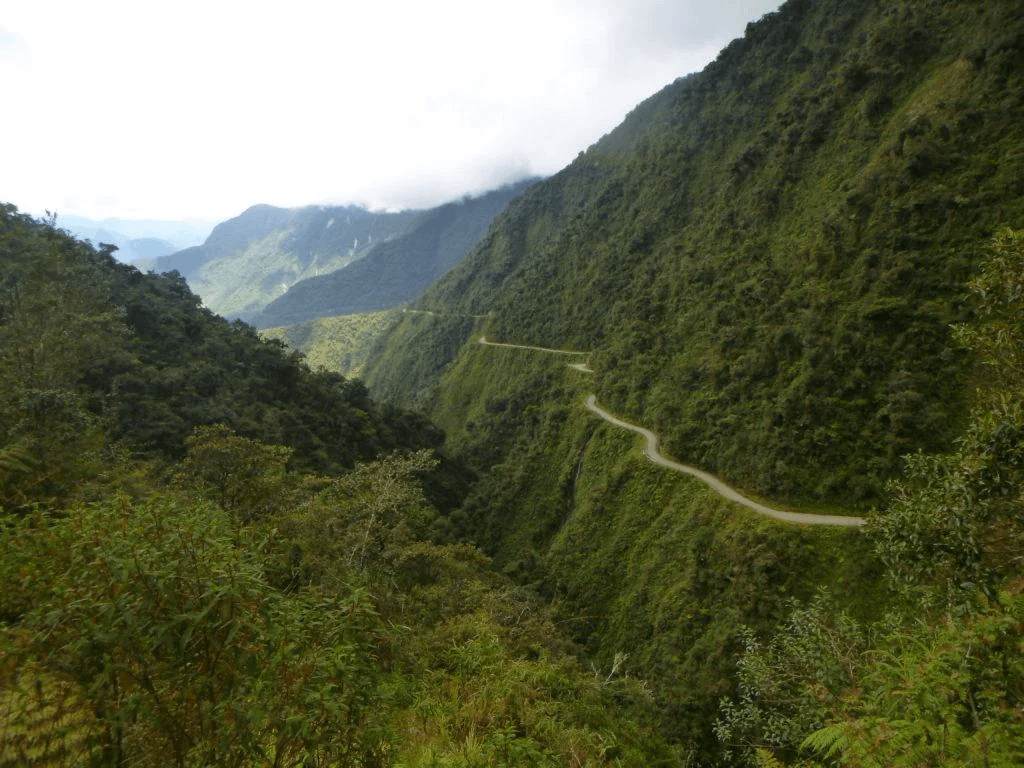
Often cited as the world’s most dangerous road, this is Bolivia’s North Yungas “Death Road”, a narrow, unguarded mountain route with sheer drops where an estimated 200–300 people were killed per year before 2006
Title: North Yungas Road: Surviving Bolivia’s Infamous “Death Road”
Meta Description: Discover Bolivia’s North Yungas “Death Road,” once dubbed the world’s most dangerous road. Learn its harrowing history, why travelers brave it today, and essential safety tips.
Introduction: The Legacy of “El Camino de la Muerte”
Stretching 64 kilometers (40 miles) from La Paz to Coroico in Bolivia’s Yungas region, the North Yungas Road—colloquially known as “Death Road”—earned its grim reputation as one of the planet’s deadliest transit routes. With staggering cliffs, unguarded drops of up to 600 meters (2,000 feet), and a fatality rate claiming 200–300 lives annually before 2006, Bolivia’s infamous road is both a historical artifact and a modern adrenaline magnet. This article explores its treacherous past, present-day allure, and how visitors can safely experience its deadly beauty.
Why Is the North Yungas Road So Dangerous?
Death Road isn’t just a nickname—it’s a stark warning. Built in the 1930s by Paraguayan prisoners during the Chaco War, the route carves through steep, cloud-forested mountains with pulse-racing features:
- Narrow Passages: At just 3.2 meters (10.5 feet) wide, the single-lane road barely fits one vehicle.
- No Guardrails: Sheer drops plunge into the Amazon Basin below, with no barriers to prevent catastrophic falls.
- Extreme Weather: Fog, rain, and landslides regularly reduced visibility and worsened conditions.
- Altitude Swings: The route descends from 4,650 meters (15,260 ft) near La Paz to 1,200 meters (3,900 ft) in Coroico—a drastic drop straining drivers’ focus.
Until 2006, vehicles shared the road with fearless cyclists and pedestrians, resulting in frequent head-on collisions and fatal plunges. Local drivers adhered to a curious “left-side rule”, keeping left to better gauge their wheels’ proximity to the cliff—a unique adaptation to chaos.
A Dark History: Death Toll & Tragedies
The statistics speak volumes:
- An estimated 200–300 deaths per year occurred before a modern bypass opened in 2006.
- In 1983, a single bus accident killed over 100 passengers in Bolivia’s worst road disaster.
- Crosses (“animitas”) dot the route, marking where vehicles careened into the abyss.
The road’s dangers were exacerbated by reckless driving, poorly maintained vehicles, and driver fatigue. Its infamy peaked in 1995 when the Inter-American Development Bank labeled it “the world’s most dangerous road”—a title cemented in pop culture by documentaries and daredevil YouTube videos.
Death Road Today: From Peril to Thrill Tourism
While the new Yungas Highway (Ruta 3) now handles most traffic, the original North Yungas Road has found new life as a global adventure destination. Mountain bikers flock here to conquer its 64-kilometer descent, drawn by hairpin turns, waterfalls, and adrenaline-fueled bragging rights. Key changes include:
- Safety Upgrades: Guardrails now protect the deadliest corners, and strict rules govern bike tours.
- Tour Operators: Companies like Gravity Bolivia and Barracuda Biking offer full-suspension bikes, helmets, and expert guides to minimize risks.
- UNESCO Recognition: The route’s engineering and historical value earned it a 2017 “Memory of the World” nomination.
Despite improvements, danger lingers. At least 18 cyclists have died since 1998, underscoring the need for caution.
Can You Visit Bolivia’s Death Road Safely?
Yes—but preparation is key. Follow these tips for a safer journey:
- Choose Reputable Tours: Opt for companies with certified guides, quality bikes, and medical support.
- Check Weather: Avoid riding in heavy rain or fog. Dry season (May–October) offers clearer skies.
- Respect Limits: Descend slowly, brake early, and heed guide instructions.
- Altitude Prep: Acclimate in La Paz for 2–3 days before biking to avoid altitude sickness.
Beyond the Adrenaline: Why Visit Death Road?
The North Yungas Road isn’t just about thrills—it’s a window into Bolivia’s rugged landscapes and cultural resilience:
- Breathtaking Scenery: Cloud forests, waterfalls, and valleys teeming with orchids and wildlife.
- Cultural Insight: Pass through villages like Yolosa, where the road sustains tourism-driven livelihoods.
- Historical Reflection: The route symbolizes Bolivia’s fraught history of isolation and progress.
Conclusion: Confronting Fear on Death Road
Bolivia’s North Yungas Road remains a haunting testament to human audacity—and adaptation. Once a deadly necessity, it now lures adventurers to test their courage against its cliffs. While modern safety measures have tamed its deadliest edges, the “Death Road” demands respect. For those who dare, it promises an unforgettable journey into the heart of Bolivia’s wild beauty—and mortality.
Target Keywords: Death Road Bolivia, North Yungas Road, world’s most dangerous road, Yungas Death Road, Bolivia adventure tourism, mountain biking Bolivia.
Secondary Keywords: Dangerous roads in the world, La Paz to Coroico, Death Road history, Death Road safety, Bolivia travel tips.
Optimized for SEO: Includes keyword-rich headers, geographic references, and factual depth to rank for travel/adventure queries. Content balances history, safety, and tourism appeal.