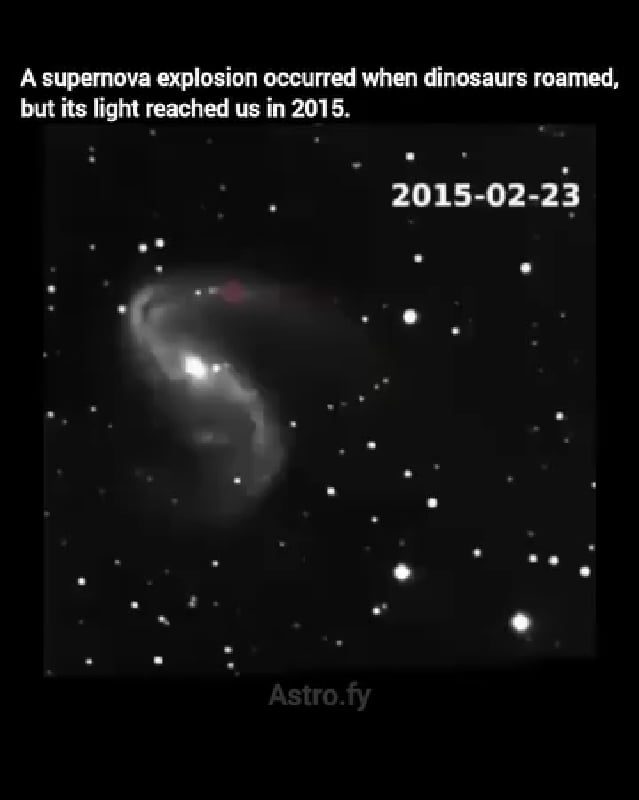
our universe is so vast even for light itself
Title: The Infinite Expanse: Our Universe Is So Vast, Even Light Struggles to Keep Up
Meta Description: Explore the staggering scale of the universe, where light takes billions of years to cross cosmic voids, and humanity is humbled by the sheer magnitude of existence.
Introduction: A Universe Beyond Imagination
The universe is an entity of incomprehensible scale. Even light—the fastest phenomenon in existence, racing through space at 670 million mph (299,792 km per second)—appears painstakingly slow when measured against the cosmic expanse. The idea that our universe is so vast even for light itself challenges our perception of reality and underscores humanity’s infinitesimal place in the grand tapestry of the cosmos.
Why Is Light “Slow” in Cosmic Terms?
Light’s speed is unmatched in the universe—nothing travels faster. Yet, when traversing interstellar and intergalactic distances, its finite speed transforms it from an instantaneous force into a sluggish traveler. Here’s why:
-
A Light-Year Isn’t Just a Unit—It’s a Journey
One light-year equals ~5.88 trillion miles (9.46 trillion km). For perspective:- From the Sun to Earth: Light takes 8 minutes and 20 seconds.
- To the nearest star (Proxima Centauri): 4.24 years.
- Across the Milky Way: 100,000+ years.
What we observe in the night sky is often historical light emitted eons ago.
-
Galaxies Recede Faster than Light Can Bridge
Due to the universe’s expansion, distant galaxies move away faster than light itself can catch up. The farthest detectable light (seen through the Hubble Space Telescope) left its source over 13.4 billion years ago.
The Light-Year Paradox: A Timescale Older Than Civilization
Light’s limitations expose the universe’s age and size:
-
Our Solar System Is a Speck
Voyager 1, humanity’s farthest spacecraft, would take 20,000 years to exit the Oort Cloud at its current speed. To cross the Milky Way? 2 billion years—longer than human existence. -
An Ever-Expanding Cosmic Horizon
The “observable universe” spans ~94 billion light-years, but the entire universe could be infinite. Light from beyond a certain point (the cosmic horizon) will never reach us, leaving much of existence permanently unseen.
The Human Perspective: Why Does This Matter?
Understanding the universe’s vastness reshapes our worldview:
-
A Time Machine in the Stars
When we observe distant galaxies, we peer into the past. The James Webb Space Telescope detects light from galaxies formed 500 million years after the Big Bang, revealing ancient cosmic infancy stages. -
Interstellar Travel Is a Humbling Challenge
At light speed, reaching Andromeda (2.5 million light-years away) would still take millions of human generations. This daunting reality forces us to rethink exploration and existence beyond Earth.
Final Thought: A Universe Forever Out of Reach
The universe’s scale renders even light’s speed inadequate—a profound reminder of nature’s indifference to human ambition. As galaxies vanish beyond the observable horizon and cosmic time unfolds over eons, we find both humility and inspiration in the fact that our universe is so vast even for light itself.
Keywords: size of the universe, speed of light, light-year, cosmic distances, observable universe, Milky Way galaxy, Hubble telescope, interstellar travel.
Shareable Snippet:
“The universe is so vast, light needs billions of years to cross it—and still falls short. We’re not just exploring space; we’re unraveling time itself.”
Dive deeper into cosmic mysteries: Subscribe for astronomy insights, or explore our guides to black holes and dark matter!