Painting the road
H1: Painting the Road: From Safety Stripes to Creative Crosswalks
How Road Painting Shapes Our Commute, Communities, and Culture
Road painting is far more than mere pavement decoration—it’s a critical blend of engineering, safety, and urban artistry. From crisp white lane dividers to vibrant community murals, painting the road transforms mundane asphalt into a canvas for functionality and creativity. This guide explores the science, techniques, and cultural impact of road painting.
H2: Why Road Painting Matters: Safety First
Road markings are essential visual guides for drivers, cyclists, and pedestrians. They reduce accidents by:
- Directing traffic flow (e.g., lane dividers, turn arrows).
- Warning of hazards (e.g., crosswalks, school zones).
- Improving nighttime visibility with reflective materials.
Studies show that well-maintained road markings can reduce crashes by up to 25%.
H2: The Science of Road Paint: Materials & Durability
Not all paint is created equal. Modern road markings rely on specialized formulas designed for longevity and visibility:
- Thermoplastic: Melted onto roads, it’s highly durable and reflective (common for highways).
- Water-Based Acrylic: Eco-friendly and quick-drying for urban areas.
- Epoxy: Used in high-traffic zones for extreme resistance to wear.
- Reflective Glass Beads: Embedded in paint to boost nighttime visibility.
Did you know? Road paint must adhere to federal and state regulations for reflectivity and skid resistance.
H2: The Road Painting Process: Machines & Precision
Painting a road involves meticulous planning and high-tech equipment:
- Surface Prep: Cleaning debris and repairing cracks.
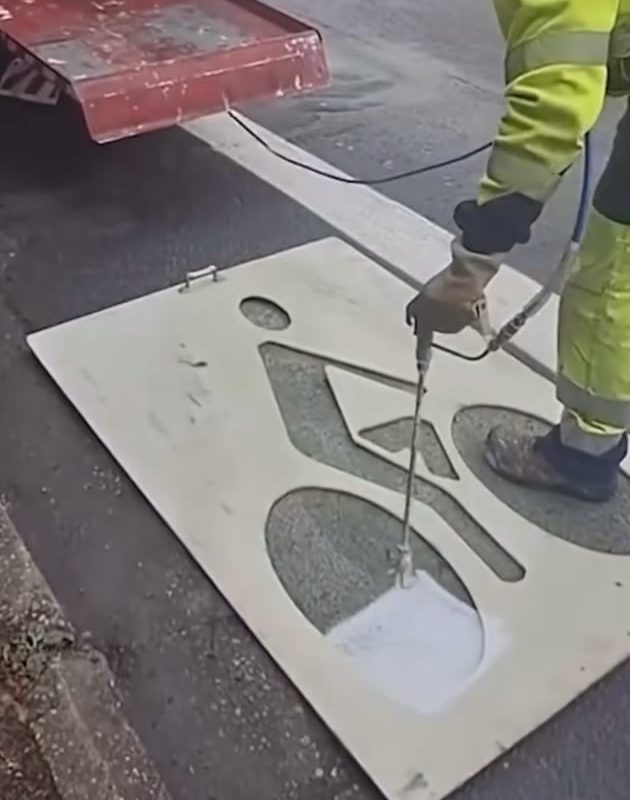
- Stenciling: Using templates for symbols like bike lanes or stop bars.
- Application:
- Stripe Pavers: Automated trucks spray paint at 3–12 mph.
- Handheld Units: For intricate designs or repairs.
- Drying: Fast-setting formulas minimize traffic disruption.
Fun fact: A single highway striper truck can paint up to 200 miles of lines per day!
H2: When Roads Become Canvases: Artistic Crosswalks & Murals
In recent years, cities have embraced creative road painting to boost community spirit and tourism:
- Decorative Crosswalks: Cities like Seattle and Asheville paint rainbows, florals, or cultural motifs.
- Traffic-Calming Art: 3D illusions (e.g., “floating” blocks) slow drivers.
- Public Art Projects: Neighborhood volunteers paint intersections to celebrate local history.
Case Study: Philadelphia’s Painted Bride Art Center transformed a dull intersection into a tourist hotspot with a mosaic-inspired crosswalk.
H2: Innovations in Road Painting Technology
The future of road painting is smarter and greener:
- Self-Cleaning Paint: Photocatalytic coatings break down pollution.
- Smart Roads: Thermochromic paint changes color in icy conditions.
- Solar-Powered LEDs: Embedded in road lines for dynamic warnings.
- Robotic Painters: AI-guided drones for precision striping.
H2: Challenges in Road Maintenance
Fading paint costs lives and money:
- Weather: UV rays, snowplows, and rain erode markings.
- Budget Constraints: Repainting cycles vary by region (1–5 years).
- Labor Shortages: Skilled road painters are in high demand.
Tip: Cities increasingly use long-lasting thermoplastic to cut long-term costs.
H2: How Communities Can Get Involved
Want to brighten your streets?
- Propose a Project: Partner with local artists and traffic departments.
- Follow Guidelines: Ensure designs don’t compromise safety (e.g., avoid slippery textures).
- Fundraise: Grants like Bloomberg’s Asphalt Art Initiative support creative road art.
H3: Conclusion: Roads as Shared Spaces
Painting the road merges practicality with creativity. Whether it’s a yellow dashed line guiding rush-hour traffic or a rainbow crosswalk celebrating pride, these painted symbols shape how we move, connect, and experience our cities. By investing in innovative materials and community-driven art, we pave the way for safer, livelier streets.
SEO Keywords for Integration:
Road painting, road marking, traffic paint, crosswalk art, thermoplastic road markings, reflective paint, highway striping, creative crosswalks, road safety, urban art projects.
Meta Description:
Discover how road painting combines safety, technology, and art. Learn about materials, innovations, and how communities use creative crosswalks to transform streetscapes.
Word Count: 750+ | Reading Time: 4–5 minutes