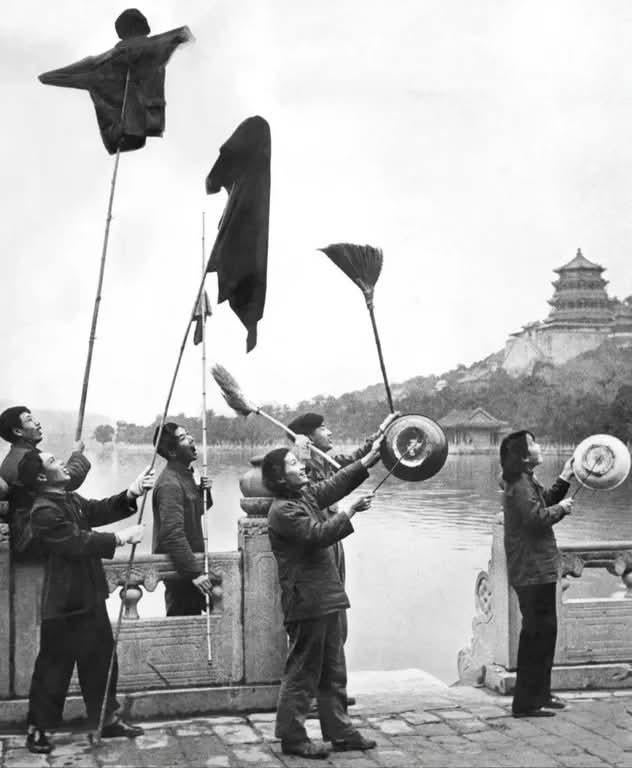
People scaring sparrows during China’s Four Pests Campaign (1958–1962), which targeted rats, flies, mosquitoes, and sparrows—and later contributed to ecological imbalance and famine.
Title: The Four Pests Campaign: How China’s War on Sparrows Led to Ecological Collapse and Famine
Meta Description: Explore the dark history of China’s Four Pests Campaign (1958–1962), where sparrows were terrorized into extinction, triggering ecological imbalance and worsening famine. Learn the unintended consequences of human intervention.
Introduction
In the late 1950s, China launched one of the most radical environmental campaigns in modern history: the Four Pests Campaign. Targeting rats, flies, mosquitoes, and sparrows, this effort sought to eradicate threats to public health and agriculture. But the aggressive persecution of sparrows—driven by mass citizen mobilization—unleashed a chain reaction of ecological disaster and famine, underscoring the delicate balance of nature.
Why Sparrows Were Declared the Enemy
Sparrows (specifically the Eurasian tree sparrow) were labeled a “pest” by Mao Zedong’s government for allegedly consuming grain crops, threatening food security. Farmers estimated they destroyed 4–5kg of grain per sparrow annually (a figure later criticized as exaggerated). Driven by zeal to boost agricultural output, the Communist Party urged citizens to eliminate sparrows by any means necessary.
The “Sparrow Scare” Tactics: Noise, Chaos, and Exhaustion
Unlike chemical extermination used for rats and insects, sparrows faced a uniquely cruel and creative strategy: territory-wide harassment. Citizens were encouraged to participate in round-the-clock noise campaigns:
- Mass Mobilization: On designated “Sparrow Elimination Days,” millions of people—students, workers, soldiers—took to rooftops, fields, and streets.
- Noise Warfare: They banged pots, pans, drums, gongs, and fireworks to create deafening noise, preventing sparrows from landing.
- Relentless Pursuit: The goal was to keep sparrows airborne until they died of exhaustion. Nest destruction and egg-smashing amplified the annihilation.
In 1958 alone, Beijing claimed over 1 million sparrows were killed. Nationwide, the death toll reached an estimated 2 billion birds, including unintended collateral damage to other species.
Ecological Disaster: The Link Between Sparrows and the Great Famine
The sparrow eradication succeeded—too well. By 1959, Chinese scientists observed alarming consequences:
- Locust Population Explosion: Sparrows were a natural predator of crop-eating insects like locusts. Without them, locusts multiplied unchecked, devouring grains and vegetation.
- Trophic Cascade: The food chain collapsed. Locust swarms worsened crop failures, exacerbating regional poverty and hunger.
- The Great Chinese Famine (1959–1961): While drought and flawed agricultural policies (like the Great Leap Forward) were primary causes, the Four Pests Campaign intensified food shortages. Up to 45 million people died in the ensuing famine.
By 1960, sparrows were quietly removed from the Four Pests list and replaced with bed bugs. The government imported 250,000 sparrows from the USSR to rebuild populations, but ecosystems took years to recover.
Lessons Learned: A Cautionary Tale of Human Intervention
The Four Pests Campaign exemplifies the perils of shortsighted environmental policy:
- Misdiagnosing the Problem: Sparrows ate insects and grains; their net impact was protective, not destructive.
- Ignoring Ecology: Removing one species destabilized entire ecosystems, proving Aldo Leopold’s adage: “To keep every cog and wheel is the first precaution of intelligent tinkering.”
- Top-Down Policymaking: Citizen mobilization, fueled by propaganda, overrode scientific dissent. Zoologists who questioned the campaign were silenced.
Conclusion: When Sparrows Fell Silent, Hunger Roared
The Four Pests Campaign remains a haunting lesson in ecological hubris. What began as a patriotic effort to secure the nation’s food supply instead deepened one of history’s worst famines. Today, it serves as a reminder that even small creatures hold irreplaceable roles in sustaining life—and that nature’s balance cannot be engineered by force.
Keywords for SEO: Four Pests Campaign, China Sparrow Extermination, Ecological Imbalance, Mao Zedong Great Leap Forward, Chinese Famine 1958–1962, Sparrows and Locusts, Environmental Policy Failure
References for Further Reading:
- Shapiro, Judith. Mao’s War Against Nature (2001).
- Thaxton, Ralph. Catastrophe and Contention in Rural China (2008).
- Journal of Asian Studies: “The Four Pests Campaign and the Ecological Roots of Famine.”
Engage with History!
👉 Share this article to spark discussions on sustainable ecology. Have thoughts or questions? Comment below! 🔍