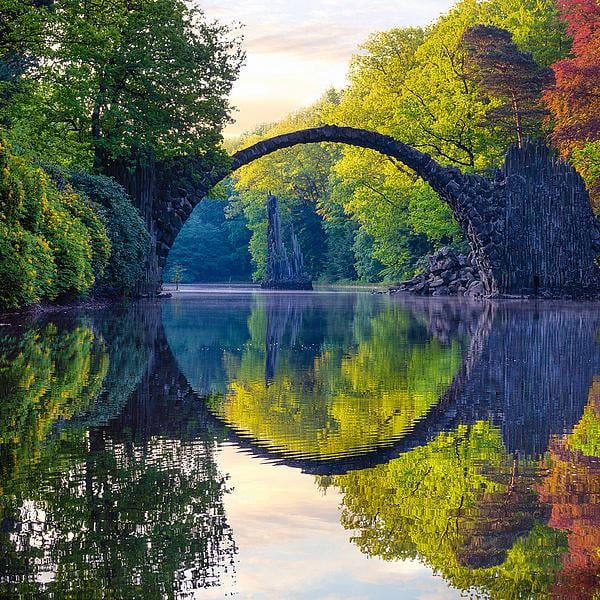
This photo is featured on the website of the East German Railway Company (ODEG). https://www.odeg.de/reiseblog/sachsen/rakotzbruecke-in-kromlau
It is also called the "devil's bridge".
Title: The Devil’s Eye: Exploring the Perfect Reflection of Rakotz Bridge in Kromlau, Germany
Meta Description: Discover the mesmerizing reflection of Rakotz Bridge (Devil’s Bridge) in Kromlau, Saxony. Learn photography tips, best times to visit, and why this architectural marvel creates a flawless stone circle on water.
Introduction
Hidden in the enchanting Rhododendron Park of Kromlau, Saxony, Germany, the Rakotz Bridge (Rakotzbrücke) is a 19th-century masterpiece that seems plucked from a fairytale. Often called the “Devil’s Bridge” due to its near-mythical reflection, this arched wonder creates a jaw-dropping perfect circular illusion when mirrored in the tranquil waters of Rakotzsee Lake. Whether you’re a photographer, nature lover, or traveler seeking unique destinations, this guide unveils why Rakotz Bridge’s reflection is a must-see spectacle.
1. The Magic of the Rakotz Bridge Reflection
The bridge’s defining feature is its flawless reflection, forming a complete stone circle resembling an eye or portal. Built in 1860 using locally quarried stone, its delicate arch was designed to align precisely with its reflection, regardless of water levels. The result? A symmetrical marvel dubbed “The Devil’s Eye” that appears almost supernatural.
Why does the reflection look so perfect?
- Precise Architecture: The bridge’s parabola matches the water’s surface curve.
- Still Waters: Rakotzsee Lake’s calmness ensures an undisturbed mirror effect.
- Natural Backdrop: Surrounding trees and azaleas amplify the scene’s mystical aura.
2. Location & How to Get There
- Where: Rhododendron Park Kromlau (Kromlauer Park), Saxony, Germany.
- Nearest cities: Berlin (2 hours by car) | Dresden (1.5 hours).
- Entry: Free and open year-round, but sunrise/sunset visits are ideal.
- Transport: Rent a car or take a train to Weißwasser Station, followed by a short taxi ride.
3. Capturing the Perfect Shot: Photography Tips
Best Conditions:
- Golden Hour: Sunrise or sunset bathes the bridge in warm light and reduces glare.
- Autumn Colors: October transforms the park into a fiery canvas, doubling the reflection’s drama.
- Still Days: Windless mornings ensure glass-like water.
Pro Tips:
- Use a polarizing filter to minimize water glare.
- Shoot from the eastern shore for iconic front-facing compositions.
- Long exposures (2–5 seconds) enhance ethereal effects.
4. Best Time to Visit Rakotz Bridge
While stunning year-round, timing enhances the magic:
- Spring (May–June): Rhododendrons bloom in vivid pinks and purples.
- Autumn (October): Fiery foliage frames the bridge.
- Winter: Frost or snow adds a surreal, otherworldly touch.
Avoid summer weekends when crowds peak. Weekday mornings offer solitude.
5. The Legend of Devil’s Bridges
Rakotz Bridge is part of Europe’s “Devil’s Bridge” folklore, where these structures were rumored to be so perfectly built that only supernatural forces could create them. Locals joked the devil himself lent a hand—in exchange for a soul, of course!
6. Beyond the Bridge: Exploring Kromlauer Park
The 200-acre Rhododendron Park is a paradise beyond the bridge:
- Wander among 10,000+ rhododendrons and azaleas.
- Discover hidden grottoes, stone monuments, and romantic pathways.
- Visit the nearby Kromlau Castle ruins for panoramic views.
7. Preserving the Magic: Responsible Tourism
Rakotz Bridge is fragile! Help protect it by:
- Never stepping on the bridge (access is restricted).
- Avoiding swimming or littering in the lake.
- Sticking to marked trails.
FAQs About Rakotz Bridge
Q: Can you walk on Rakotz Bridge?
A: No—access is blocked to preserve its structure. Admire it from the shores.
Q: Is the reflection visible year-round?
A: Yes, but autumn offers the most dramatic colors and reflections.
Q: How was Rakotz Bridge built?
A: Using basalt stones sourced from Saxon Switzerland, carefully shaped to form its parabolic arch.
Conclusion
The Rakotz Bridge’s perfect reflection is a testament to nature and human ingenuity colliding in harmony. Whether you seek inspiration, adventure, or simply a moment of wonder, this Saxon gem delivers an unforgettable glimpse into the extraordinary. Plan your visit, pack your camera, and let the Devil’s Eye mesmerize you.