Pictures Of A Russian Meteorologist Who Spent 30 Years At An Arctic Meteorology Base. By Evgenia Arbugaeva
Title: Frozen in Time: The Remarkable Story of a Russian Meteorologist Who Spent 30 Years Alone in the Arctic – Captured by Evgenia Arbugaeva
Meta Description: Delve into the hauntingly beautiful photographs of Evgenia Arbugaeva, who documented the life of a Russian meteorologist isolated for 30 years at a remote Arctic weather station. Discover solitude, resilience, and humanity in the frozen wilderness.
Introduction: A Portrait of Isolation and Dedication
In the vast, frozen expanse of Russia’s Arctic coastline lies Khodovarikha – a desolate meteorology station so remote that its sole inhabitant, Slava Korotki, spent three decades charting the brutal weather patterns of the Far North. His solitary existence was brought to global attention through the lens of photographer Evgenia Arbugaeva, whose intimate series Weather Man paints a poetic portrait of human resilience against an unforgiving landscape.
This article explores Korotki’s extraordinary life, Arbugaeva’s evocative imagery, and the haunting beauty of a world where ice, wind, and sheer willpower collide.
Who Was Slava Korotki? The Meteorologist of the Arctic
Slava Korotki (also transliterated as Vyacheslav Korotkikh) was a Russian meteorologist who began his tenure at Khodovarikha station in the 1980s. Located on the shores of the Barents Sea, the station was accessible only by helicopter during brief windows of tolerable weather. With no roads, neighbors, or modern comforts, Korotki’s daily ritual involved braving blizzards to record temperature, wind speed, and atmospheric data critical for Soviet and later Russian climate science.
Korotki’s commitment bordered on mythical: 30 years of solitude, with only occasional visits from supply teams or researchers. His world was a tangle of analog equipment, Soviet-era maps, and the crushing silence of the Arctic.
Evgenia Arbugaeva: Capturing the Soul of the Arctic
Evgenia Arbugaeva, a Siberian-born photographer renowned for her ethereal work in polar regions, first learned of Korotki through hearsay. Intrigued by tales of an aging hermit-scientist, she embarked on a perilous journey to Khodovarikha in 2014. Her resulting photo series blends documentary realism with dreamlike surrealism, immortalizing Korotki’s life in images that feel both timeless and fragile.
Key Themes in Arbugaeva’s Photography:
- Isolation vs. Warmth: Arbugaeva juxtaposes the stark, icy wilderness with warm, intimate glimpses of Korotki’s routine – brewing tea, tending to equipment, or gazing through frosted windows.
- Technological Relics: Soviet-era instruments, yellowed notebooks, and analog devices contrast sharply with the digital future Korotki resisted.
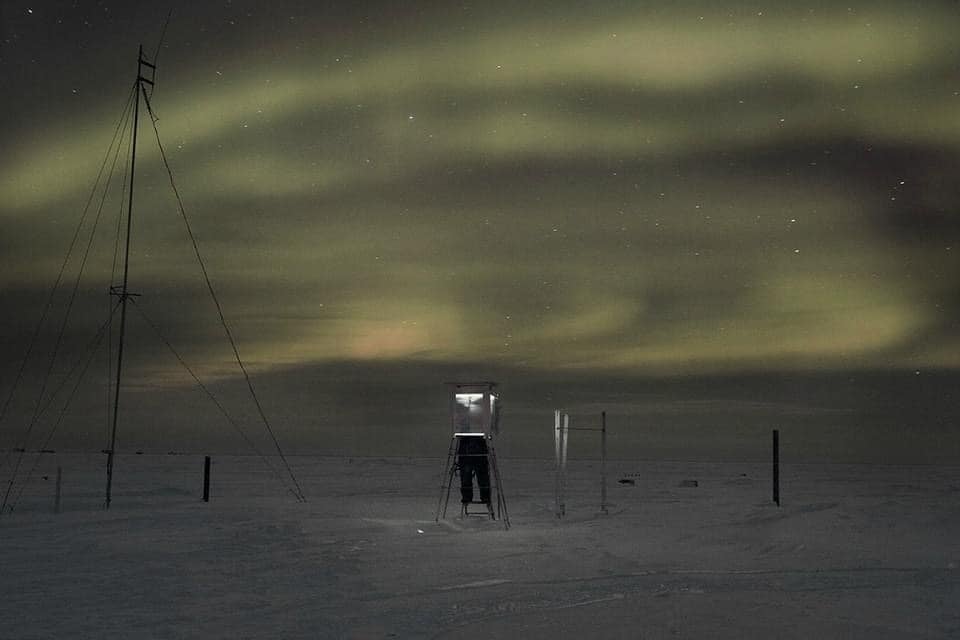
- Human Resilience: Korotki’s quiet resolve radiates from portraits where he stands defiantly against blizzards or contemplates the aurora borealis.
Life at Khodovarikha: A Day in the Eternal Winter
Arbugaeva’s photos reveal the hypnotic rhythm of Korotki’s life:
- 6:00 AM: Braving -40°C temperatures to manually record data from outdoor instruments.
- Afternoons: Mending equipment, decoding Morse code messages, and maintaining the station’s skeletal framework against relentless winds.
- Nights: Reading Soviet novels, journaling, or listening to the radio – his only tether to humanity.
Despite the hardship, Korotki found purpose in his work, describing weather patterns with poetic reverence: “The wind speaks to me. It carries stories from places no human has ever seen.”
Why Did He Stay? The Allure of the Arctic
Korotki’s 30-year tenure defies modern logic, but his motivations reveal profound truths about human connection to isolation:
- Duty: He saw himself as a guardian of irreplaceable scientific continuity.
- Escape: Like many hermits, Khodovarikha represented freedom from societal expectations.
- Love for the Land: The Arctic’s raw beauty captivated him, a sentiment Arbugaeva mirrors in her photos’ lyrical compositions.
Legacy of the “Weather Man”
Slava Korotki passed away in 2020, but his legend endures through Arbugaeva’s work. His station, now automated, symbolizes a disappearing era of human-centric climate observation. Meanwhile, the photos serve as a meditation on:
- Climate Change: Korotki’s data contributed to understanding Arctic warming.
- The Human Spirit: A testament to how purpose can flourish in extremity.
Evgenia Arbugaeva’s Arctic Trilogy
Weather Man is part of Arbugaeva’s broader exploration of Arctic life. Her earlier series, Tiksi and Amani, similarly capture the surreal coexistence of humans and nature in Russia’s Far North. Critics praise her ability to reveal the “magical realism” hidden in barren landscapes.
Conclusion: A Story of Ice and Light
Evgenia Arbugaeva’s photographs of Slava Korotki transcend mere documentation – they are visual elegies to a vanishing way of life. At the intersection of art, science, and solitude, Weather Man compels us to reflect on humanity’s relationship with nature, time, and the choices that define a life.
As climate change reshapes the Arctic, Korotki’s legacy reminds us that some truths can only be measured by those willing to stand alone in the storm.
SEO Keywords:
Russian meteorologist Arctic, Evgenia Arbugaeva photography, Arctic weather station, Khodovarikha meteorology, Slava Korotki, isolation photography, Arctic climate science, Weather Man photo series, remote meteorologist, Arctic survival, Evgenia Arbugaeva Weather Man.
Image Alt Text Suggestions (for featured photos):
- “Slava Korotki standing outside Khodovarikha station during a blizzard – Evgenia Arbugaeva”
- “Soviet-era weather instruments in Slava Korotki’s Arctic station”
- “Portrait of Russian meteorologist Vyacheslav Korotki by Evgenia Arbugaeva”
- “Khodovarikha weather station overlooking the frozen Barents Sea”
Note: For the full visual impact, pair this article with Evgenia Arbugaeva’s photographs from her Weather Man series, available through National Geographic and her official portfolio.