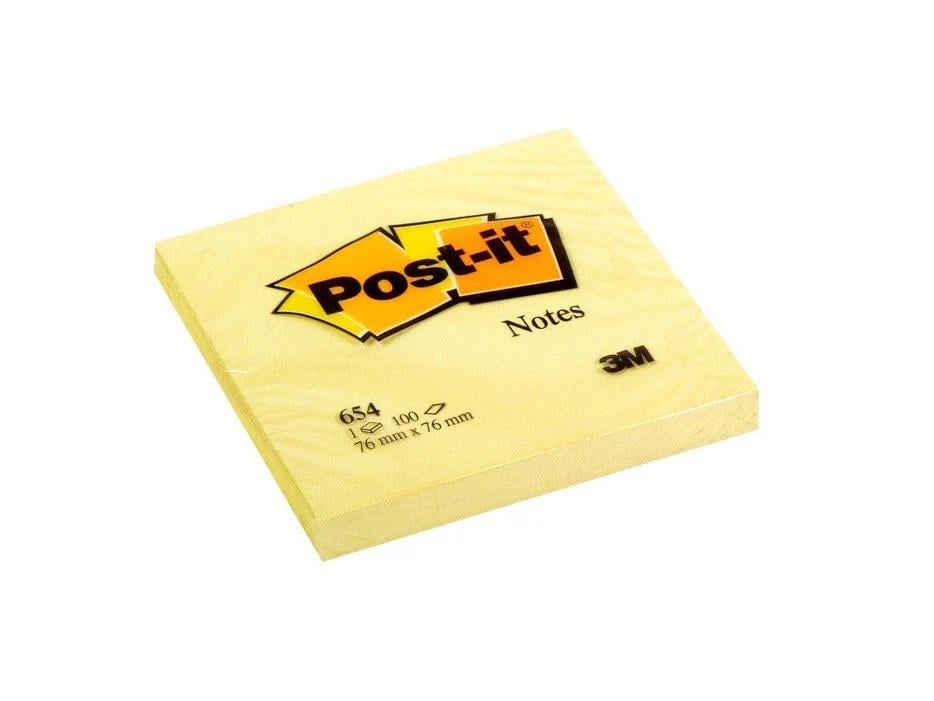
Post-it Notes exist because a 3M scientist accidentally created a weak, reusable adhesive in 1968 while trying to develop a super-strong adhesive for aerospace applications.
Title: The Accidental Innovation: How Post-it Notes Were Born from a Failed Experiment
Introduction
Imagine a world without Post-it Notes—no brightly colored squares adorning desks, laptops, or refrigerators with reminders, ideas, or grocery lists. Surprisingly, this ubiquitous office staple didn’t start as a planned invention. Instead, it emerged from a “happy accident” at 3M, proving that innovation often thrives in unexpected places.
The Accidental Discovery: A Weak Adhesive with Big Potential
In 1968, Dr. Spencer Silver, a chemist at 3M, was tasked with developing a super-strong adhesive for aerospace applications. But science had other plans. Instead of a powerful glue, Silver stumbled upon a low-tack, reusable adhesive that could stick to surfaces without leaving residue. While his initial project was deemed a failure, Silver recognized the adhesive’s unique properties. It was weak but reusable—something unheard of at the time.
For years, Silver tried to champion his invention, nicknamed “solution without a problem,” but struggled to find a practical use. Colleagues dismissed it as a novelty, and the project nearly faded into obscurity… until another 3M scientist had a eureka moment.
From Bookmark to Business Breakthrough: Art Fry’s Vision
Enter Art Fry, a 3M product developer and choir enthusiast. In 1974, Fry grew frustrated with paper bookmarks that kept slipping out of his hymnal during rehearsals. Remembering Silver’s adhesive, Fry realized it could create the perfect temporary bookmark: sticky enough to stay put but gentle enough to remove without tearing pages.
Fry coated small paper strips with the adhesive, and the first prototype of Post-it Notes was born. The concept evolved quickly—from a personal solution to a workplace revolution. But convincing 3M to invest in the product wasn’t easy. Early tests failed to generate interest until the company tried a game-changing marketing strategy…
The “Boise Blitz” and the Rise of a Cultural Icon
In 1977, 3M launched a massive trial campaign dubbed the “Boise Blitz”, flooding offices in Boise, Idaho, with free samples. Employees quickly fell in love with the notes’ simplicity and versatility, using them to label documents, share messages, and brainstorm ideas.
By 1980, Post-it Notes were officially launched nationwide, and their popularity exploded. Today, they’re sold in 150+ countries, with thousands of shapes, sizes, and colors—even digital versions.
Key Features That Made Post-it Notes a Game-Changer
- Reusability: Sticks securely but removes cleanly, ideal for temporary tasks.
- Versatility: Used for reminders, collaboration, art, education, and more.
- Customization: Endless formats, from tiny flags to giant easel pads.
- Psychological Impact: Bright colors and tactile use boost creativity and memory.
Why Post-it Notes Are a Masterclass in Innovation
The story of Post-it Notes isn’t just about luck—it’s about persistence and vision. Spencer Silver saw potential in a “failed” experiment, and Art Fry found a real-world application where others saw none. Their collaboration highlights three timeless lessons:
- Embrace “Failure”: Serendipity often hides in unexpected results.
- Solve Everyday Problems: Great ideas arise from personal pain points.
- Test and Adapt: 3M’s sampling strategy proved that seeing (and using) is believing.
Post-it Notes Today: A Legacy of Creativity
From classrooms to Fortune 500 companies, Post-it Notes remain symbols of innovation and collaboration. They’ve inspired art installations, voting campaigns, and even scientific research on creativity. As 3M celebrates billions sold, the humble sticky note stands as a testament to the power of accidental genius.
Conclusion
Next time you peel off a Post-it Note, remember: it exists because a scientist dared to ask, “What if?” when faced with a “failed” glue. In every fluttering square lies proof that groundbreaking ideas don’t always follow a straight path—and that the best solutions often stick around (temporarily!).
Meta Description: Discover how Post-it Notes were invented by accident! Learn how a 3M scientist’s “failed” adhesive in 1968 sparked a global phenomenon of sticky notes.
Keywords: Post-it Notes history, accidental invention, 3M scientist, Spencer Silver, Art Fry, reusable adhesive, innovation stories, office supplies, 3M inventions.
Optimize this article with internal/external links (e.g., to 3M’s innovation hub) and multimedia (vintage Post-it ads, Spencer Silver interviews) for SEO. Share it to inspire creators, entrepreneurs, and science enthusiasts!