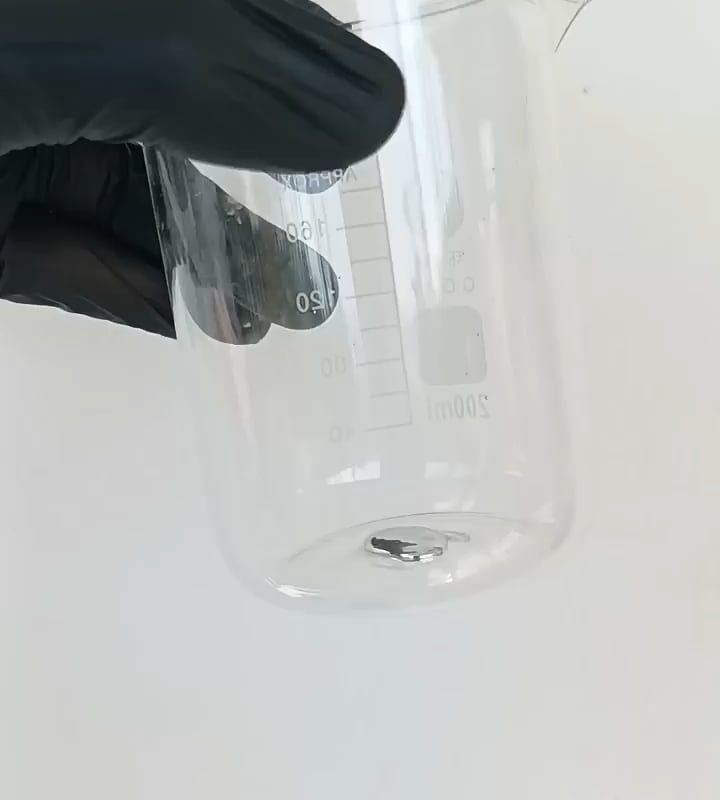
Reaction between elemental aluminium and mercury gives off a very eye catching reaction that you can never get used to it. It’s called the amalgamation.
Title: Aluminum and Mercury: The Bizarre Amalgamation Reaction Explained
Meta Description: Discover the eerie reaction between aluminum and mercury known as “amalgamation.” Learn why this mesmerizing chemical process creates alien-like aluminum oxide growths and why it demands caution.
Aluminum + Mercury: A Reaction Like No Other
Few chemical reactions are as visually captivating—and unsettling—as the amalgamation of aluminum and mercury. When these two elements meet, they trigger a cascade of transformations that defy expectations. Delicate, ghostly filaments of aluminum oxide erupt from the metal’s surface, resembling frost or crystalline ice. It’s a reaction so strange that even seasoned chemists find it hard to look away. Let’s dive into the science behind this phenomenon and why it leaves observers in awe.
What Happens When Aluminum Meets Mercury?
The reaction begins with mercury (Hg) disrupting aluminum’s protective oxide layer. Aluminum normally resists corrosion thanks to a thin coating of aluminum oxide (Al₂O₃), which shields the metal beneath. But mercury—a liquid metal—seeps through microscopic flaws in this barrier, forming an amalgam (an alloy of mercury and aluminum). This process kickstarts three startling stages:
- Amalgam Formation: Mercury dissolves into the aluminum surface, weakening its structure.
- Rapid Oxidation: Exposed aluminum reacts violently with oxygen and moisture, releasing heat.
- “Aluminum Hairs” Eruption: As aluminum oxidizes, eerie, fibrous strands of aluminum oxide hydroxide ([AlO(OH)] or [Al(OH)₃]) shoot outward, growing like biological tendrils.
The result? A once-smooth aluminum surface transforms into a fuzzy, crystalline mass within minutes.
Why Does This Reaction Look So Alien?
The amalgamation reaction captivates because it defies typical metal corrosion. Instead of rusting slowly, aluminum undergoes accelerated, chaotic oxidation:
- Self-Propagating Destruction: The amalgam spreads across the aluminum, leaving no safe zones.
- Thermal Reaction: Heat from oxidation speeds up the reaction, creating a feedback loop.
- Unique Growth Patterns: Filaments emerge in random directions due to uneven surface stresses, gravity, and humidity.
These factors create a spectacle reminiscent of sci-fi horror—living proof that chemistry can be both beautiful and unsettling.
Safety & Risks: Why You SHOULD NOT Try This
While fascinating, this experiment is extremely dangerous. Mercury vapor is highly toxic, and aluminum amalgam residue remains hazardous. Key risks include:
- Neurotoxicity: Even small mercury exposures can damage the nervous system.
- Environmental Harm: Mercury persists in ecosystems, contaminating water and soil.
- Fire Risk: Rapid oxidation near flammable materials could spark a fire.
Never attempt this reaction without professional training, fume hoods, and proper disposal methods.
Real-World Implications: When Amalgamation Goes Wrong
Historically, mercury’s reactivity with aluminum caused disasters:
- Airplane Corrosion: Older aircraft with aluminum parts faced risks if mercury thermometers broke onboard.
- Banned Mercury Products: Mercury-based paints and electronics were phased out partly due to this reaction.
- Lab Accidents: Spilled mercury in labs can destroy aluminum tools or structures.
Today, strict regulations govern mercury handling, but awareness remains critical.
Conclusion: A Cautionary Spectacle
The reaction between aluminum and mercury is a hypnotic reminder of chemistry’s power—and its dangers. While the eerie growths of aluminum oxide fascinate, they also symbolize mercury’s destructive potential. For scientists, this reaction underscores the importance of safety protocols and responsible chemical disposal. For observers, it’s a glimpse into a strange, hidden world where metals behave in ways that blur the line between chemistry and art.
Remember: This reaction is best admired through controlled demonstrations, like those in educational videos by professionals—never replicated casually.
Keywords for SEO:
aluminum mercury reaction, amalgamation chemistry, aluminum oxide growth, toxic chemical reactions, mercury hazards, aluminum corrosion, science demonstrations, lab safety, chemical experiments, exotic reactions