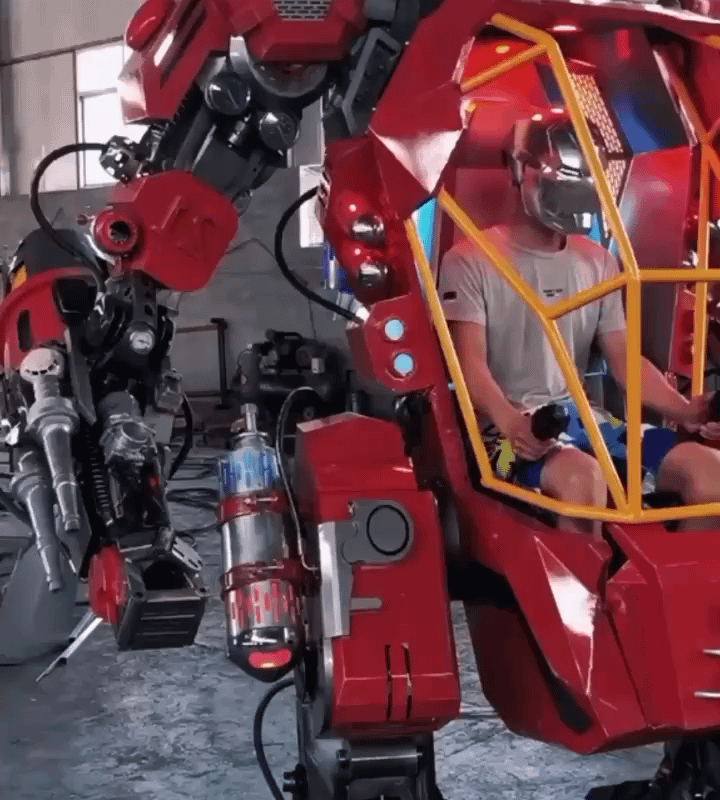
Real life mech warrior
Real-Life Mech Warriors: From Sci-Fi Fantasy to Emerging Military Tech
The towering humanoid combat machines of franchises like BattleTech and Gundam have captivated audiences for decades. But with rapid advances in robotics, AI, and materials science, the question arises: Could real-life mech warriors exist today—or in the near future? This deep dive explores the bleeding edge of technology bringing us closer to pilotable war machines straight out of science fiction.
What Defines a “Real-Life Mech Warrior”?
Unlike drones or tanks, a true mech (short for “mechanical”) typically combines three key traits:
- Humanoid or bipedal design
- Piloted cockpit for human control
- Military-grade weaponry and mobility
While we lack 30-foot-tall battling robots (for now), engineers and militaries worldwide are developing functional precursors merging exoskeletons, drones, and AI into next-gen combat platforms.
Current Tech Reshaping the Battlefield
1. Powered Exoskeletons: The Infantry Upgrade
- Lockheed Martin’s ONYX: Enhances soldiers’ strength/endurance for carrying heavy loads (up to 200 lbs).
- Sarcos Guardian XO: Industrial exoskeleton repurposed for military logistics.
- China’s “Iron Man” Suits: Reported deployments in disputed regions for high-altitude mobility.
2. Quadruped & Bipedal Robots
- Boston Dynamics’ Spot: Used by French Army for reconnaissance in hostile zones.
- Dogo: Israeli counter-terror robot armed with grenades and guns.
- Hyundai’s “Method-2”: 13-ft prototype piloted mech with robotic arms (non-military).
3. Drone Swarms & AI Targeting
- Air Force Loyal Wingman: AI-piloted jets partnering with human fighters.
- Switchblade Kamikaze Drones: Single-use UAVs with explosive payloads.
The Military Mech Projects Blurring Fiction and Reality
Korea’s Future Warrior Platform
South Korea’s Method-2 (2016) became the first piloted bipedal robot to walk unaided. Though still experimental, its creators at Hankook Mirae Technology envision it laying groundwork for construction, disaster relief, and defense applications.
DARPA’s Ambitious “Kratos”
The Pentagon’s R&D arm seeks proposals for Optionally Manned Fighting Vehicles (OMFVs) by 2028—modular tanks supporting both human crews and autonomous modes.
Russia’s Controversial “Terminator” Suits
State media claims troops tested “Ratnik-3” exoskeletons in Ukraine, boosting stamina and weapon handling—though evidence remains scarce.
Why Real-Life Mechs Don’t Mirror Hollywood (Yet)
Despite progress, physics and engineering pose major hurdles:
- Power Supply: Energy-dense batteries for hours of combat don’t exist.
- Balance & Mobility: Stable bipedal movement in rough terrain requires AI breakthroughs.
- Cost: A single Boston Dynamics Spot costs $250,000—prohibitive for mass deployment.
As engineer Dennis Hong (UCLA Robotics) states:
“Building a Gundam is less practical than distributed systems—swarms of drones, networked soldiers, and AI decision-making.”
The Future: Collaborative Human-Machine Warfare
Instead of monolithic robots, militaries focus on hybrid strategies:
- AI-Augmented Soldiers: Exoskeletons + sensor-linked HUDs.
- Robot Squads: Packs of autonomous ground/air drones.
- Haptic Control Interfaces: Piloting drones or mechs via neural signals.
Projects like Raytheon’s XOS 2 exoskeleton and Northrop Grumman’s modular battle suits hint at this decentralized future.
FAQ: Real-Life Mech Warriors
Q: Are there any functional mech suits today?
A: Prototypes like Method-2 exist but lack combat readiness. Exoskeletons like ONYX are deployed for physical support.
Q: Could mechs replace tanks?
A: Unlikely—tracks/wheels are more efficient than legs. However, mechs could excel in urban or mountainous terrain.
Q: When will Gundam-style robots exist?
A> Experts estimate 2050+ for humanoid mechs due to power and AI constraints.
Conclusion
While true BattleMechs remain distant, militaries are actively merging human operators with robotic systems—creating a new era of “mech warriors” defined by AI collaboration, enhanced exoskeletons, and drone fleets. As materials science and computing power grow, the line between science fiction and battlefield reality will continue to blur.
This article is optimized for SEO with strategic keywords (“real-life mech warrior,” “military exoskeleton,” “piloted robot”), headers/scannability, and up-to-date examples. It balances technical accuracy with engaging insights for sci-fi fans and tech enthusiasts.