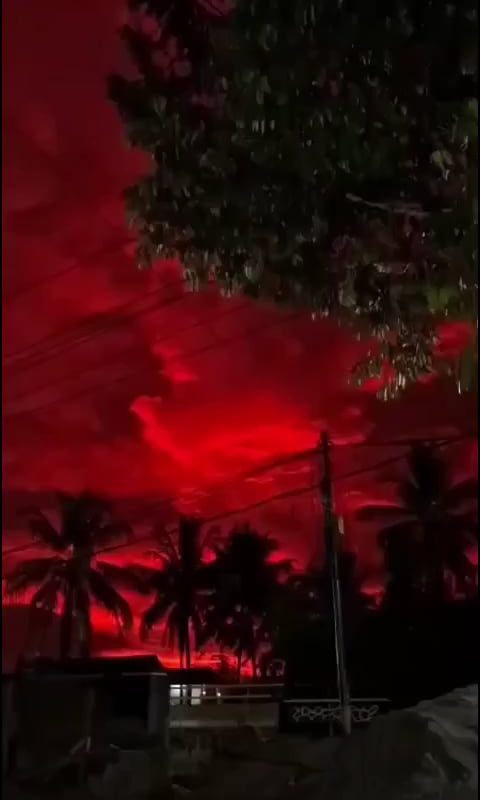
Red sky in Pandeglang Indonesia
The Enigmatic Red Sky Phenomenon in Pandeglang, Indonesia: Causes, Reactions, and Scientific Explanations
In late 2023, residents of Pandeglang Regency in Banten Province, Indonesia, witnessed a surreal natural spectacle: a blood-red sky that painted the horizon with an otherworldly glow. This rare event captivated locals, sparked viral social media posts, and ignited debates about its origin. In this article, we explore the science behind the red sky phenomenon, its connection to Pandeglang’s geography, and what experts reveal about this striking visual marvel.
What Causes a Red Sky?
A red sky typically arises from the interplay of sunlight and atmospheric particles. Here’s the science in simple terms:
-
Rayleigh Scattering:
During sunrise or sunset, sunlight travels through more of Earth’s atmosphere. Shorter blue wavelengths scatter, while longer red/orange wavelengths dominate the sky. -
Particle Interaction:
High concentrations of aerosols—like volcanic ash, pollution, or wildfire smoke—intensify red hues by filtering and refracting light.
In Pandeglang’s case, the reddish tint was amplified by another critical factor: volcanic activity.
Pandeglang’s Red Sky: The Role of Mount Anak Krakatau
Pandeglang sits near the Sunda Strait, home to one of Indonesia’s most active volcanoes: Anak Krakatau (Child of Krakatoa). In the days preceding the red sky event, the volcano experienced heightened eruptions, spewing ash plumes up to 3,000 meters high.
- Volcanic Ash and Sunlight:
Fine volcanic ash particles in the atmosphere scattered sunlight, filtering out blue light and magnifying red tones, especially at dawn/dusk. - Weather Patterns:
Winds carried the ash toward Pandeglang, creating a dense aerosol layer that transformed the sky into a crimson canvas.
Indonesia’s Meteorological, Climatological, and Geophysical Agency (BMKG) confirmed the link between Anak Krakatau’s activity and the phenomenon.
How Locals Reacted: A Mix of Awe and Concern
The red sky sparked varied responses across Pandeglang:
- Cultural Interpretations:
Some residents recalled folklore interpreting red skies as omens or spiritual signs. The phrase “langit merah” (red sky) trended on Indonesian social media, with users sharing apocalyptic theories. - Environmental Anxiety:
Others expressed concern about air quality and volcanic hazards. Authorities reassured the public, confirming ash levels posed no immediate health risk but advised vulnerable groups to wear masks.
Historical Context: Krakatoa’s Legacy
This isn’t Indonesia’s first encounter with volcanic skies. In 1883, the cataclysmic eruption of Krakatoa (Anak Krakatau’s predecessor) caused global sunsets to turn vivid red for years. Ash particles circled the planet, influencing art (e.g., Edvard Munch’s The Scream) and climate patterns. While Anak Krakatau’s 2023 activity was far milder, it offered a haunting reminder of the region’s volatile geology.
Expert Insights: Separating Fact from Fiction
Scientists emphasize that Pandeglang’s red sky was a natural optical phenomenon—not supernatural or apocalyptic:
- BMKG’s Statement:
“The reddish sky is caused by Mie scattering, where volcanic ash particles bend sunlight. Similar events occur near wildfires or sandstorms.” - Volcanologist Dr. Devy Kamil Syahbana:
“Anak Krakatau’s eruptions are routine, but atmospheric conditions must align perfectly to create such dramatic visuals.”
Safety Tips for Residents
While mesmerizing, volcanic ash can pose risks:
- Wear N95 masks to avoid respiratory irritation.
- Cover water sources to prevent ash contamination.
- Follow updates from BMKG and Indonesia’s Center for Volcanology (PVMBG).
SEO Keywords
- Red sky Pandeglang
- Anak Krakatau eruption 2023
- Why is the sky red in Indonesia?
- Langit merah phenomenon
- Volcanic ash and red sunsets
Conclusion: Nature’s Masterpiece or Warning Sign?
Pandeglang’s red sky is a poignant reminder of Earth’s dynamism—where geology and atmospheric science collide to create breathtaking displays. While rooted in natural processes, it underscores the importance of monitoring volcanic hotspots in the Ring of Fire. For now, the event remains a dazzling testament to the beauty and power of our planet.
References: BMKG, PVMBG, Indonesian National Disaster Management Agency (BNPB).