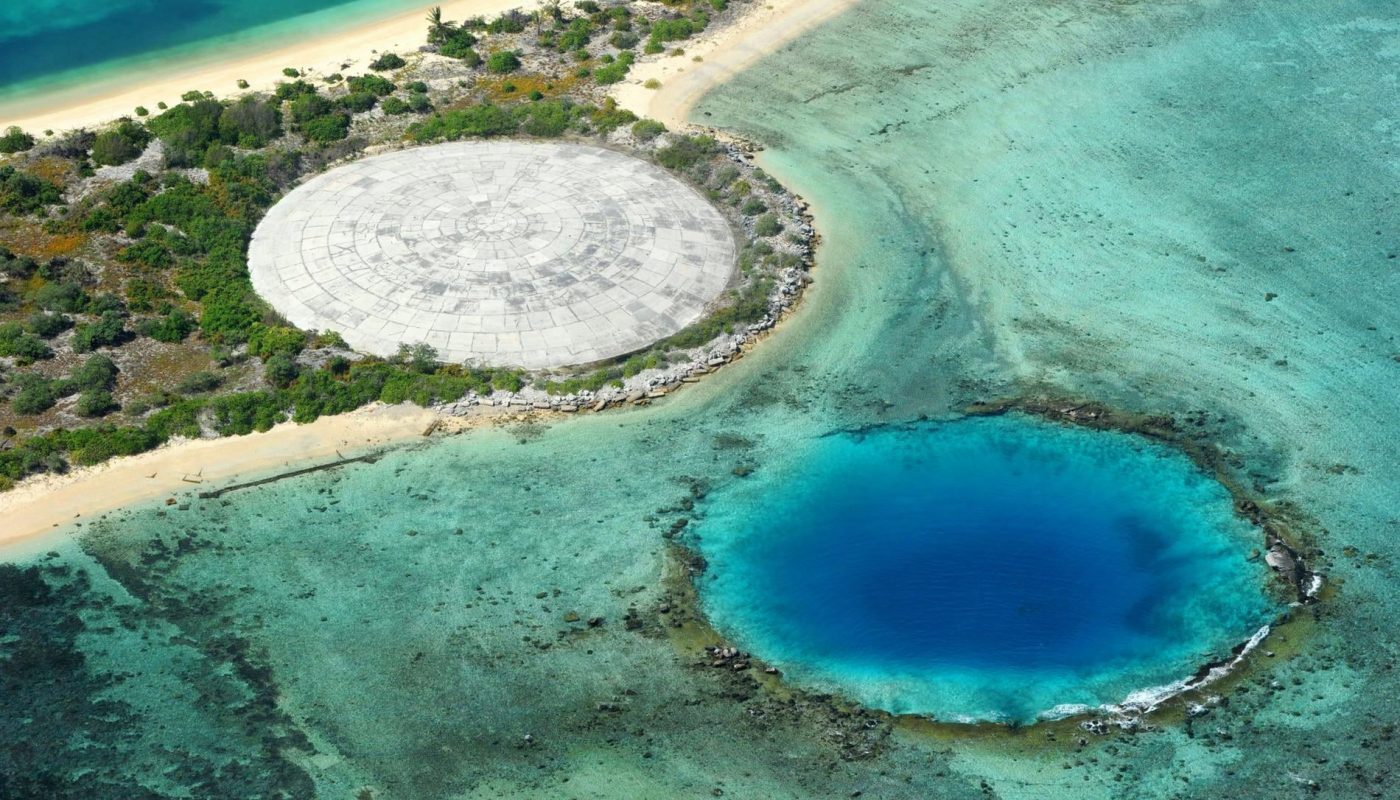
Runit Island. The 115m wide concrete dome is used to seal contaminated waste from nuclear bomb testing in the Marshall Islands in the 1950s. The hole next to it is from a nuke test.
Title: Runit Dome: The “Tomb” Holding Nuclear Ghosts of the Marshall Islands
Meta Description: Explore the haunting legacy of Runit Island’s crumbling concrete dome—the radioactive tomb sealing toxic nuclear waste from Cold War bomb tests. Learn about its risks, history, and uncertain future.
Introduction: A Toxic Time Capsule in Paradise
Nestled within the azure waters of the Pacific’s Enewetak Atoll in the Marshall Islands, Runit Island harbors a chilling secret: a massive, cracked concrete dome filled with radioactive debris from 43 nuclear bomb tests conducted by the U.S. in the 1950s. Known locally as “The Tomb,” this 115-meter-wide structure seals 3.1 million cubic feet of contaminated waste—a crumbling symbol of the Cold War’s environmental devastation.
The Nuclear Legacy of the Marshall Islands
Between 1946 and 1958, the U.S. detonated 67 nuclear devices in the Marshall Islands, including the infamous “Castle Bravo” test (1954), the largest U.S. bomb ever detonated. The explosions vaporized islands, poisoned ecosystems, and displaced Indigenous communities. By the 1970s, Enewetak Atoll was declared uninhabitable.
Operation “Cactus” (1958): The blast responsible for Runit’s gaping crater—visible beside the dome today—left a 100-foot-deep scar. This test, along with others, scattered plutonium-239, americium, and other radioactive isotopes across the atoll.
Building “The Tomb”: A Hasty Fix
In 1979, the U.S. launched a $239 million cleanup effort (Project PACIFIC IVY) to entomb the most lethal waste.
- How It Was Built: Over 3 years, 4,000 U.S. soldiers mixed concrete with radioactive soil, debris, and weapon fragments (including plutonium-laden dust from 43 tests).
- What’s Inside: 73,000 cubic meters of contaminated material packed beneath the dome’s 18-inch-thick concrete cap.
- The Promise vs. Reality: The U.S. claimed the dome was a temporary fix, yet it remains the sole barrier against leakage.
Ticking Time Bomb? Current Threats
Decades of neglect and climate change now threaten the dome’s stability:
- Cracking & Erosion: Saltwater corrodes the concrete, widening cracks. Radioactive water already pools inside.
- Sea-Level Rise: As oceans encroach, storms could scatter waste into the Pacific. A 2013 U.S. report admitted seawater infiltration but denied responsibility for future cleanup.
- Health Risks: Marshallese communities report cancers and birth defects linked to residual radiation.
A Local’s Warning:
“The ocean tide is coming in closer every year. If it breaks, our fish, our ocean—everything we depend on—will be poisoned.“
– Marshall Islands activist Alson Kelen
Who Bears Responsibility?
- U.S. Stance: A 1986 agreement granted the Marshall Islands independence and $150 million in compensation but absolved the U.S. of future liability. The dome was declared “safe” despite studies showing leakage.
- Marshallese Pleas: Leaders demand urgent repairs, calling the dome “a monument to U.S. betrayal.” In 2019, a UN report condemned it as “a cruel and ironic legacy.”
Runit Dome Today: Forgotten but Not Gone
The dome remains unmonitored, surrounded by a restricted “exclusion zone.” Tourists and journalists who visit describe eerie silence—a stark contrast to the vibrant reefs just beyond the poisoned sands. Meanwhile, rising seas and political inertia push the site toward catastrophe.
Conclusion: A Global Wake-Up Call
Runit Dome is more than a relic; it’s a warning of nuclear colonialism and environmental injustice. As climate change accelerates, the world must confront this toxic inheritance—before the Pacific becomes a radioactive highway.
Keywords for SEO:
Runit Island dome, Marshall Islands nuclear testing, Enewetak Atoll, concrete dome radioactive waste, nuclear bomb crater, U.S. nuclear legacy, climate change nuclear risk.
Image Suggestion: Feature a side-by-side aerial photo of Runit Dome and its adjacent test crater to highlight scale and irony.