Runway painting and without the lights
Meta Title: Runway Painting & Operations Without Lights: Ensuring Aviation Safety
Meta Description: Explore how runway painting and procedures during unlit conditions maintain safety. Learn about markings, pilot protocols, and regulatory standards.
Runway Painting & Operations Without Lights: The Critical Role of Visual Aids in Aviation Safety
Runways are the backbone of aviation infrastructure, where precision and safety are paramount. While runway lights are essential for nighttime and low-visibility operations, painted markings play an equally critical role—especially when lighting systems are inoperative or unavailable. This article explores the science of runway painting and how pilots and airports manage operations without lights to ensure safety.
1. The Science of Runway Painting: More Than Just Paint
Runway markings are standardized globally under guidelines from the International Civil Aviation Organization (ICAO) and the Federal Aviation Administration (FAA). These paints aren’t ordinary—they’re engineered for durability, reflectivity, and weather resistance.
Key Runway Markings and Their Functions:
- Centerline: A dashed white line guiding pilots during takeoff and landing.
- Threshold Bars: White stripes marking the runway’s beginning.
- Touchdown Zone: Rectangular blocks indicating the ideal landing area.
- Hold Lines: Yellow lines designating where aircraft must stop to avoid runway incursions.
- Displaced Threshold Arrows: Show areas not intended for landing.
Material Innovations:
Modern runway paints incorporate glass beads or reflective compounds to enhance visibility in low light. In emergencies or unlit scenarios, these materials can shine under moonlight or aircraft spotlights.
2. When Lights Go Out: Operating Without Runway Lighting
While most airports rely on lighting systems, emergencies (e.g., power outages) or remote airstrips may force pilots to operate without them. Here’s how aviation professionals mitigate risks:
Daytime Operations:
- Markings Are Paramount: Painted lines and symbols become the primary navigational aid. Pilots use them to align the aircraft and gauge distance.
- Contrast Matters: Airports ensure markings stand out against pavement—white for runways, yellow for taxiways.
Nighttime or Low-Light Scenarios:
- Emergency Protocols: Air Traffic Control (ATC) may deploy portable lighting (e.g., LED flares) or guide pilots via radio.
- Pilot Training: Pilots practice “non-precision” approaches using instruments like altimeters and GPS, alongside visual cues from paint.
- Moonlight and Ambient Light: Reflective paint can make markings visible under natural light if weather permits.
3. Regulatory Standards and Best Practices
ICAO and FAA mandate specific contrast ratios, reflectivity levels, and maintenance schedules for runway paint. For example:
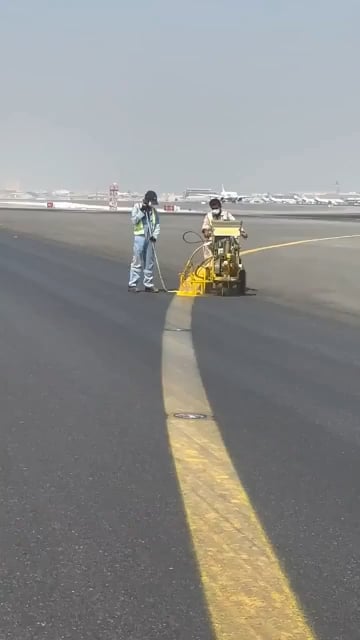
- Repainting Frequency: Runways are repainted every 6–24 months, depending on traffic and wear.
- Emergency Readiness: Airports must have contingency plans for lighting failures, including NOTAMs (Notices to Airmen) to alert pilots.
4. Challenges and Innovations
Weather Impacts: Rain, snow, or debris can obscure markings. Solution: Grooved runways channel water, maintaining paint visibility.
Tech Advancements:
- Photoluminescent Paint: Absorbs light during the day and glows at night (still experimental).
- Augmented Reality (AR): Emerging heads-up displays (HUDs) could overlay runway data for pilots in darkness.
5. Case Study: Real-World Importance of Runway Paint
In 2017, a Caribbean airport lost lighting during a hurricane. Pilots relied on high-visibility paint and ATC guidance to land safely, underscoring the life-saving role of well-maintained markings.
Conclusion: Synergy Between Paint and Technology
Runway painting and lighting form an interdependent safety net. While lights dominate nighttime ops, painted markings are the unsung heroes during emergencies or daylight. As aviation evolves, innovations in materials and procedures will continue to bridge gaps—ensuring safety even when the lights go out.
SEO Tags:
Runway Painting, Airport Markings, Runway Safety, Aviation Standards, Non-Illuminated Runways, Emergency Landing Procedures, ICAO, FAA, Reflective Paint, Pilot Training