Saddam Hussein’s elite bodyguards wore helmets modeled after Darth Vader
Title: The Bizarre Truth: Saddam Hussein’s Elite Bodyguards Wore Darth Vader Helmets
Meta Description: Discover the surreal story of how Saddam Hussein’s Fedayeen bodyguards donned helmets modeled after Star Wars’ Darth Vader—a chilling blend of propaganda and sci-fi intimidation.
Introduction
In the annals of authoritarian excess, few details are as jarringly surreal as this: Saddam Hussein’s elite personal guards were once outfitted with black helmets directly inspired by Darth Vader, the iconic Star Wars villain. This strange fusion of sci-fi aesthetics and real-world tyranny underscores the Iraqi dictator’s obsession with projecting invincibility and fear—and it raises questions about the psychology of power, propaganda, and the lengths autocrats go to craft an image of dominance.
This article delves into the history, design, and intent behind the Fedayeen Saddam’s infamous helmets, exploring how Saddam weaponized pop culture to entrench his cult of personality.
The Fedayeen Saddam: Saddam’s “Men of Sacrifice”
To understand the helmets, we must first examine the unit that wore them. The Fedayeen Saddam (translated as “Saddam’s Men of Sacrifice”) were a paramilitary force established in 1995. They served as:
- Personal bodyguards for Saddam and his inner circle.
- Enforcers tasked with crushing internal dissent and rebellions.
- Propaganda symbols loyal to Saddam above all else.
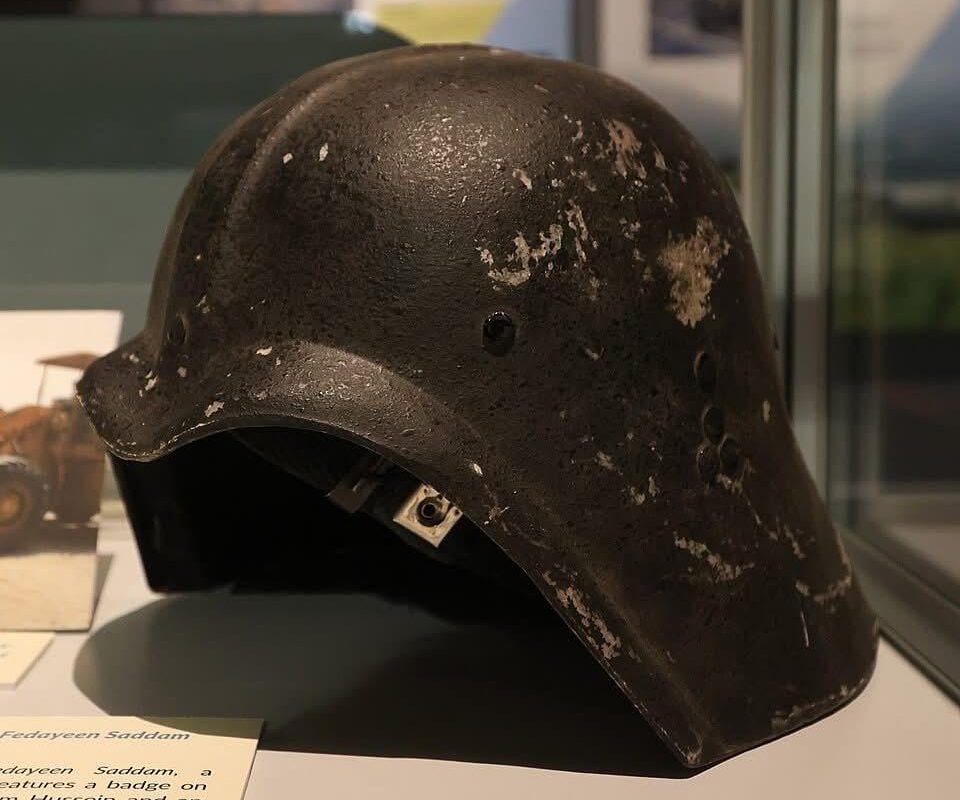
Clad in all-black uniforms, the Fedayeen were notorious for brutality. Yet their most visually striking trait was their headgear: sleek, angular black helmets resembling the headpiece of Star Wars’ fearsome Darth Vader.
Why Darth Vader? Design and Symbolism
While Saddam’s regime never officially confirmed the inspiration, the resemblance is uncanny. Here’s why the dictator may have chosen this design:
1. Psychological Warfare
Darth Vader is a global symbol of imposing, inhuman power. Saddam likely aimed to leverage this imagery to intimidate foes and civilians alike. The helmets—combined with pitch-black outfits—created a dehumanizing effect, distancing the wearers from their humanity and amplifying their role as faceless enforcers.
2. The Cult of Personality
Saddam’s regime thrived on mythmaking. From propaganda murals to grandiose statues, he styled himself as an Arab warrior-hero. The Vader helmets fed into this narrative, associating his guards with futuristic, otherworldly strength and suggesting Saddam commanded forces beyond ordinary comprehension.
3. Cold War-Era Militarism
Iraqi military aesthetics often borrowed from global trends. Saddam’s son Uday—a noted Star Wars fan—reportedly influenced the regime’s affinity for Western pop culture. Meanwhile, the helmets mirrored authoritarian regimes’ broader use of intimidating gear (e.g., North Korea’s militarized parades).
The Helmets’ Role in Propaganda
Saddam understood the power of visuals. Documentaries and state media frequently showcased the Fedayeen marching in formation, their Vader-like helmets gleaming—a spectacle meant to broadcast:
- Loyalty: Unquestioning obedience to Saddam’s rule.
- Technological Prowess: Implicating Iraq’s military sophistication (ironic, given widespread UN sanctions).
- Omnipresence: Signaling the Fedayeen were everywhere, watching everyone.
The helmets became shorthand for Saddam’s grip on Iraq, embodying his regime’s blend of brutality and theatricality.
Aftermath: The Fall of the Fedayeen
The Fedayeen Saddam dissolved shortly after the U.S.-led invasion of Iraq in 2003. Many members died resisting coalition forces, while others fled or joined insurgent groups. The helmets, once gleaming symbols of Saddam’s invincibility, were stripped from captured warehouses and morphed into macabre Cold War curiosities.
Today, they appear in museums (e.g., the Imperial War Museum in London) and private collections—artifacts of a regime that collapsed under the weight of its own myths.
A Legacy of Absurdity and Tyranny
The Fedayeen’s Vader helmets are more than just a historical footnote; they’re a case study in authoritarian theatre. Saddam’s regime spent years cultivating an aura of inevitability—only for its symbols to become relics of hubris.
Much like Darth Vader himself, Saddam Hussein wielded fear as a weapon. Yet the dictator’s downfall proved that even the most imposing facades can shatter.
Frequently Asked Questions (FAQs)
Q: Did Saddam Hussein personally choose the Darth Vader helmet design?
A: While no official records confirm Saddam’s direct involvement, his son Uday—a pop culture enthusiast—reportedly influenced the regime’s aesthetics. The design aligns with Saddam’s broader propaganda goals.
Q: Where can I see these helmets today?
A: Some are displayed in museums like London’s Imperial War Museum. Others circulate among military collectors.
Q: Were the helmets bulletproof or functional?
A: As propaganda pieces, they prioritized appearance over utility. Standard military helmets typically offer better protection.
Q: Did George Lucas or Star Wars’ creators comment on this?
A: No public statements exist, though the resemblance sparked global media fascination post-2003.
Conclusion: When Fiction Meets Dictatorship
Saddam Hussein’s Fedayeen helmets remain a darkly comedic example of how dictators co-opt pop culture to feed delusions of grandeur. In the end, the regime’s Darth Vader cosplay failed to save it—proving that no amount of sci-fi villainy can shield tyranny from reality.
For historians and Star Wars fans alike, the story is a reminder: truth can be stranger—and more absurd—than fiction.
Keywords (SEO-Optimized):
- Saddam Hussein Darth Vader helmets
- Fedayeen Saddam bodyguards
- Saddam Hussein elite guards
- Iraqi dictatorship propaganda
- Darth Vader helmet military
- Saddam Hussein cult of personality
- Fedayeen Saddam paramilitary
- Saddam Hussein regime symbols