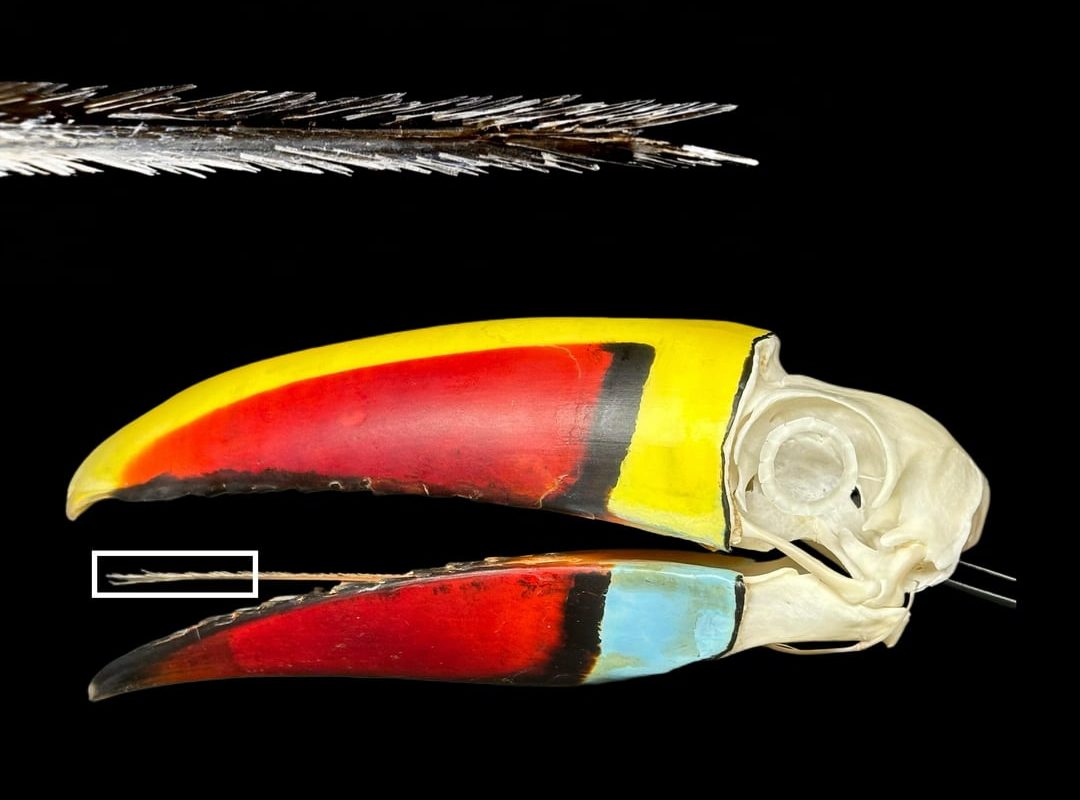
Serrated and keratinized tongue of White-throated toucan(Ramphastos tucanus)
Unlocking the Secrets of the White-Throated Toucan’s Serrated, Keratinized Tongue: A Marvel of Avian Adaptation
The White-throated toucan (Ramphastos tucanus), with its iconic rainbow-hued beak and boisterous calls, is a poster child for tropical biodiversity. But beyond its flashy appearance lies an anatomical masterpiece rarely given the spotlight: its serrated, keratinized tongue. This unique organ is more than just a fleshy flap—it’s a precision-engineered tool for survival in the rainforest. In this deep dive, we explore the structure, function, and ecological importance of this remarkable adaptation.
Anatomy of a Specialist: Structure of the Toucan’s Tongue
The White-throated toucan’s tongue is a study in evolutionary ingenuity. Measuring up to 6 inches long, it extends nearly the full length of its oversized beak. Here’s what sets it apart:
-
Keratinized Surface:
Like human fingernails and toucan beaks, the tongue is coated in keratin—a tough, fibrous protein. This armor-like layer protects the tongue from abrasion while handling rough-skinned fruits, sharp seeds, or even prey like insects and small lizards. -
Serrated Edges:
The tongue’s margins resemble tiny, backward-facing ridges or “teeth.” These serrations act like Velcro, gripping slippery food items. Combined with the beak’s dexterity, they enable toucans to peel fruit, crush berries, and manipulate prey with surgical precision. -
Whiplike Flexibility:
Despite its rigidity, the tongue is highly maneuverable. Muscles at its base allow it to coil, flick, and pivot, turning the beak into a multifunctional “third hand.”
Functional Brilliance: What Does the Tongue Do?
This tongue isn’t just for show—it’s central to the toucan’s diet and survival:
-
Fruit Handling
Toucans are frugivores (fruit-eaters), and their serrated tongues excel at snagging and maneuvering berries. The keratinized surface prevents damage from acidic or toxic compounds in certain fruits, like figs or palm nuts. -
Prey Capture
While fruit dominates their menu, toucans opportunistically eat insects, eggs, or nestlings. The tongue’s serrations help pin prey against the beak’s edges, preventing escape during swallowing. -
Nest Defense & Thermoregulation
Researchers suggest the tongue’s keratinization may deter bites from ants or other insects raiding nests. Additionally, like other toucans, Ramphastos tucanus may use its tongue to dissipate heat—vital in steamy rainforest habitats.
Ecological Impact: Seed Dispersal Superheroes
The efficiency of the toucan’s tongue has ripple effects across ecosystems. By swiftly consuming and excreting seeds intact, these birds act as critical seed dispersers. Their feeding habits promote forest regeneration, making them “gardeners of the canopy.”
Why Keratin and Serrations? Evolutionary Insights
Toucans split from other birds over 24 million years ago, refining their anatomy for a niche diet. The serrated, keratinized tongue likely evolved to:
- Minimize energy expenditure (efficient food processing).
- Maximize resource access (exploiting hard-to-reach fruits).
- Reduce feeding competition (handling foods other birds can’t).
FAQs About the White-Throated Toucan’s Tongue
-
Is the tongue visible when closed?
No—it rests inside the beak but extends fully when feeding. -
Do other birds have similar tongues?
Woodpeckers have barbed tongues for extracting insects, but toucans’ serrated design is unique for fruit handling. -
Can toucans taste their food?
Yes! Taste buds are present, but research on their sensitivity is ongoing.
Conclusion: A Testament to Nature’s Innovation
The White-throated toucan’s tongue—serrated, resilient, and impeccably designed—is a powerhouse of adaptation. It underscores how even the smallest anatomical traits can drive ecological success. For birdwatchers and biologists alike, this organ offers a compelling glimpse into the elegance of evolutionary problem-solving.
Keywords: White-throated toucan tongue, Ramphastos tucanus anatomy, serrated bird tongue, keratinized adaptation, toucan feeding behavior, avian frugivore adaptations, tropical bird seed dispersal.
Meta Description: Discover how the White-throated toucan’s serrated, keratinized tongue powers its fruit-heavy diet and seed-dispersing role—a marvel of avian evolution in the rainforest canopy.