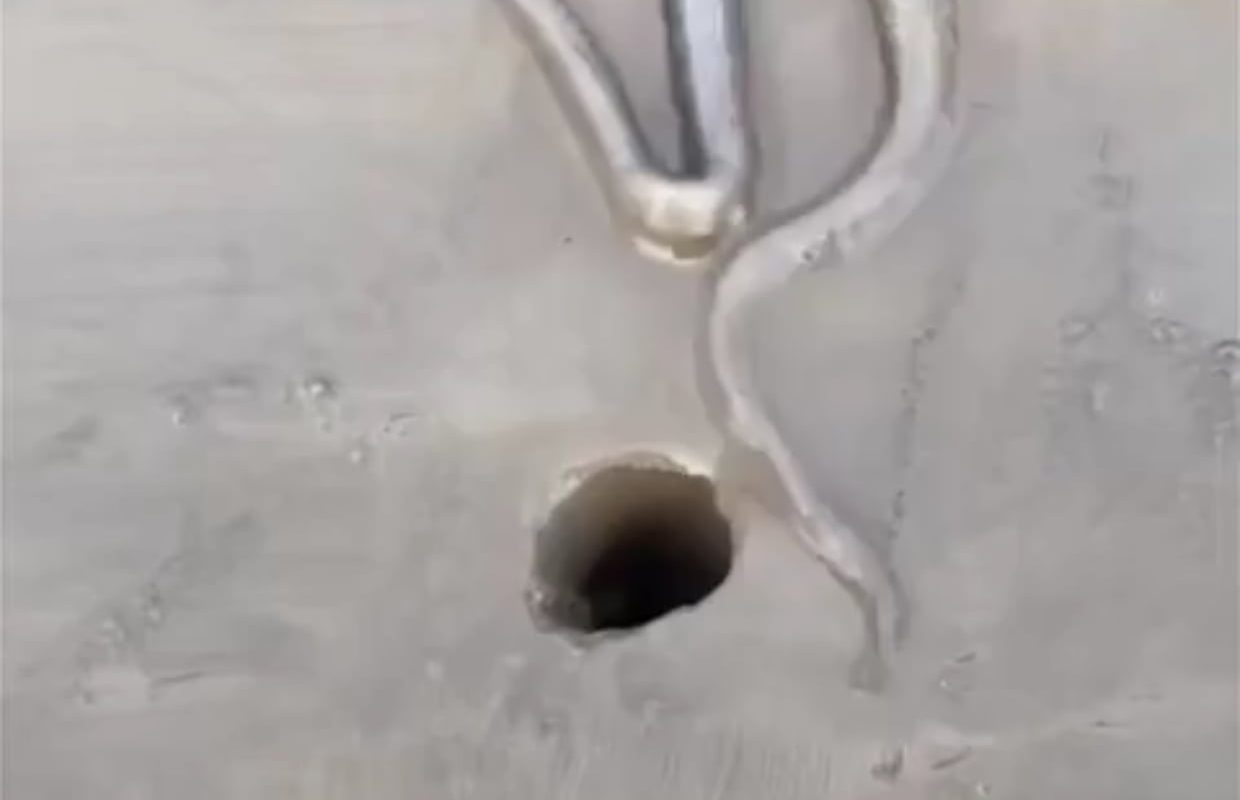
Since they have no bones, octopuses can squeeze into practically any hole
How Octopuses Squeeze Through Tiny Spaces: The Boneless Marvel of the Ocean
Octopuses are among the ocean’s most fascinating creatures, renowned for their intelligence, camouflage skills, and almost supernatural ability to disappear into impossibly tight spaces. The secret behind their Houdini-like escapes? They have no bones. This boneless anatomy allows octopuses to contort, compress, and slither into crevices smaller than their beaks—the only rigid part of their body.
In this article, we’ll explore how octopuses defy the limits of space, why their flexibility is key to survival, and what makes them one of Earth’s most extraordinary escape artists.
The Science Behind the Squeeze: No Bones, No Boundaries
Unlike vertebrates (fish, mammals, birds), octopuses belong to a group called cephalopods—invertebrates with soft, muscular bodies. Their lack of a skeleton gives them unparalleled freedom of movement:
- Muscular Hydrostats: An octopus’s body is powered by a network of muscles that function like a “hydraulic skeleton.” By contracting and relaxing these muscles, they can elongate, flatten, or inflate specific body parts.
- Beak Limitation: The beak (a hard, parrot-like mouth) is the only part of an octopus that can’t compress. If the beak fits, the octopus can follow.
- Jet-Powered Escape: Some species use jet propulsion to shoot into narrow openings, then reshape their bodies like liquid to seal the gap.
Scientists have observed octopuses squeezing through holes as small as 1 inch (2.5 cm) in diameter—less than the size of a golf ball!
Real-World Examples: Escape Artist Extraordinaire
Octopuses leverage this talent in the wild—and even in captivity:
- Aquarium Escapes: Octopuses in labs and aquariums are infamous for slipping out of tanks. In one famous case, “Inky” the octopus escaped his New Zealand enclosure, slid through a 6-foot-long drainpipe, and vanished into the ocean.
- Hunting & Hiding: In the wild, octopuses sneak into crab burrows, coral reefs, or shipwrecks to ambush prey or evade predators like sharks and dolphins.
- Den Squatters: They often repurpose clamshells, bottles, or even coconut shells as portable dens, squeezing inside for protection.
Why Are Octopuses So Flexible? Survival at Its Finest
The ability to disappear into micro-spaces isn’t just a party trick—it’s critical for survival:
- Predator Avoidance: Without shells or spines, octopuses rely on stealth. Their boneless bodies let them vanish in seconds.
- Energy Efficiency: Compressing into a safe hideout conserves energy compared to constant swimming.
- Ambush Hunting: Hiding in tight spaces lets them strike prey by surprise with their lightning-fast tentacles.
FAQs About Octopuses and Their Flexibility
Q: Can octopuses get stuck in small spaces?
A: Rarely! Their beaks act as a “size limiter.” As long as their beak fits, their soft body can follow.
Q: Do all octopuses have this ability?
A: Yes, but smaller species (like the pygmy octopus) excel at micro-escapes. Larger species (e.g., the giant Pacific octopus) still surprise researchers with their flexibility.
Q: How do they avoid injuries while squeezing?
A: Their skin secretes mucus to reduce friction, and their muscles distribute pressure evenly.
Q: Could humans mimic this ability?
A: Not easily! Robotics engineers study octopus anatomy to design soft, flexible robots for search-and-rescue missions.
Conclusion: Nature’s Masters of Disguise
Octopuses prove that sometimes, less (bones) truly is more. Their boneless bodies empower them to thrive in harsh ocean environments, outsmart predators, and captivate scientists. Next time you see a tiny hole in a rock or a shipwreck, remember: an octopus might just be hiding inside, watching the world with curious, intelligent eyes.
Know someone who loves marine biology? Share this article to spread the wonder of nature’s ultimate contortionists!
SEO Tags: Octopus flexibility, boneless animals, cephalopod anatomy, how octopuses squeeze, marine biology facts, octopus behavior, invertebrate survival.