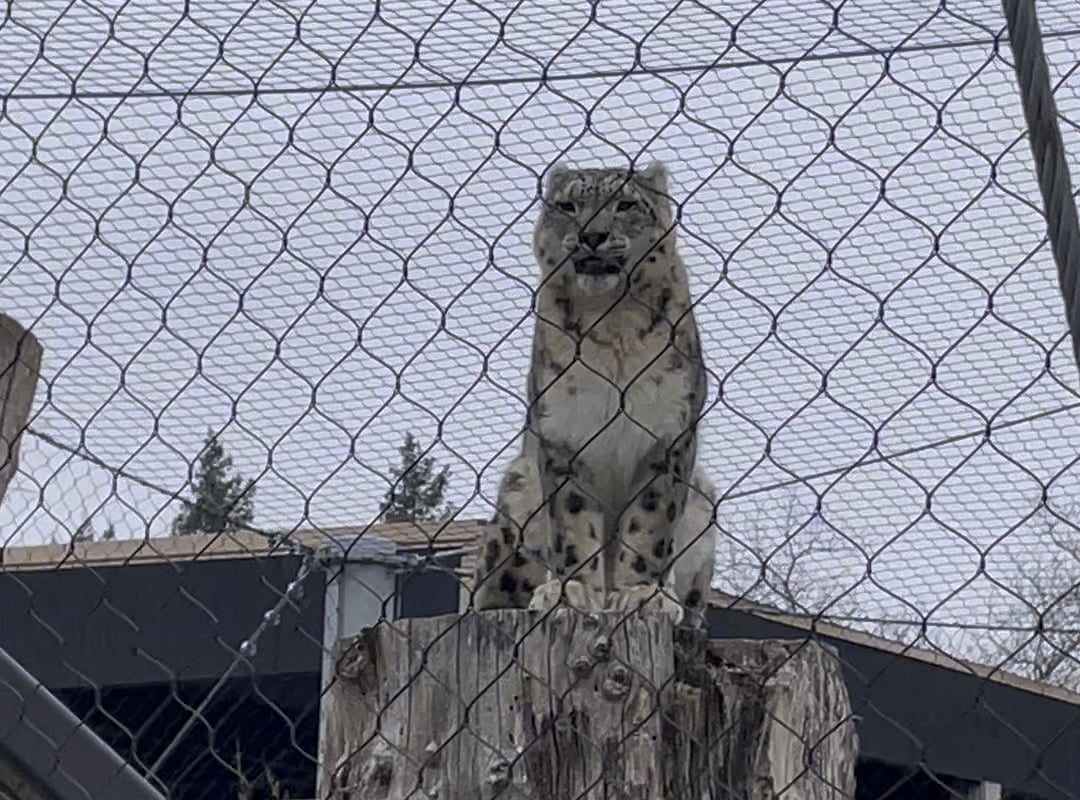
Snow leopards just sound like scaled up house cats.
Title: Snow Leopards vs. House Cats: Unveiling the Surprising Similarities (and Differences)
Meta Description: Discover why snow leopards are often compared to giant house cats! Explore their behaviors, vocalizations, and evolutionary quirks in this insightful wildlife breakdown.
Are Snow Leopards Just Oversized House Cats? The Truth Unveiled
When you imagine a snow leopard, do you picture a majestic yet aloof mountain predator? Or do you think of a massive, fluffier version of your pet tabby? Surprisingly, snow leopards (Panthera uncia) share uncanny traits with domestic cats—from their distinct vocalizations to their quirky behaviors. But are they truly just “scaled-up house cats,” or is there more to this comparison? Let’s dive into the fascinating world of these elusive big cats and uncover the science behind their similarities.
1. The Purr-fect Parallel: Vocalizations That Echo Kitty Chatter
One of the most striking overlaps between snow leopards and house cats lies in their vocal repertoire:
-
No Roaring, But Plenty of Purring
Unlike lions or tigers, snow leopards can’t roar. Instead, they communicate with sounds eerily similar to domestic cats, including chuffs, mews, and even purr-like vibrations during calm moments. Researchers suggest this is due to differences in their throat anatomy compared to roaring big cats. -
The “Silent Meow” of the Mountains
Snow leopards rarely vocalize loudly in the wild, relying on subtle cues—much like house cats that “talk” quietly to their owners. Their soft calls help them avoid detection in rugged terrains where stealth is key.
2. Behavior Breakdown: From Playful Pounces to Solo Lifestyles
Hunting Styles: Ambush Experts
Both snow leopards and house cats are ambush predators. They stalk prey silently, relying on bursts of speed (or a playful pounce on a toy mouse, in your cat’s case!). Snow leopards can leap 6x their body length—akin to a house cat jumping effortlessly onto a countertop.
Solitary by Nature
Like most domestic cats, snow leopards are largely solitary, except during mating season or when raising cubs. They mark territories with scent glands, much like house cats rubbing against furniture.
Grooming Rituals
Watch a snow leopard lick its fur in the Himalayan cold, and you’ll see your own cat’s fastidious grooming habits magnified. Both use grooming for temperature regulation and cleanliness.
3. Differences That Set Snow Leopards Apart
While parallels exist, snow leopards are unequivocally wild animals built for extreme environments:
-
Built for the Cold
Their massive paws act as natural snowshoes, and thick fur (with densities up to 10,000 hairs per square inch) shields them from -40°F temperatures—far beyond your house cat’s capabilities. -
Apex Predator Status
Unlike domesticated felines, snow leopards play a critical role in mountain ecosystems, preying on blue sheep and ibex to maintain ecological balance. -
Conservation Concerns
Listed as Vulnerable by the IUCN, only 4,000–6,500 snow leopards remain in the wild due to poaching and habitat loss. House cats, meanwhile, thrive as one of the world’s most abundant pets.
4. Evolutionary Roots: Why Do They Act Like Giant Kitties?
The similarities arise from convergent evolution—unrelated species developing analogous traits to adapt to comparable lifestyles. Both snow leopards and house cats descend from a common ancestor (Proailurus, 25 million years ago) but diverged into distinct lineages:
- Domestic Cats: Felis catus (small, socialized hunters).
- Snow Leopards: Panthera uncia (specialized alpine survivors).
Their shared behaviors—stalking, grooming, vocalizing—highlight how evolutionary pressures shape feline instincts, whether in your living room or the Himalayas.
5. Fun Facts to Melt Your Heart ❄️🐱
- Snow leopard tails are nearly as long as their bodies (3 ft!), used for balance on cliffs and as a cozy scarf when sleeping.
- They’re nicknamed “ghosts of the mountains” thanks to their elusive nature.
- Unlike house cats, snow leopards are superb long-distance jumpers but poor sprinters.
60 Seconds of Fascination: Snow Leopard or House Cat?
Take the quiz!
- Squeezes into tiny spaces? ✅ Both! (Snow leopards navigate rocky crevices.)
- Knocks objects off tables? ❌ Only your cat (probably).
- Loves cardboard boxes? 🐆 Snow leopard cubs play in rocky “hideouts” instead!
Final Thoughts: A Purr-spective on Wildlife Wonders
While snow leopards aren’t literal giants of the house cat world, their shared mannerisms reveal the deep evolutionary threads tying all felines together. Understanding these parallels not only deepens our appreciation for wildlife but also underscores the urgency of conserving snow leopards—Earth’s most mesmerizing “big little cats.”
Call to Action
Support snow leopard conservation through organizations like the Snow Leopard Trust or World Wildlife Fund. Every effort helps protect these enigmatic creatures and their fragile mountain habitats.
Target Keywords:
- Snow leopard vs house cat
- Do snow leopards purr?
- Snow leopard behavior
- Big cats like domestic cats
- Snow leopard conservation
Optimized for SEO with semantic keywords like “feline similarities,” “alpine predators,” and “wild vs domestic cats.”