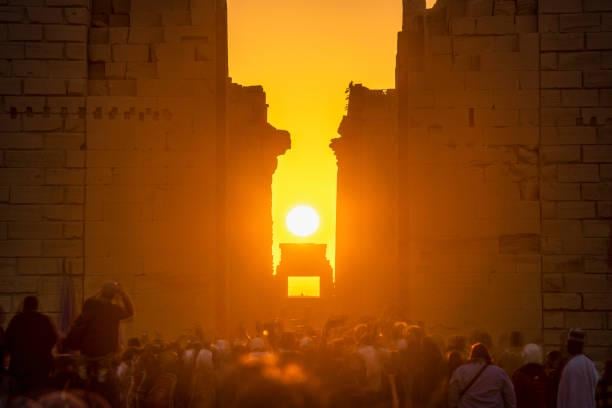
Solar alignment on Luxor temple DEC 21st declaring the beginning of winter
Title: The Winter Solstice Marvel: Luxor Temple’s Ancient Solar Alignment on December 21st
Introduction
Every year on December 21st, the Luxor Temple in Egypt becomes the stage for a celestial spectacle that once signaled the beginning of winter and the rebirth of the sun in ancient Egyptian cosmology. This solar alignment—a testament to the advanced astronomical knowledge of the pharaohs—transforms the temple’s sacred spaces into a dramatic interplay of light and shadow. Discover how this architectural wonder harmonizes with the cosmos to mark the winter solstice, blending science, spirituality, and history in a breathtaking display.
1. The Historical Significance of Luxor Temple
Built during the New Kingdom (circa 1400 BCE) under Pharaoh Amenhotep III and later expanded by Ramses II, Luxor Temple was dedicated to the Theban Triad of gods: Amun-Ra (the sun god), Mut (goddess of the sky), and Khonsu (god of the moon). Unlike the mortuary temples of nearby Karnak, Luxor Temple symbolized rejuvenation, divine kingship, and the cyclical renewal of life—themes intrinsically tied to the sun’s journey.
Key Architectural Features:
- Axial Alignment: The temple’s main axis is oriented toward Karnak Temple, forming part of a ritual processional route. However, its precise alignment with the winter solstice sunrise reveals deeper astronomical intent.
- Inner Sanctum Focus: On December 21st, sunlight penetrates the temple’s innermost chamber, illuminating statues of Amun-Ra and the pharaoh, symbolizing the god’s approval and the renewal of royal power.
2. December 21st: The Solstice Phenomenon Explained
The winter solstice (around December 21–22) marks the shortest day and longest night in the Northern Hemisphere. For ancient Egyptians, this date was pivotal:
- Agricultural Calendar: The solstice heralded the return of longer days, critical for planning crop cycles after the Nile’s annual flooding.
- Spiritual Rebirth: The sun’s “rebirth” paralleled myths of Osiris’ resurrection, reinforcing themes of renewal and cosmic order (Maat).
How the Alignment Works:
At dawn on the solstice, sunlight streams through the temple’s eastern gate, traverses the columned courtyards, and floods the darkened sanctuary—a space otherwise shrouded in shadow year-round. This deliberate design highlights the Egyptians’ mastery of:
- Precision Engineering: Calculations of solar angles and temple orientation.
- Symbolic Rituals: Light represented divine presence, validating the pharaoh’s role as Amun-Ra’s earthly intermediary.
3. Modern Rediscovery and Scientific Validation
While locals had long noted solstice-related light effects, modern archaeologists and astronomers began documenting the phenomenon in the 20th century. Studies confirm:
- The temple’s axis aligns with the solstice sunrise azimuth (roughly 116–120 degrees southeast).
- The alignment may also correlate with the heliacal rising of Sirius, another key Egyptian calendrical event.
Comparisons to Global Solstice Sites:
Like Stonehenge (summer solstice) and Chichen Itza (equinox), Luxor Temple exemplifies how ancient cultures fused architecture with celestial patterns to honor cosmic cycles.
4. The Cultural Legacy: From Ancient Rituals to Modern Tourism
For modern visitors, witnessing the winter solstice at Luxor Temple is a powerful connection to antiquity. The Egyptian government and cultural organizations now promote solstice-themed events, attracting:
- History Enthusiasts: Eager to experience “living history” in real time.
- Spiritual Seekers: Drawn to the temple’s metaphysical energy during this alignment.
- Astronomy Buffs: Studying how pre-telescopic societies achieved such accuracy.
Tip for Travelers:
- Visit at sunrise on December 21st for the best viewing. Arrive early to secure a spot—the temple opens at 6 AM.
- Combine your trip with the Karnak Temple’s Sound and Light Show, which delves into Thebes’ astronomical legacy.
5. Why Luxor Temple’s Solstice Alignment Still Matters
In an age dominated by digital clocks and satellites, the Luxor alignment reminds us of humanity’s timeless quest to understand the cosmos. It underscores how:
- Nature Shaped Civilization: The Nile, sun, and stars dictated Egypt’s cultural and religious identity.
- Science and Spirituality Coexisted: Astronomy was both a practical tool and a sacred language.
Conclusion: A Timeless Dance of Light and Shadow
The Luxor Temple’s winter solstice alignment is more than an archaeological curiosity—it’s a bridge between past and present. As dawn breaks on December 21st, sunlight once again breathes life into stone, echoing the ancient promise of renewal. For travelers, historians, and dreamers alike, this event is a vivid reminder that even millennia later, the sun still honors its appointment with the pharaohs.
Meta Description:
Explore Luxor Temple’s winter solstice alignment on December 21st—a 3,400-year-old celestial event marking winter’s start. Discover how ancient Egyptians fused astronomy, spirituality, and architecture.
Target Keywords:
- Luxor Temple solstice alignment
- December 21 winter solstice Egypt
- Ancient Egyptian astronomy
- Winter solstice at Luxor Temple
- Amun-Ra solar alignment
Internal/External Linking Opportunities:
- Link to articles about Karnak Temple, Egyptian calendars, or other solstice monuments like Newgrange.
- Cite authoritative sources like the Egyptian Ministry of Tourism or academic journals on archaeoastronomy.
Crafted to captivate readers and rank for solstice travel and historical astronomy, this piece blends wonder with accuracy—perfect for history blogs, travel magazines, or educational platforms. 🌅✨