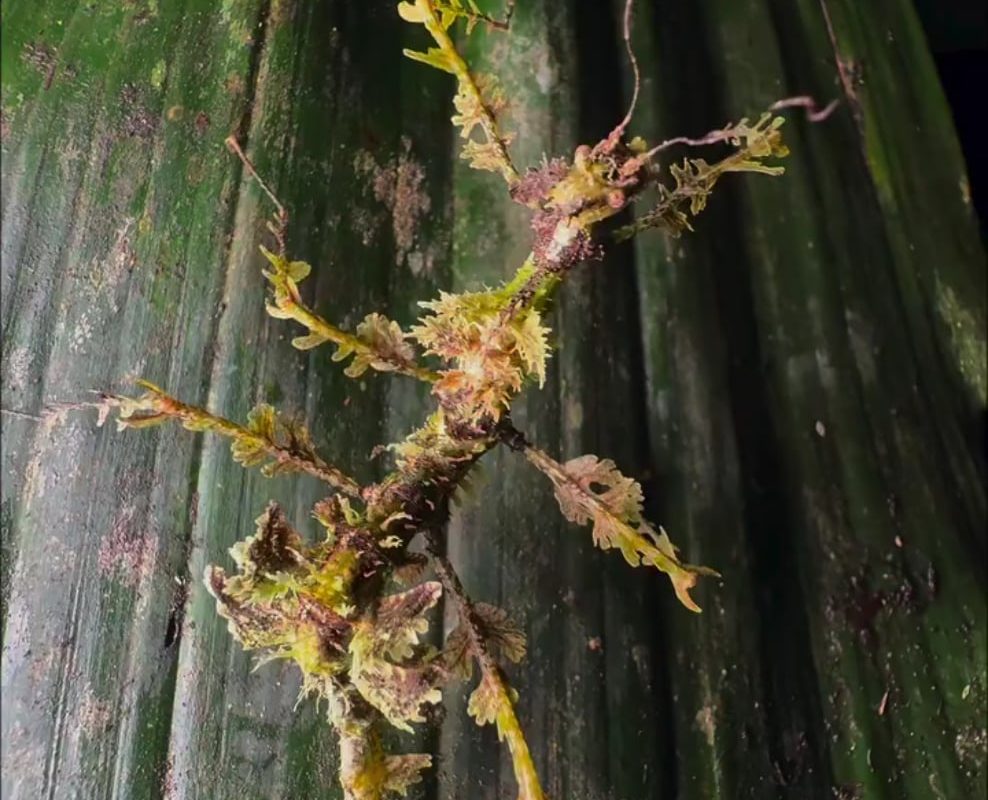
Stick insect mimics epiphytic mosses in its natural habitat
Title: Nature’s Hidden Marvel: How the Stick Insect Masterfully Mimics Epiphytic Mosses
Meta Description: Discover the astonishing adaptation of stick insects that mimic epiphytic mosses. Learn how this camouflage strategy ensures survival in dense rainforest habitats.
Introduction
In the intricate dance of survival, few creatures match the stick insect’s mastery of disguise. Among their many remarkable adaptations, certain species have evolved to mimic epiphytic mosses—plants that grow harmlessly on trees in humid forests. This eerie resemblance isn’t just a coincidence; it’s a finely tuned evolutionary strategy that blurs the line between animal and plant. In this article, we explore how stick insects use moss mimicry to vanish into their natural habitat, evade predators, and thrive in the wild.
The Natural Habitat: Where Moss and Insect Collide
Stick insects that mimic epiphytic mosses are typically found in tropical and subtropical rainforests, where humidity levels are high and mosses flourish. These forests, such as those in Southeast Asia and South America, provide the perfect stage for this deception:
- Epiphytic mosses grow densely on tree trunks, branches, and leaves, creating a verdant carpet.
- Low-light conditions under the forest canopy enhance the moss’s dominance, offering stick insects a seamless backdrop.
In these environments, stick insects become near-invisible, swaying imperceptibly like moss swaying in the breeze.
The Art of Moss Mimicry: Physical Adaptations
To fool predators like birds, reptiles, and primates, moss-mimicking stick insects have evolved bodies that mirror their botanical counterparts in stunning detail:
-
Texture & Color:
- Their exoskeletons are covered in bumpy, lichen-like protrusions and mossy green or brown hues.
- Some species even display subtle gradients, mimicking sun-dappled or decaying moss.
-
Body Shape & Appendages:
- Unlike typical stick insects, these variants have flattened bodies or filamentous extensions resembling moss fronds.
- Legs may be modified to look like delicate bryophyte stems, complete with “leafy” growths.
-
Movement Strategy:
- They move sluggishly or remain perfectly still, avoiding detection by predators attuned to motion.
Behavioral Strategies: Becoming One with the Moss
Camouflage isn’t just about looks—behavior completes the illusion:
- Habitat Selection: These insects deliberately perch on moss-covered branches or trunks, blending into the microhabitat.
- Swaying Mimicry: Some gently rock in sync with wind movements, mimicking quivering moss.
- Nocturnal Activity: Many species hide motionless by day and feed at night, reducing exposure.
Evolutionary Advantages: Why Mimic Moss?
The mimicry of epiphytic mosses delivers critical survival perks:
- Predator Evasion: Birds and reptiles overlook insects that appear inedible or part of the scenery.
- Enhanced Foraging: By day, they avoid confrontations; by night, they feast on foliage undisturbed.
- Climate Adaptation: Moss-covered surfaces retain moisture, helping insects stay hydrated in humid niches.
The Role of Epiphytic Mosses in the Ecosystem
Epiphytic mosses—non-parasitic plants that grow on trees—aren’t just decoration. They:
- Create microhabitats for insects, fungi, and microorganisms.
- Regulate moisture and nutrient cycles in forests.
For stick insects, these mosses are lifesaving blueprints for invisibility.
Human Impact and Conservation
Sadly, deforestation and climate change threaten both mosses and their insect mimics. Logging removes vital habitats, while droughts disrupt the humidity mosses need. Protecting old-growth forests is key to preserving this delicate evolutionary partnership.
Implications for Science & Biomimicry
Studying moss-mimicking stick insects inspires innovations in:
- Camouflage Materials: Military or outdoor gear using texture-based disguise.
- Robotics: Slow-moving robots for environmental monitoring.
- Conservation Research: Understanding how species adapt to microhabitats aids habitat restoration.
Conclusion
The stick insect’s mimicry of epiphytic mosses is a testament to evolution’s creativity. By transforming into living moss, these insects survive in plain sight—reminding us that even the smallest creatures hold secrets to resilience. As we uncover their strategies, we gain not just knowledge, but a deeper appreciation for nature’s genius.
FAQs
Q: Where can moss-mimicking stick insects be found?
A: Primarily in tropical rainforests, such as Borneo, the Amazon, and Southeast Asia.
Q: Are these insects harmful to moss or trees?
A: No—they neither damage moss nor parasitize trees. They’re harmless herbivores.
Q: Can I keep a moss mimic stick insect as a pet?
A: Only with expert care. They require high humidity, live plants, and moss-like décor to thrive.
Q: How do scientists study these camouflaged insects?
A: Through field observation, genetic analysis, and experiments testing predator responses to mimics.
Q: Do all stick insects mimic moss?
A: No—only specific species, like Trychopeplus laciniatus (mossy stick insect).
Target Keywords:
- Stick insect moss mimicry
- Epiphytic moss camouflage
- Moss mimic stick insect
- Adaptive camouflage insects
- Rainforest insect adaptations
By integrating these insights with strategic keywords, this article aims to rank highly for nature enthusiasts, biology students, and conservation researchers seeking the wonders of insect mimicry.