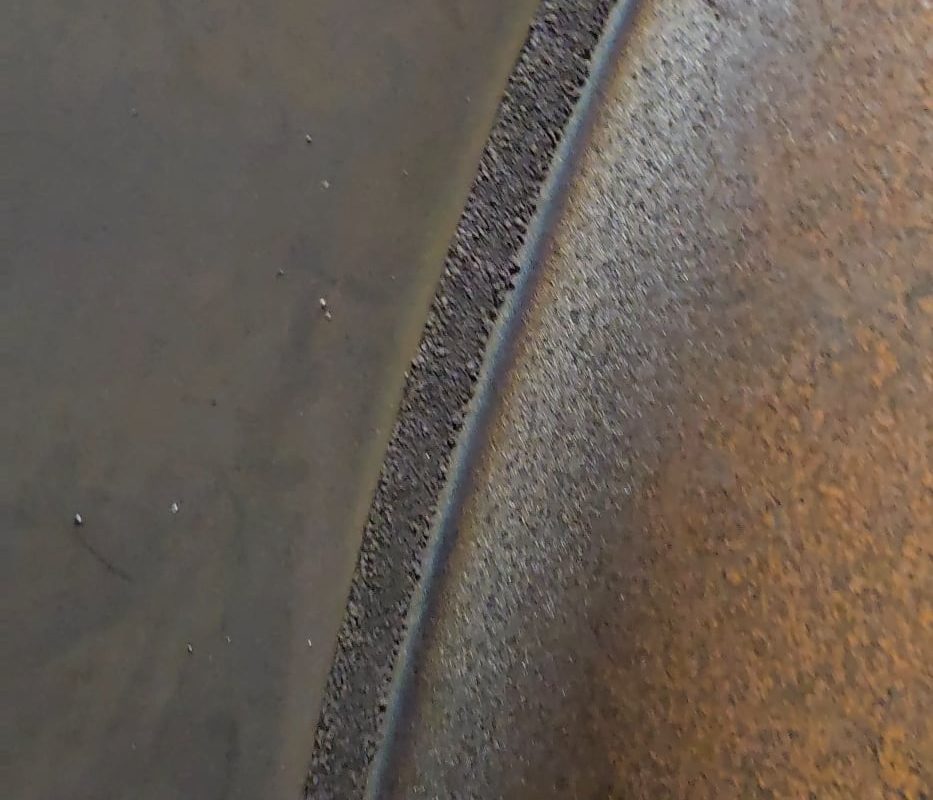
Sub arc welding Slag* removal.
Subarc Welding Slag Removal: A Complete Guide for Stronger, Cleaner Welds
Submerged arc welding (SAW) is prized for its high deposition rates and deep penetration in thick materials, making it a go-to process for heavy fabrication. However, improper slag removal can sabotage weld quality, leading to hidden defects, rework, and safety risks. This guide dives into the what, why, and how of SAW slag removal to help you optimize efficiency and quality in your welding operations.
What Is SAW Slag?
Slag is the glass-like byproduct formed during submerged arc welding. In SAW, a granular flux layer covers the arc and weld pool. This flux shields the molten metal from atmospheric contamination, stabilizes the arc, and alloys the weld. As the weld cools, residual flux combines with impurities to form solidified slag, which must be removed before subsequent passes or final inspection.
Why Slag Removal Matters in SAW
Ignoring slag removal risks:
- Slag Inclusions: Embedded slag weakens welds, causing porosity or cracks under stress.
- Poor Weld Appearance: Slag residues create uneven surfaces, complicating inspections.
- Weld Defects: Trapped slag in multi-pass welds reduces fusion between layers.
- Safety Hazards: Sharp slag fragments pose injury risks during handling.
Efficient slag removal enhances weld integrity, reduces NDT failures, and ensures compliance with codes like AWS D1.1 or ASME BPVC.
How to Remove Slag in Submerged Arc Welding
The optimal approach depends on slag composition, welding parameters, and application. Tools and methods include:
1. Manual Removal Tools
- Chipping Hammer: Ideal for thick slag layers. Strike slag gently at a 45° angle to avoid gouging the weld.
- Wire Brushes (Stainless Steel): Remove fine slag residues after chipping. Avoid brass brushes—contamination risk!
- Needle Scalers: Pneumatic tools quickly detach tenacious slag on large surfaces.
2. Power Tools
- Grinders with Flap Discs: Efficient for final cleaning and smoothing welds.
- Rotary Wire Wheels: Fast slag removal on long weld seams (e.g., pipelines).
3. Self-Detaching Slag
- Some SAW fluxes (e.g., neutral agglomerated fluxes) produce slag that cracks and falls off as the weld cools. Adjusting voltage/travel speed can optimize self-release.
Best Practices for Easy Slag Removal
-
Optimize Welding Parameters
- High Travel Speed: Thinner slag layers form faster and detach more easily.
- Correct Voltage: Excessive voltage increases slag thickness and adhesion.
-
Choose the Right Flux
- Agglomerated Fluxes: Often produce less-adherent slag vs. fused fluxes.
- Basicity: Higher-basicity fluxes (e.g., >2.0) yield smoother slag removal.
-
Timing Matters
- Allow welds to cool slightly (but not fully) before slag removal. Hot slag is brittle and chips easier.
-
Interpass Cleaning
- Remove all slag between passes in multi-layer welds to prevent inclusions.
Common Mistakes to Avoid
- Skipping Slag Removal Between Passes: Leads to fused slag layers and lack-of-fusion defects.
- Overly Aggressive Tools: Gouging the base metal with chisels or grinders weakens welds.
- Ignoring Flux Storage: Moisture-contaminated flux creates porous, sticky slag. Always bake flux per manufacturer specs.
The Role of Automation in Slag Removal
For high-volume SAW applications (e.g., wind towers, shipbuilding), automated slag removal systems save time:
- Robotic Chipping/Pneumatic Tools: Integrated with welding cells for seamless post-weld cleaning.
- Laser Cleaning: Emerging tech for precision slag removal without surface damage.
Safety First!
Slag removal generates sharp debris and dust. Always wear:
- Impact-resistant safety glasses
- Heavy-duty gloves
- Respiratory protection (NIOSH-approved mask)
Key Takeaways
- Slag removal is non-negotiable for SAW quality control and weld longevity.
- Match tools to slag thickness: Chipping hammers for heavy slag, brushes/scalers for residues.
- Optimize parameters and flux choice to make slag easier to remove.
By mastering SAW slag removal, you’ll cut rework costs, pass inspections faster, and build unbreakable joints.
Looking for more welding insights? Explore our guides on [flux selection for SAW] or [submerged arc welding troubleshooting].