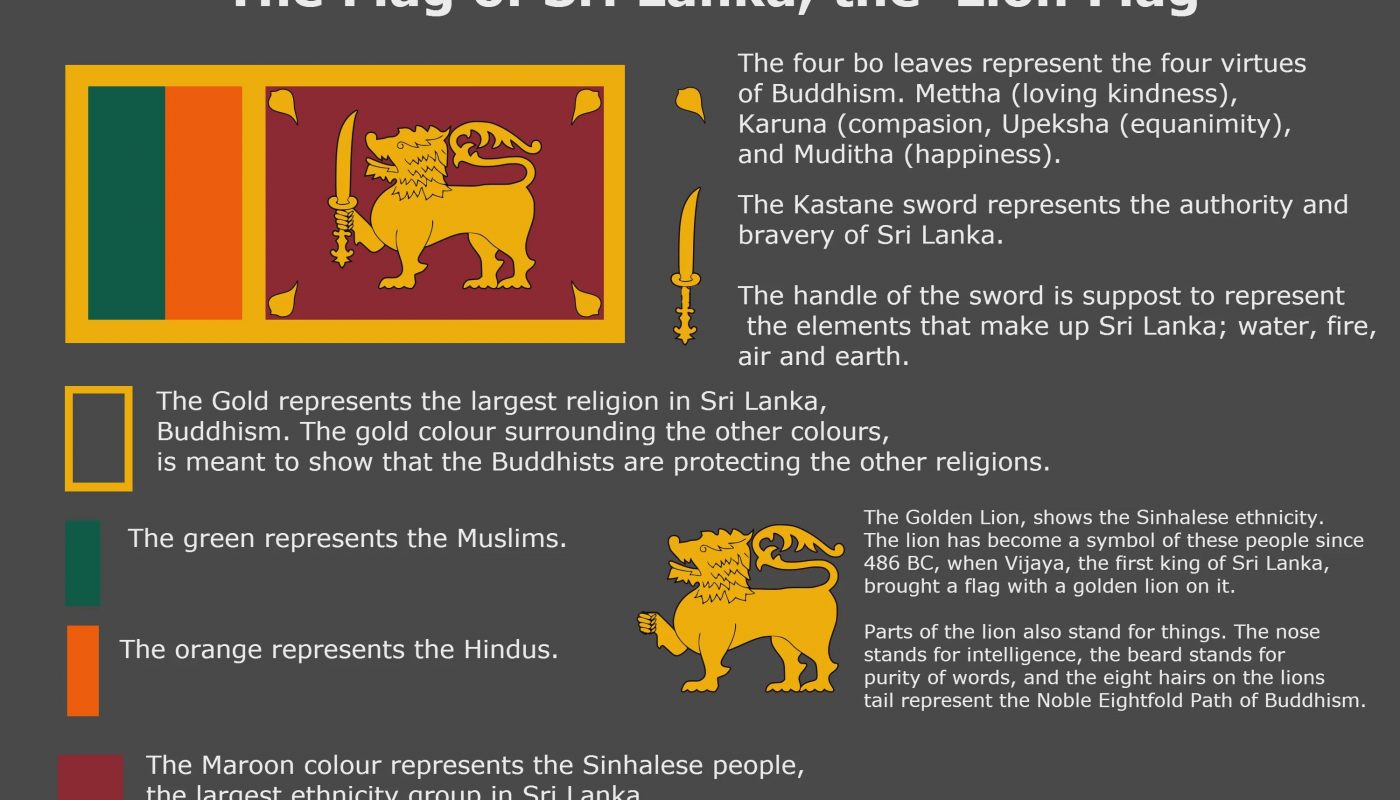
Symbolism of the Sri Lankan Flag
Title: The Symbolism of the Sri Lankan Flag: A Deep Dive into History and Meaning
Meta Description: Discover the rich symbolism behind Sri Lanka’s national flag – from the majestic lion and sacred Bo leaves to its vibrant colors. Explore its historical roots and cultural significance.
Header 1: Introduction to Sri Lanka’s Iconic Flag
The national flag of Sri Lanka, known as the “Lion Flag” (Sinhala: සිංහල කොඩිය), is one of the world’s most distinctive and meaningful flags. Adopted in 1972, it’s a powerful visual tapestry weaving together the island’s Buddhist heritage, ethnic diversity, and struggle for sovereignty. Each element of the flag—the lion, the sword, the maroon and gold hues, and the four Bo leaves—holds profound historical and cultural significance, making it a symbol of unity and national pride.
Header 2: Historical Origins of the Flag
Sri Lanka’s flag evolved from the royal standard of the Kandyan Kingdom, the last independent monarchy of the island before British colonization. The lion symbolized Sinhalese royalty and power for centuries. When Sri Lanka gained independence in 1948, the flag retained its lion motif but underwent revisions to reflect a modern, inclusive republic. The current design was finalized in 1972, incorporating elements honoring all ethnic communities.
Header 2: Breaking Down the Sri Lankan Flag’s Symbols
Header 3: The Golden Lion – Strength and Sovereignty
At the heart of the flag stands a golden lion holding a kastane sword in its right paw. The lion represents the Sinhalese people, the island’s majority ethnic group, and embodies attributes like bravery, strength, and sovereignty. Its upright posture and fierce gaze symbolize vigilance against threats.
- The Sword: The lion’s sword signifies the nation’s right to self-determination and the authority of governance.
- Decorative Design: The lion’s curled tail and ornate mane reflect the artistry of Kandyan craftsmanship.
Header 3: The Four Sacred Bo Leaves – Peace and Buddhism
Four Bo leaves (Ficus religiosa) flank the lion in each corner. This sacred tree is tied to Buddha’s enlightenment and Sri Lanka’s deep-rooted Buddhist identity. The leaves represent the Four Noble Truths of Buddhism and the virtues of loving-kindness (metta), compassion (karuna), joy (mudita), and equanimity (upekkha). They also symbolize protection and prosperity for the nation.
Header 3: Color Symbolism
- Maroon Background: The maroon rectangle behind the lion signifies Sri Lanka’s majority Buddhist population and the country’s historical Buddhist kingdoms.
- Golden Borders: The yellow-gold border surrounding the flag stands for unity and the ethical purity of its people.
- Green and Orange Stripes: Vertical stripes on the left represent the island’s ethnic minorities:
- Green: The Muslim community.
- Orange: Tamil-speaking communities (Hindu and Christian).
Together, these stripes emphasize Sri Lanka’s multiethnic harmony.
Header 2: The Flag’s Evolution and Modern Significance
Originally, the flag had a simple lion-centric design. However, after debates over inclusivity, the green and orange stripes were added in 1951 to acknowledge minority groups. In 1972, the four Bo leaves replaced previous decorative spearheads, deepening the flag’s connection to Buddhist philosophy.
Today, the flag unites Sri Lankans through shared ideals:
- Courage (the lion).
- Spiritual wisdom (Bo leaves).
- Unity in diversity (colors).
Header 2: Cultural Impact and Global Recognition
The flag is ubiquitous in Sri Lankan life—hoisted at government buildings, sports events, and cultural festivals. During times of crisis, such as the 2019 Easter attacks or the 2022 economic protests, it became a rallying symbol of resilience and solidarity. Its unique design also makes it instantly recognizable internationally, reflecting Sri Lanka’s rich cultural heritage.
Header 1: Conclusion
Sri Lanka’s flag is more than a national emblem; it’s a narrative of identity, faith, and unity. Every detail—from the lion’s roar to the humility of the Bo leaves—tells a story of an island shaped by ancient traditions and modern aspirations. By understanding its symbolism, we honor the spirit of a nation that continues to rise with resilience and grace.
SEO Keywords:
- Sri Lankan flag meaning
- Lion flag Sri Lanka history
- Sri Lanka flag symbols explained
- Significance of Bo leaves Sri Lanka
- Buddhist symbolism in Sri Lanka flag
- Ethnic representation Sri Lankan flag
- Kandyan Kingdom and Lion flag
- Why does Sri Lanka have a lion on its flag?
- Four Noble Truths flag symbolism
- Maroon and gold Sri Lanka flag
Image Suggestion:
A high-quality image of the Sri Lankan flag with labeled elements (lion, Bo leaves, stripes) would enhance reader understanding.
This SEO-optimized article balances historical facts, cultural analysis, and concise explanations to engage readers while boosting search visibility.