Breaking load 75 tons
Title: Technora Braided Rope: Production, Advantages & Industrial Applications
Meta Description: Discover how Technora braided rope is manufactured, its superior properties (heat resistance, strength), and applications across marine, aerospace, and industrial sectors.
Introduction
In high-performance industrial applications, few materials match the strength, durability, and heat resistance of Technora® braided rope. Derived from para-aramid fibers, Technora ropes are engineered to thrive in extreme conditions, making them indispensable in sectors from marine rigging to firefighting. This article explores how Technora braided ropes are produced, their unique properties, and why industries rely on them for critical operations.
What Makes Technora Unique?
Technora® is a high-performance para-aramid fiber developed by Teijin Limited. Unlike standard nylon or polyester ropes, Technora boasts:
- Exceptional tensile strength (comparable to steel, weight-for-weight).
- Heat resistance up to 450°F (232°C) without degradation.
- Chemical resistance to oils, solvents, and acids.
- Low stretch and minimal creep under load.
- Lightweight flexibility, ideal for dynamic applications.
These traits make braided Technora ropes ideal for environments where failure is not an option.
The Production Process of Technora Braided Rope
Creating Technora braided rope involves precision engineering to maximize its innate strengths. Here’s a step-by-step breakdown:
1. Fiber Synthesis
Technora fibers are synthesized through a high-temperature polymerization process, forming liquid crystal polymers. These fibers are then spun into yarns, providing the foundational strength and heat stability.
2. Braiding Technique
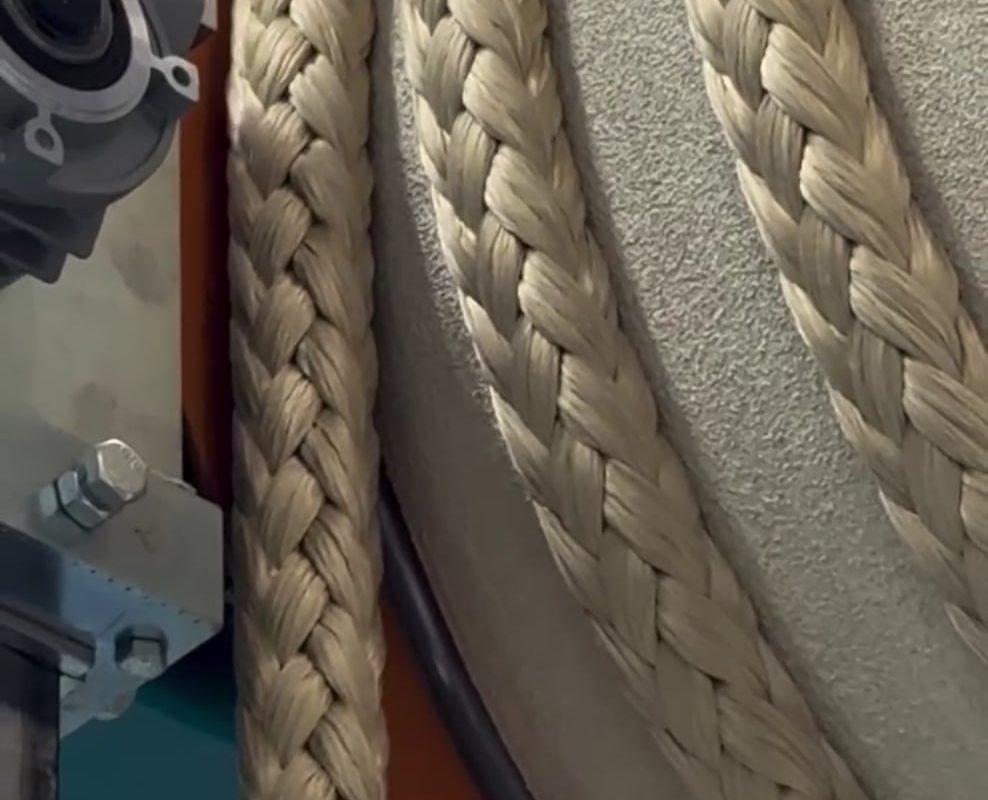
Yarns are woven into ropes using specialized braiding machines. The 8-strand or 12-strand braided structure optimizes load distribution, flexibility, and abrasion resistance. Unlike twisted ropes, braiding minimizes kinking and enhances durability.
3. Heat Treatment
Post-braiding, ropes undergo heat stabilization to lock in dimensional stability and eliminate residual stresses. This process ensures consistent performance under thermal stress.
4. Quality Control & Testing
Every batch undergoes rigorous testing, including:
- Tensile strength tests (ASTM D6268 standard).
- Thermal degradation analysis.
- Abrasion resistance checks.
Only ropes meeting strict tolerances proceed to finishing.
5. Finishing & Coating
Optional coatings (e.g., silicone or fluoropolymer) are applied for enhanced UV resistance, reduced friction, or chemical protection, depending on the end-use environment.
Key Advantages of Braided Technora Ropes
- Safety & Reliability: Non-conductive and flame-retardant, ideal for electrical or high-temperature zones.
- Longevity: Outlasts steel cables and synthetic alternatives in corrosive/abrasive settings.
- Weight Efficiency: 5x stronger than steel at 20% of the weight, reducing logistical strain.
- Customizability: Tailored diameters (1mm to 50mm+) and braid patterns suit specialized needs.
Industrial Applications
Technora braided ropes excel in extreme scenarios:
- Marine & Offshore:
- Mooring lines, rigging, and tow ropes resistant to saltwater corrosion.
- Aerospace:
- Lightweight suspension systems, cargo tie-downs, and drone tethers.
- Fire & Rescue:
- Heat-resistant lifelines and rappelling ropes for first responders.
- Industrial Machinery:
- Conveyor belts, crane cables, and lifting slings in high-heat factories.
- Renewable Energy:
- Tensioning ropes for solar arrays and wind turbine components.
Technora vs. Other High-Performance Ropes
| Property | Technora | Kevlar® | Dyneema® |
|---|---|---|---|
| Max. Temperature | 450°F | 400°F | 150°F |
| Chemical Resistance | Excellent | Good | Moderate |
| Flexibility | High | Moderate | High |
| Abrasion Resistance | High | Moderate-High | Moderate |
Conclusion
Technora braided rope represents the pinnacle of synthetic rope engineering, blending unmatched strength, thermal stability, and adaptability. From racing yachts battling ocean storms to firefighters entering blazing structures, this rope ensures safety and performance where it matters most. As industries push the boundaries of innovation, Technora’s role in critical applications will only grow.
Looking for Technora ropes? Partner with suppliers who specialize in high-performance fibers and provide third-party certification for load safety.
FAQ Section
Q: How long does Technora rope last?
A: With proper care, Technora ropes can last 5–10 years, even in harsh environments.
Q: Can Technora ropes be spliced?
A: Yes, but specialized techniques are required due to their low-stretch nature.
Q: Are they UV-resistant?
A: Technora has moderate UV resistance; coatings can enhance durability for outdoor use.
Q: What’s the cost comparison to steel cables?
A: Initial costs are higher, but lifecycle savings (weight, corrosion resistance) justify investment.
Keywords for SEO:
Technora braided rope, para-aramid rope production, heat-resistant synthetic rope, high-strength industrial rope, Technora vs Kevlar, marine rigging ropes, aerospace cable alternatives, Technora rope applications.
Optimize your operations with the unparalleled resilience of Technora braided rope – where science meets survival.