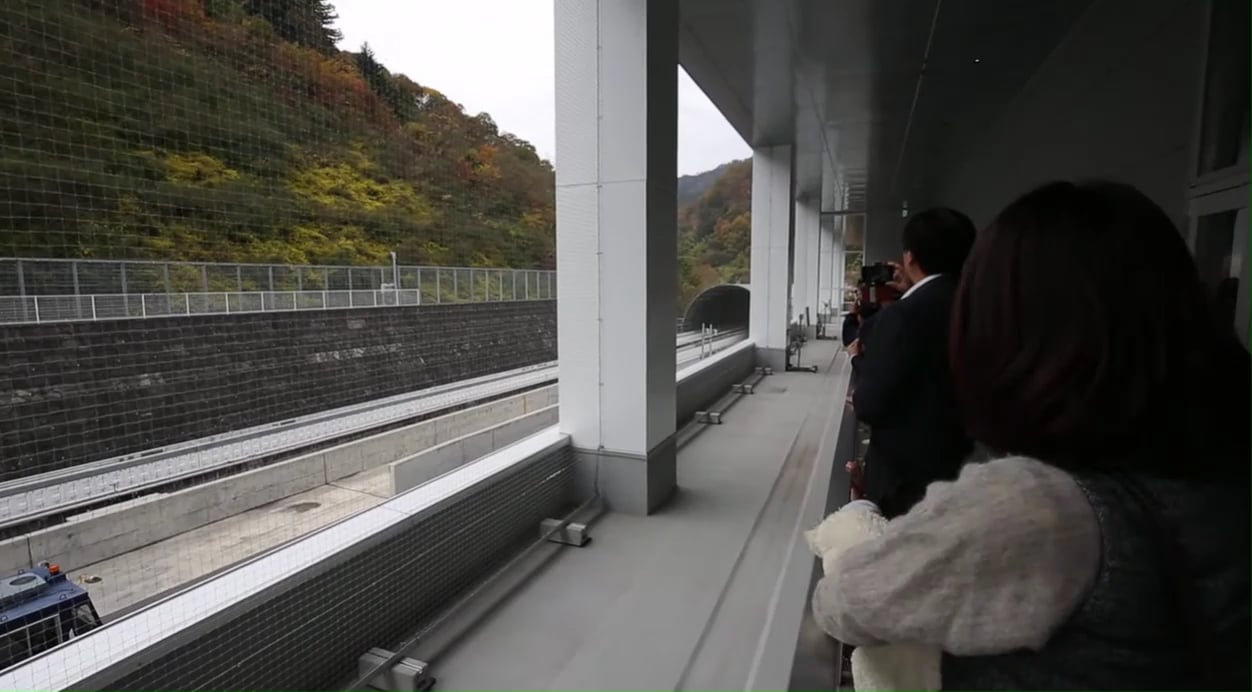
The Chuo Shinkansen which is a High Speed Maglev that goes at 500kph per hour goes from Tokyo to Nagoya with plans for extensions to Osaka in Japan.
Title:
Chuo Shinkansen Maglev: Japan’s 500 kph Revolution in High-Speed Rail Travel
Meta Description:
Discover Japan’s revolutionary Chuo Shinkansen Maglev, a 500 kph train connecting Tokyo to Nagoya (and soon Osaka). Explore its technology, timeline, and transformative impact on travel.
Introduction: The Future of High-Speed Rail
Japan, already famed for its Shinkansen “bullet trains,” is once again redefining rail transportation with the Chuo Shinkansen – a magnetically levitated (maglev) train capable of reaching 500 kilometers per hour (311 mph). Slated to connect Tokyo, Nagoya, and eventually Osaka, this engineering marvel promises to slash travel times, boost economic productivity, and set a new global benchmark for sustainable high-speed transit.
What is the Chuo Shinkansen?
The Chuo Shinkansen is a maglev train line developed by Central Japan Railway Company (JR Central). Unlike conventional Shinkansen trains, which rely on wheels, maglev technology uses superconducting magnets to levitate and propel trains above the tracks, eliminating friction and enabling unprecedented speed and efficiency.
Key Stats:
- Top Speed: 500 kph (tested at 603 kph in 2015, setting a world record).
- Current Phase: Tokyo to Nagoya (286 km) under construction, opening by 2034 (delayed from 2027).
- Future Phase: Nagoya to Osaka (153 km), extending the line to 438 km total post-2037.
- Travel Time:
- Tokyo ↔ Nagoya: 40 minutes (vs. 1h 30m via current Shinkansen).
- Tokyo ↔ Osaka: 67 minutes (vs. 2h 30m).
How Does Maglev Technology Work?
The Chuo Shinkansen employs the L0 Series (“Ell-zero”) maglev trains, leveraging:
- Magnetic Levitation: Superconducting magnets lift the train 10 cm above the guideway.
- Linear Motor Propulsion: Electromagnetic forces push/pull the train without engine-driven wheels.
- Energy Efficiency: Reduced friction minimizes energy use and noise pollution.
Benefits Over Traditional Rail:
- Faster acceleration/deceleration.
- Less wear-and-tear on infrastructure.
- Smoother rides with no wheel-track vibrations.
The Route: Tokyo to Nagoya (and Beyond)
Phase 1: Tokyo ↔ Nagoya (Opening ~2034)
- Stations: Tokyo (Shinagawa Station), Nagoya.
- Tunnels: 86% of the route runs underground to minimize urban disruption, including beneath the Japanese Alps.
- Scenic Advantage: Passengers will glimpse Mount Fuji during brief above-ground sections.
Phase 2: Nagoya ↔ Osaka (Post-2037)
- Stations: Osaka (Umeda Station).
- Economic Impact: Will create a seamless “megalopolis corridor” linking Japan’s three largest economies.
Why the Chuo Shinkansen Matters
- Time Savings: Tokyo-Osaka in ~1 hour makes same-day business trips feasible.
- Sustainability: Maglev emits 30% less CO₂ per passenger than air travel.
- Global Leadership: Reinforces Japan’s reputation as a pioneer in high-speed rail innovation.
- Tourism Boost: Faster access to Nagoya (gateway to historic Kyoto and Nara) and Osaka.
Challenges Ahead
- Cost: The project’s estimated price tag exceeds $82 billion, driven by tunneling and land acquisition.
- Delays: Geological surveys, funding debates, and pandemic impacts have pushed completion back.
- Competition: Domestic flights and existing Shinkansen lines offer cheaper (albeit slower) alternatives.
The Global Maglev Race
While Japan leads maglev development, other countries are exploring similar tech:
- China: Operates a short 460 kph maglev line in Shanghai.
- USA: Proposing maglev corridors like Washington DC-Baltimore.
The Chuo Shinkansen’s success could catalyze maglev adoption worldwide.
Conclusion: Redefining Rail’s Potential
The Chuo Shinkansen isn’t just a train—it’s a vision of tomorrow’s transportation. By cutting travel times in half and showcasing cutting-edge maglev tech, Japan is poised to revolutionize intercity mobility and set a blueprint for a faster, greener future. Once complete, riders will witness firsthand how 500 kph rail can shrink a nation and inspire a world in motion.
Keywords for SEO:
Chuo Shinkansen, Maglev train Japan, Tokyo to Nagoya maglev, fastest train in the world, JR Central maglev, L0 Series maglev, Tokyo to Osaka maglev, Japan high-speed rail, magnetic levitation train, 500 kph train.