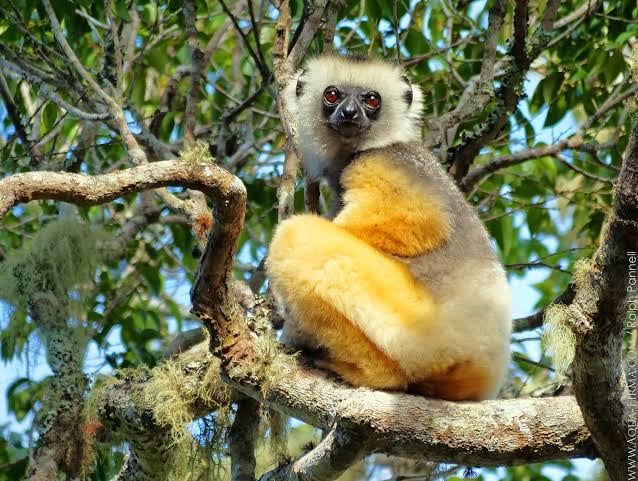
The Diademed Sifaka is one of the most striking primates silver fur, a golden crown, and bright orange limbs yet only 6,000–10,000 remain. They can leap over 30 feet and dance-walk on the ground, but Madagascar’s forests are disappearing faster than they can survive. A mythical creature fading fast.
Title: The Diademed Sifaka: Madagascar’s Crowned Lemur Dancing on the Brink of Extinction
Meta Description: Discover the Diademed Sifaka, an iconic lemur with silver fur, a golden crown, and gravity-defying leaps. Learn why fewer than 10,000 remain and how you can help save them.
Introduction: A Living Myth of the Forest
Imagine a creature so ethereal it seems plucked from folklore: draped in plush silver fur, crowned with gold, and sporting vivid orange limbs that flash like flames against Madagascar’s emerald rainforests. This is the Diademed Sifaka (Propithecus diadema), one of the planet’s most visually stunning primates—and one of its most endangered. Fewer than 6,000–10,000 individuals survive, their existence hanging in the balance as their island home disappears beneath them.
In this article, we delve into the incredible biology, behavior, and urgent plight of the “dancing lemur,” a species whose fate is intertwined with the survival of Madagascar’s vanishing wilderness.
Meet the Diademed Sifaka: Nature’s Acrobat
Often called the “angel of the forest,” the Diademed Sifaka epitomizes Madagascar’s unmatched biodiversity:
- Appearance: Their silvery-white fur shimmers like moonlight, contrasted by a regal golden crown and striking orange-red arms and thighs. Adults weigh 11–13 lbs (5–6 kg), making them among the largest lemurs.
- Range: Endemic to eastern Madagascar’s rainforests, they rely on dense, undisturbed canopy to survive.
- Superpowers: These primates are master leapers, propelling themselves over 30 feet (9 meters) between trees with effortless grace. On the rare occasions they descend to the ground, they perform a comical sideways “dance-walk” (a bipedal hop with arms outstretched for balance).
Life in the Treetops: Diet, Family, and Survival
Diademed Sifakas live in tight-knit family groups of 2–8 individuals, communicating through a chorus of barks, growls, and alarm calls. Their daily routines revolve around foraging:
- Diet: Primarily folivorous (leaf-eating), they also feast on fruits, flowers, and unripe seeds—acting as critical seed dispersers for Madagascar’s forests.
- Breeding: Females give birth to a single infant annually after a 6-month gestation. Babies cling to their mothers for months before learning to leap independently.
- Threats: Sadly, their slow reproductive rate makes recovery difficult in the face of rampant habitat loss.
Why Are Diademed Sifakas Disappearing?
Madagascar has lost over 40% of its forests since the 1950s, and the Diademed Sifaka’s habitat is vanishing faster than they can adapt:
- Deforestation: Slash-and-burn agriculture (tavy), illegal logging, and charcoal production fragment their homes.
- Hunting: While culturally taboo in some regions, bushmeat hunting still occurs.
- Climate Change: Droughts and fires worsen food scarcity and habitat degradation.
With critically endangered status on the IUCN Red List, their population could collapse entirely without intervention.
Conservation Efforts: Can We Save the “Dancing Lemur”?
Hope persists thanks to grassroots and global initiatives:
- Protected Areas: Parks like Mantadia National Park and Andasibe-Mantadia safeguard key populations.
- Reforestation: NGOs like Madagascar Fauna and Flora Group work with local communities to restore corridors between forest fragments.
- Ecotourism: Responsible wildlife tourism funds conservation and incentivizes habitat protection.
However, success hinges on addressing poverty-driven deforestation and bolstering anti-poaching laws.
How You Can Help
- Support Reputable Organizations: Donate to groups like the Lemur Conservation Foundation or WWF Madagascar.
- Choose Sustainable Products: Avoid palm oil and tropical hardwoods linked to deforestation.
- Spread Awareness: Share the Diademed Sifaka’s story to amplify their cry for help.
Conclusion: A Race Against Time
The Diademed Sifaka is more than just a primate—it’s a symbol of Madagascar’s ecological magic and fragility. With their forests shrinking and numbers dwindling, their iconic dance-walk could soon vanish from the wild forever. Yet, with swift action, education, and international support, this living jewel still has a chance to reclaim its throne in the rainforest canopy.
The clock is ticking. Will we let their legend fade—or ensure it leaps into the future?
Keywords for SEO: Diademed Sifaka, endangered lemurs, Madagascar wildlife, dancing lemur, lemur conservation, critically endangered primates, silfur sifaka, lemur habitat loss, Madagascar deforestation, save the sifaka.
[Author Bio: Wildlife conservation writer with a focus on endangered species and ecosystem preservation. Sources: IUCN Red List, Duke Lemur Center, National Geographic.]
Optimization Tips:
- Use high-quality images of Diademed Sifakas mid-leap or dance-walking.
- Link internally to related articles (e.g., “Madagascar’s Endangered Ecosystems” or “How Ecotourism Saves Wildlife”).
- Update regularly with new conservation milestones.
By weaving storytelling with hard facts, this article aims to rank for key search terms while inspiring readers to join the fight for the Diademed Sifaka’s survival.