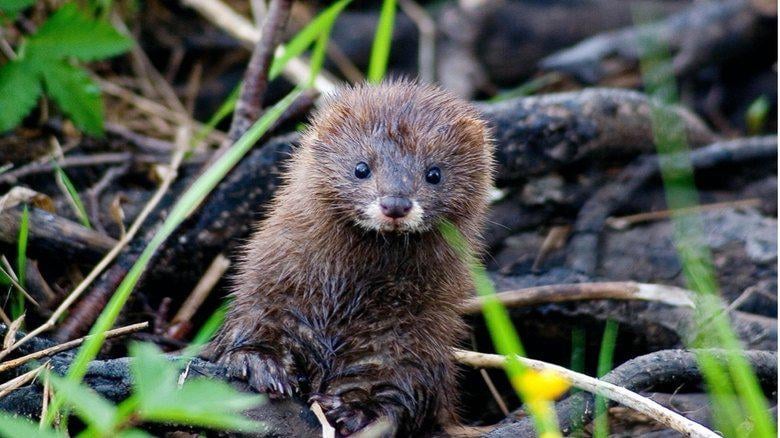
The European mink is one of the most endangered mammals in Europe fewer than 5,000 remain globally as per recent reports, scattered across small river systems after being pushed out by habitat loss and invasive American mink. A native pr
Title: The European Mink: Europe’s Most Endangered Mammal on the Brink of Extinction
Meta Description: Europe’s native mink is vanishing. With fewer than 5,000 left globally, learn about the threats, conservation efforts, and why this elusive predator needs urgent help to survive.
Europe’s Hidden Tragedy: The Fight to Save the European Mink
The European mink (Mustela lutreola), once thriving across the continent’s riverbanks and wetlands, is now one of the most endangered mammals in Europe. Recent studies estimate fewer than 5,000 individuals remain in the wild, fragmented into tiny, isolated populations. Native to Europe for millennia, this shy aquatic predator has been relentlessly pushed toward extinction by habitat destruction, pollution, and—most critically—the relentless invasion of its aggressive American cousin, the American mink (Neovison vison).
In this article, we explore the stark reality facing the European mink, the ecological consequences of its decline, and the urgent conservation battles being fought to save it from oblivion.
The European Mink: A Native Species Under Siege
The European mink is a semi-aquatic mammal uniquely adapted to Europe’s freshwater ecosystems. Smaller and less versatile than the invasive American mink, it hunts fish, amphibians, and crustaceans along riverbanks, relying on clean water and dense riparian vegetation. Historically found from Spain to Russia, its range has collapsed by over 90% since the mid-20th century. Today, survivors cling to scattered pockets in regions like:
- The Danube Delta (Romania/Ukraine)
- Northern Spain and southwestern France
- Remote parts of Russia and Estonia
This catastrophic decline earned the species a Critically Endangered listing on the IUCN Red List—one step away from extinction in the wild.
Why Is the European Mink Disappearing?
1. Habitat Loss & Fragmentation
Human encroachment has devastated Europe’s wetlands and rivers. Agriculture, dams, urbanization, and pollution have degraded or erased the mink’s nesting and hunting grounds. Fragmented habitats also prevent isolated populations from breeding, accelerating genetic decline.
2. The American Mink Invasion
The greatest threat comes from the invasive American mink, a larger, more adaptable species imported to Europe in the 1920s for fur farming. Escapes and intentional releases led to wild colonies that outcompete the native mink for food, breeding sites, and territory. American minks also carry deadly diseases like Aleutian mink disease virus (AMDV), to which European minks have no immunity.
3. Genetic Bottlenecks
With populations so small, inbreeding weakens resilience to disease and environmental changes. Some groups have lost genetic diversity, reducing survival odds even further.
The Tipping Point: Can the European Mink Be Saved?
Conservationists are racing against time with strategies including:
- Eradicating Invasive Minks: Trapping programs in Estonia, France, and Spain aim to remove American minks from critical habitats.
- Habitat Restoration: Rewilding riverbanks and wetlands (e.g., floodplain projects in the Danube Delta).
- Captive Breeding & Reintroductions: Zoos and breeding centers, like the Tallinn Zoo in Estonia, rear minks for release into protected areas.
- Legal Safeguards: Strengthened protections under the EU Habitats Directive and national laws.
Yet challenges remain: without connectivity between populations, meaningful genetic exchange is impossible, and political inertia slows habitat protection.
Why Should You Care?
The European mink’s extinction would ripple through ecosystems. As a mid-level predator, it keeps prey populations (like invasive crayfish) in check, while its abandoned dens shelter birds and insects. Its loss would also symbolize the failure to protect Europe’s natural heritage in the face of invasive species and industrial exploitation.
How You Can Help
- Support: Organizations like Rewilding Europe, the IUCN, and local wildlife trusts.
- Advocate: Press governments to prioritize wetland conservation and invasive species control.
- Educate: Spread awareness about the hidden costs of fur farming and habitat destruction.
Conclusion: A Window of Opportunity
The European mink’s plight is a wake-up call. Its survival hinges on immediate, collective action—from policy reforms to grassroots activism. By restoring rivers and removing invasive species, we might yet reverse its slide into extinction. But time is running out.
SEO Keywords for Integration:
- European mink endangered
- European mink vs American mink
- Invasive species Europe
- Critically endangered mammals
- Wetland conservation
- Wildlife rewilding Europe
Optimized Subheadings & Formatting Tips:
- Use bullet points for threats/conservation steps.
- Highlight stats (e.g., fewer than 5,000 remain).
- Link to reputable sources like IUCN Red List or Rewilding Europe.
- Include a call-to-action (CTA) to donate or volunteer.
Image Recommendations (Not Included):
- European mink along a riverbank (vs. American mink for comparison).
- Maps showing range decline.
- Infographics on threats/conservation steps.
Let this piece serve as a rallying cry—before Europe loses a keystone species forever.