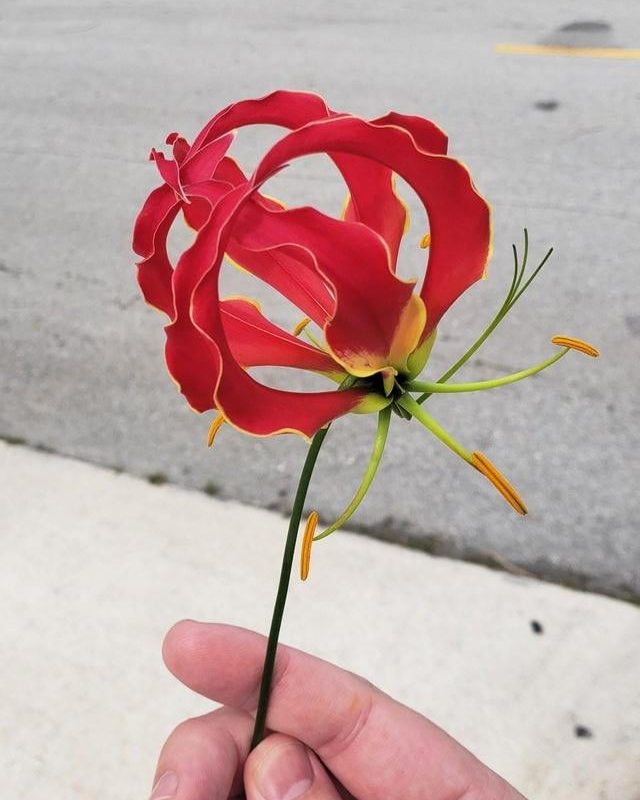
The Flame Lily. National flower of Zimbabwe.
The Flame Lily: Zimbabwe’s Fiery Emblem of Beauty and Resilience
The Flame Lily (Gloriosa superba), Zimbabwe’s national flower, captivates with its fiery beauty and profound cultural symbolism. Also known as the “gloriosa lily” or “fire lily,” this striking bloom is more than just a botanical wonder—it embodies Zimbabwe’s spirit, heritage, and natural splendor.
A Botanical Marvel
The Flame Lily is a climbing perennial plant native to tropical regions of Africa and Asia. Its vibrant flowers feature six wavy, reflexed petals that transition from green at the base to brilliant shades of red, orange, and yellow, resembling flickering flames. The dramatic appearance is enhanced by long, curling stamens.
Key Facts:
- Scientific Name: Gloriosa superba.
- Habitat: Thrives in sandy, well-drained soils; commonly found in grasslands, woodlands, and savannahs.
- Blooming Season: Summer months (November to April in Zimbabwe).
- Toxicity: All parts of the plant are highly poisonous if ingested due to toxic alkaloids.
Cultural and Historical Significance
Zimbabwe adopted the Flame Lily as its national flower in the 1980s, following independence. The flower symbolizes:
- Freedom and Resilience: Its ability to thrive in harsh conditions mirrors Zimbabwe’s journey toward self-determination.
- Beauty and Prosperity: The Flame Lily’s radiant colors represent hope, rebirth, and the nation’s rich natural heritage.
It frequently appears in Zimbabwean art, textiles, and symbolism, including the country’s coat of arms and coins. In Shona tradition, the flower is called “Kajongwe” and is linked to folklore celebrating strength and transformation.
Medicinal Importance & Precautions
Despite its toxicity, traditional healers in Southern Africa have carefully used the Flame Lily for generations:
- Pain Relief: Root extracts treated arthritis, burns, and wounds.
- Spiritual Practices: Believed to ward off evil spirits and bring luck.
Warning: Modern medicine cautions against unsupervised use—even small doses can be fatal. Research continues into its potential anti-cancer properties (containing colchicine alkaloids).
Conservation Status: Protecting a National Treasure
The Flame Lily faces threats from habitat loss, climate change, and overharvesting for ornamental and medicinal trade. It is listed as endangered in parts of its native range. Zimbabwe has taken steps to safeguard the species:
- Legal Protections: Regulated harvesting under the National Parks and Wildlife Act.
- CITES Listing: Classified under Appendix II to control international trade.
- Community Initiatives: Conservation groups promote sustainable wildflower harvesting and habitat restoration.
Growing Flame Lilies: A Gardener’s Guide
While challenging, cultivating Flame Lilies is rewarding:
- Climate: Prefers warm temperatures (Zones 9–11) and partial shade.
- Soil: Requires sandy, well-draining soil and support for climbing.
- Caution: Keep away from children and pets due to toxicity.
Conclusion: A Flower of Fire and Fortitude
The Flame Lily encapsulates Zimbabwe’s identity—bold, resilient, and breathtakingly beautiful. As a national symbol, it fosters pride while reminding us to protect fragile ecosystems. Through conservation and education, this floral icon can continue inspiring future generations as a beacon of Zimbabwe’s natural and cultural legacy.
Keywords for SEO: Flame Lily Zimbabwe, Gloriosa superba, national flower of Zimbabwe, Flame Lily meaning, Flame Lily uses, endangered flowers of Africa, Zimbabwean symbols, toxic medicinal plants, how to grow Flame Lilies, Zimbabwe national flower facts.