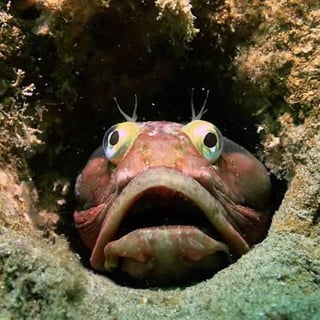
The ‘Flesh-Tearer’: This is Sarcastic Fringehead, a Fish which doesn‘t understand humor
Title: The Sarcastic Fringehead: Meet the “Flesh-Tearer,” the Fish That Takes Aggression Dead Seriously
Meta Description: Discover the Sarcastic Fringehead, a small but vicious fish nicknamed the “Flesh-Tearer.” Dive into its bizarre behavior, terrifying looks, and the ironic twist behind its name.
Introduction: A Name That’s No Joke
Picture a creature with a name that sounds like a stand-up comedian’s alias—the Sarcastic Fringehead—and then imagine a fish so fiercely territorial it’s earned the chilling nickname “Flesh-Tearer.” This bizarre paradox embodies Neoclinus blanchardi, a small but savage fish that proves nature has a dark sense of humor. Found lurking off the Pacific Coast, this species doesn’t understand jokes—it only understands combat. Let’s unravel the mystery behind one of the ocean’s most aggressive (and ironically named) inhabitants.
Appearance: A Nightmare in Miniature
Don’t let its 6–10 inch size fool you—the Sarcastic Fringehead looks like something straight out of a sci-fi horror film:
- Giant, Vacuum-like Mouth: Its jaw stretches disproportionately wide, revealing needle-sharp teeth.
- Fringed “Crown”: A wild mane of fleshy tentacles frames its head (“fringehead”), possibly for camouflage.
- Muted Coloration: Mottled brown and green skin helps it blend into rocky crevices.
This sinister design isn’t for show. When threatened, the Fringehead transforms into a nightmarish gaping portal, ready to lunge at rivals or prey.
Behavior: The Real “Flesh-Tearer” in Action
The Sarcastic Fringehead’s nickname isn’t hyperbole—it’s a brutally accurate descriptor:
- Territorial Fury: It fiercely guards burrows (often empty shells or human debris) against intruders.
- Mouth-to-Mouth Combat: When two males clash, they engage in gruesome “mouth-wrestling” matches, biting and tearing flesh to assert dominance.
- Lightning Strikes: Its ambush hunting style targets small fish, crustaceans, and squid, which it swallows whole.
Ironically, despite the name “sarcastic,” this fish isn’t joking around—it’s a survivalist wired for violence.
Habitat: Where to Find the Ocean’s Tiny Terror
The Sarcastic Fringehead thrives in specific Pacific Coast habitats:
- Range: From San Francisco to Baja California, Mexico.
- Depth: Shallow waters (10–250 feet), often nestled in sandy or muddy seabeds.
- Home Sweet Hole: Uses abandoned burrows, shells, bottles, or even soda cans as shelters.
Their burrow obsession makes them both reclusive and explosively defensive. Divers who stumble upon them might witness a shocking display of aggression!
The Ironic Twist: Why “Sarcastic”?
The name Sarcastic Fringehead isn’t a nod to wit—it’s a historic mistranslation:
- Greek Roots: “Sarcastic” derives from sarkázein, meaning “to tear flesh”—aptly aligning with “Flesh-Tearer.”
- No Funny Business: Scientists confirm zero evidence of humor (or self-awareness) in this species. The name is purely ironic.
In reality, this fish is all bite and zero banter—it doesn’t “understand” sarcasm; it embodies savagery.
Conclusion: Nature’s Deadly Punchline
The Sarcastic Fringehead is a masterclass in evolutionary irony: a tiny terror wearing a comedic name that belies its ferocity. Its “flesh-tearing” reputation isn’t just a label—it’s a survival strategy honed over millennia. Next time you chuckle at its name, remember: this fish isn’t here for laughs. It’s here to dominate.
For marine enthusiasts and thrill-seekers alike, encountering this creature is a reminder: in the wild, even the smallest players can be the fiercest predators.
Keywords for SEO: Sarcastic Fringehead, Flesh-Tearer fish, Neoclinus blanchardi, aggressive fish behavior, Pacific coast fish, bizarre marine animals, territorial fish species, deep-sea creatures.
Dive deeper into the ocean’s oddities—subscribe for more wild marine life stories!