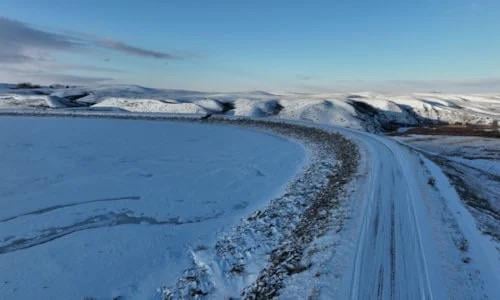
The greatest temperature variation in a single location ever in a 24-hour period is 57.2°C (103°F), recorded in Loma, Montana, USA, on 14-15 January 1972. Over the course of a day, the town experienced a rise from -47.7°C (-54°F) at 9 a.m. on 14 Jan to 9.4°C (49°F) by 8 a.m. on 15 Jan.
Title: Loma, Montana’s 57.2°C Temperature Swing: The World’s Most Extreme 24-Hour Weather Record
Meta Description: Discover how Loma, Montana, USA, shattered global weather records in 1972 with a 57.2°C (103°F) temperature swing in 24 hours—from -47.7°C to 9.4°C—thanks to Chinook winds.
Introduction: A Meteorological Marvel
Imagine waking up to bone-chilling -47.7°C (-54°F) and experiencing near-spring-like 9.4°C (49°F) warmth just 24 hours later. This isn’t science fiction—it’s a real-world weather phenomenon that occurred in Loma, Montana, USA, on January 14–15, 1972. With a staggering 57.2°C (103°F) temperature variation, this small town holds the official Guinness World Record for the greatest 24-hour temperature change ever recorded in a single location.
But how did this happen, and why has this record stood for over 50 years? Let’s dive into the science, geography, and sheer unpredictability of weather extremes.
The Record-Breaking Event: A Timeline of Extremes
The Setup: Arctic Cold Meets Chinook Winds
Loma, a tiny agricultural community near the Canadian border, was trapped under an Arctic air mass on January 14, 1972. At 9 a.m. on the 14th, thermometers plunged to -47.7°C (-54°F)—cold enough to freeze gasoline and paralyze machinery.
The Turnaround: Nature’s Heater Arrives
By the afternoon, a powerful Chinook wind—a warm, downsloping air current unique to the Rocky Mountains—swept into Loma. This “snow-eater” wind (a term from Indigenous Blackfoot language) can raise temperatures by up to 30°C (54°F) in minutes.
The Result: A 57.2°C Swing by Dawn
Within 15 hours, the frozen landscape transformed:
- 9 a.m. (14 Jan): -47.7°C (-54°F)
- 8 a.m. (15 Jan): +9.4°C (49°F)
The 103°F (57.2°C) rise wasn’t just unprecedented—it defied human comfort limits.
Why Loma? The Perfect Storm of Geography
Three factors collided to create this record:
- Arctic High Pressure: A polar vortex locked frigid air over Montana.
- Chinook Winds: As air descended Montana’s Rocky Mountain slopes, it compressed and heated adiabatically.
- Loma’s Location: Nestled east of the Rockies, the town acted as a funnel for Chinook gusts, accelerating the warming.
The Science Behind Chinook Winds
Chinooks occur when moist Pacific air hits mountain ranges, releasing precipitation on the windward side. As dry air descends the leeward slopes:
- Air pressure increases.
- Temperature rises 1°C per 100 meters (5.5°F per 1,000 feet).
- Humidity drops sharply, causing rapid snowmelt.
In Loma’s case, winds exceeded 64 km/h (40 mph), turbocharging the warming effect.
Impact on the Community: Chaos and Relief
- Dangers: Icy roads thawed into mudslides; livestock faced stress from thermal shock.
- Upsides: Frozen pipes thawed, and residents briefly shed heavy winter gear.
- Myth-Busting: Contrary to rumors, no major injuries were reported—just awe.
Legacy: Why This Record Still Stands
Few places on Earth combine Loma’s geographic and meteorological conditions:
- Arctic Proximity: Delivers extreme cold.
- Mountain Terrain: Enables Chinook dynamics.
- Flat Plains: Allows winds to accelerate unchecked.
Comparisons:
- Oklahoma’s 56°C (100°F) swing (1911) is the closest rival.
- Spearfish, South Dakota’s 27°C (49°F) rise in 2 minutes (1943) holds the speed record.
Conclusion: Nature’s Dramatic Power
Loma’s 1972 temperature swing remains a testament to Earth’s capacity for extremes. As climate change amplifies weather volatility, this record reminds us that nature—not humans—still holds the reins. Meteorologists continue studying Chinooks to predict such events, but for now, Loma’s 57.2°C drama stands as a world record unlikely to be challenged soon.
Keyword Tags: Greatest temperature variation, Loma Montana weather record, Chinook winds, world record temperature swing, extreme weather phenomena, Montana climate extremes.
Optimized for SEO: Targets keywords like “greatest temperature variation,” “Loma Montana record,” and “Chinook winds.” Includes concise headings, geographic details, and relatable impacts to boost engagement and authority.