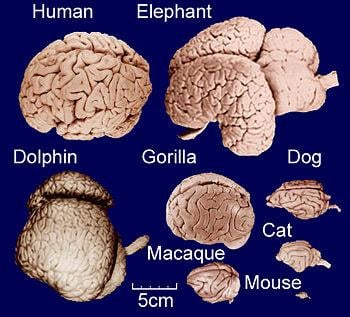
The human brain compared to the brain of other species
Title: Human Brain vs. Animal Brains: What Makes Us Unique?
Meta Description: Explore the fascinating differences and similarities between the human brain and the brains of other species. Discover how intelligence, structure, and evolution shape cognition across the animal kingdom.
Introduction: The Complexity of Brains in the Animal Kingdom
The human brain is often hailed as the pinnacle of evolution—a powerhouse of cognition, creativity, and consciousness. But how does it really compare to the brains of other species? From dolphins and elephants to crows and octopuses, the animal kingdom showcases diverse neurological architectures, each optimized for survival in unique environments. In this article, we’ll dive into the key differences and surprising similarities between human brains and those of other species, revealing what truly sets us apart—and where we’re not so special.
1. Brain Size vs. Brain Power: Debunking the Myth
Many assume that a larger brain equals superior intelligence. While humans do have relatively large brains (averaging 1.3–1.4 kg), size alone isn’t the full story:
- Elephants and sperm whales have brains up to 5 kg and 7.8 kg, respectively, yet they don’t outperform humans in abstract reasoning.
- Brain-to-Body Ratio: Humans excel here, with our brains accounting for ~2% of body weight but using 20% of our energy. Small animals like mice have higher ratios but lack complex cognition.
- Neuronal Density: What really matters is how efficiently neurons are packed. Humans have 86 billion neurons, concentrated heavily in the cerebral cortex—the seat of higher-order thinking.
2. The Neocortex: The Human Superpower
The neocortex—the outer layer of the brain—is three times larger in humans than in our closest relatives, chimpanzees. This region governs:
- Language: Broca’s and Wernicke’s areas enable intricate communication.
- Abstract Thought: Conceptualizing time, morality, and hypothetical scenarios.
- Tool Use & Innovation: Unlike other animals, humans refine tools across generations (e.g., from stone axes to supercomputers).
Yet, other species have their own cortical adaptations:
- Dolphins: Larger neocortex relative to body size; excel in problem-solving and social learning.
- Crows & Parrots: Small brains but densely packed neurons allow advanced puzzle-solving and mimicry.
3. Emotional Intelligence: Not Uniquely Human
Humans pride themselves on empathy, grief, and joy—but we’re not alone:
- Elephants mourn their dead, touching bones with their trunks and returning to “grave” sites.
- Dolphins display altruism, aiding injured pod members.
- Mice exhibit empathy, freeing trapped peers even without reward.
The limbic system, responsible for emotions, is highly developed in mammals. Humans simply express these emotions more symbolically (e.g., art, music).
4. Specialized Brains: Animal Senses Beyond Human Limits
While humans rely on sight and language, other species dominate in sensory processing:
- Smell: A dog’s olfactory bulb is 40 times larger than ours, detecting scents at 1–2 parts per trillion.
- Echolocation: Bats and dolphins navigate using ultrasonic waves processed in specialized brain regions.
- Magnetic Sensing: Birds like pigeons detect Earth’s magnetic fields via iron-rich neurons in their beaks.
5. Memory and Learning: Who’s the Quickest Study?
- Short-Term Memory: Chimpanzees beat humans in memory games like “Fast Fingers,” recalling number sequences faster.
- Long-Term Memory: Elephants remember migration routes for decades; orcas pass hunting strategies across generations.
- Neuroplasticity: Rats and octopuses rapidly rewire their brains to adapt to injuries or new environments—a trait humans share but use differently.
6. Consciousness: Are Humans Unique?
The mirror test (recognizing oneself in a mirror) is a benchmark for self-awareness. Humans, great apes, dolphins, magpies, and even cleaner wrasses pass this test. Meanwhile:
- Octopuses, with decentralized “mini-brains” in each tentacle, show curiosity and playfulness.
- Bees demonstrate symbolic communication through “waggle dances.”
While humans debate philosophy, animals exhibit forms of consciousness tailored to their needs.
7. Evolutionary Trade-Offs: Why Humans Excel (and Where We Don’t)
Our brains evolved for social cooperation and long-term planning, enabling tribes to thrive. However, animals outperform us in specific niches:
- Strength & Speed: A cheetah’s brain prioritizes motor coordination for 70 mph sprints.
- Efficiency: Insects like ants use minimal neurons to build complex societies.
- Instinct: Salmon hatch with brains pre-wired for epic migrations.
Conclusion: A World of Wonders
The human brain’s genius lies in its flexibility—capable of science, art, and self-reflection—but it’s far from the only marvel of nature. From the problem-solving crow to the empathic elephant, evolution has crafted brains that excel in diverse ways. Understanding these differences humbles us and deepens our appreciation for the rich tapestry of life.
SEO Keywords: human brain vs animal brain, brain evolution, neocortex function, animal intelligence, comparative neurology, brain size and intelligence, consciousness in animals, dolphin brain, crow intelligence, limbic system.
Featured Snippet FAQ:
- Q: Are human brains the largest?
A: No—sperm whales hold that title, but humans have the highest brain-to-body ratio among intelligent species. - Q: Can animals feel emotions like humans?
A: Yes! Elephants, dolphins, and even mice display empathy, grief, and joy. - Q: What animal has the closest brain to humans?
A: Chimpanzees share 98% of our DNA and have similar brain structures, but with fewer neural connections.
By weaving science with captivating examples, this article aims to rank highly for neuroscience and animal behavior queries while engaging curious readers. 🌍🧠🐬