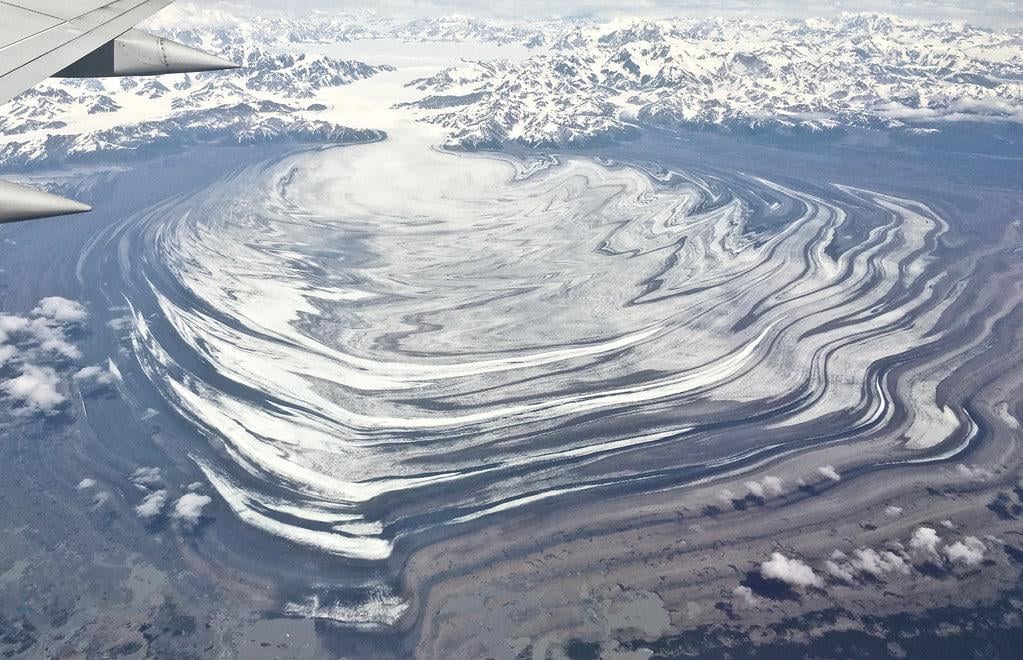
The Malaspina Glacier in Alaska presents a particularly unusual shape.
Title: The Malaspina Glacier: Alaska’s Uniquely Shaped Ice Giant
Meta Description: Explore Alaska’s Malaspina Glacier, one of Earth’s most unusual glaciers with its sprawling, pancake-like shape. Learn how this glacial wonder formed and why it captivates scientists and adventurers alike.
Introduction: Alaska’s Frozen Marvel
Alaska’s glaciers are legendary for their scale and beauty, but none stand out quite like the Malaspina Glacier. Located in the southeastern part of the state, this colossal ice sheet is not only North America’s largest piedmont glacier—it’s also a geological oddity with a shape unlike any other glacier on Earth. Resembling a giant, crumpled pancake or a surreal octopus stretching its icy arms across the landscape, the Malaspina Glacier offers a visual spectacle visible even from space. But what makes its formation so extraordinary? Let’s explore.
What Makes the Malaspina Glacier’s Shape So Unusual?
Most glaciers flow like rivers of ice, constrained by valleys or mountains. The Malaspina Glacier, however, defies this pattern. When it spills out from the Saint Elias Mountains onto the flat coastal plain of the Gulf of Alaska, it spreads laterally into a vast, lobe-shaped expanse covering nearly 1,500 square miles (3,900 km²)—larger than Rhode Island!
This “piedmont” style (derived from the Italian for “foot of the mountain”) creates its signature fan-like shape, with intricate patterns of crevasses and dirt bands that resemble abstract art when viewed from above. Its sluggish movement—only a few centimeters per day—allows it to slowly morph into a sprawling, circular mass edged by jagged ice lobes.
How Did This Unique Glacier Form?
The Malaspina’s bizarre structure is the result of a rare glacial trifecta:
- Multiple Ice Sources: It’s fed by several valley glaciers, including the colossal Seward Glacier, which merge like converging highways at the mountain’s base.
- Flat Terrain: The glacier’s dramatic spread occurs because it flows from steep valleys onto a coastal plain, allowing it to “pancake” outward rather than downward.
- Climate and Geography: Heavy snowfall in the Saint Elias Range and slow melting due to its low elevation sustain its massive size.
A Living Laboratory for Climate Science
Scientists view the Malaspina as a critical indicator of climate change. Its surface is coated with “glacial flour”—fine sediment swept up by ice movement—that forms striking concentric patterns visible in satellite imagery. However, the glacier is rapidly retreating due to rising temperatures, losing an estimated 0.6 cubic miles of ice annually.
Its meltwater also feeds into one of Alaska’s largest proglacial lakes, creating ecosystems unique to glacial environments. Researchers study its sediments to decode ancient climate records, while its shifting margins provide real-time data on Arctic warming.
Visiting the Malaspina Glacier: Tips for Adventurers
While remote, the glacier is accessible via flightseeing tours from Yakutat or nearby Wrangell-St. Elias National Park. Highlights include:
- Aerial views of its mesmerizing swirls and deep blue crevasses.
- Hiking along its outwash plains (with a guide—crevasses are hazardous!).
- Wildlife spotting: Look for coastal brown bears, eagles, and seals in the adjacent Gulf waters.
Insider Tip: Visit between May and September for clearer skies and safer conditions.
Why the Malaspina Glacier Matters
Beyond its odd beauty, the Malaspina Glacier serves as a stark reminder of Earth’s fragility. As it melts, it contributes to sea-level rise while reshaping local landscapes and habitats. Its unusual structure also provides insights into glacial dynamics on other planets, like Mars, where similar piedmont formations exist.
Conclusion: Nature’s Ice Giant, Unmatched and Unforgettable
The Malaspina Glacier is more than an Alaskan landmark—it’s a testament to the planet’s complexity. Its bizarre shape, slow-motion flow, and role in climate science make it a marvel worth protecting (and visiting, responsibly!). Whether you’re a geology enthusiast, adventurer, or eco-tourist, this sprawling ice giant offers a glimpse into Earth’s past—and a warning about its future.
Fun Fact: The glacier is named after Alessandro Malaspina, an Italian explorer who mapped Alaska’s coast in 1791. Its Indigenous name, Sít’ Tlein, means “Big Glacier” in Tlingit.
Keywords: Malaspina Glacier Alaska, largest piedmont glacier, unique glacier shapes, Alaska glaciers, glacial formations, climate change glaciers, Wrangell-St. Elias National Park, glacial retreat, flightseeing tours Alaska.
Optimize Further: Add internal links to related articles on Alaska travel, climate change impacts, or Wrangell-St. Elias hiking guides. Use high-quality images with alt text (“aerial view of Malaspina Glacier’s unusual shape”) for SEO.
By blending science, adventure, and environmental urgency, this piece engages readers while targeting key search terms about Alaska’s icy wonders. Let me know if you’d like tweaks for tone or depth!