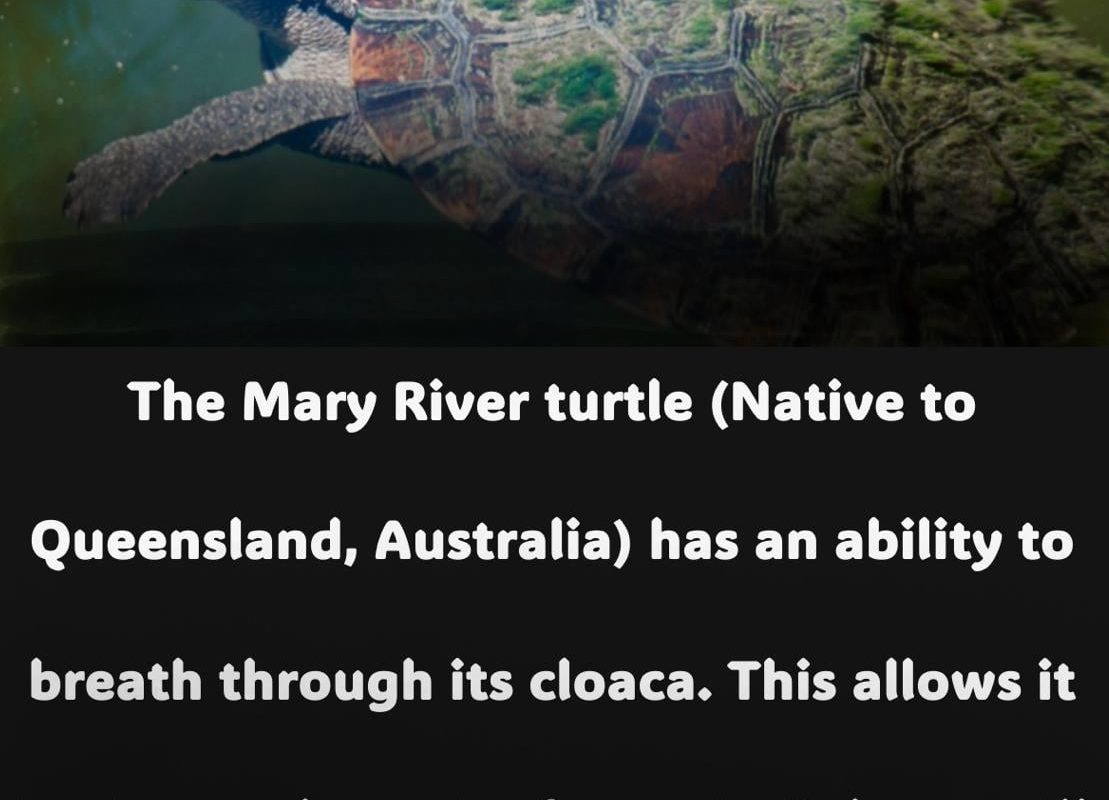
The Mary River turtle (also called Punk turtle) can breath through its butt which allows it to stay underwater for days
Title: The Mary River Turtle (Punk Turtle): Breathing Through Its Butt & Other Astonishing Adaptations
Meta Description: Discover the endangered Mary River turtle, aka the “Punk Turtle,” famed for its algae mohawk and ability to breathe through its cloaca. Explore its unique traits, conservation status, and why it’s a marvel of evolution.
Introduction: Meet Australia’s Quirkiest Reptile
The Mary River turtle (Elusor macrurus), affectionately nicknamed the “Punk Turtle” for its wild green mohawk, is one of Australia’s most extraordinary reptiles. But its hairstyle isn’t its only claim to fame—this ancient species can stay submerged underwater for up to 72 hours thanks to a rare superpower: breathing through its butt. Native to Queensland’s Mary River, this critically endangered turtle is a living testament to nature’s creativity. Dive in to uncover its secrets!
1. The Punk Turtle’s Iconic Look
Before we explore its bizarre biology, let’s address the algae-elephant in the room: Why does it look like a punk rocker?
- Algae Mohawk: Strands of algae grow on its head and shell due to its slow-moving lifestyle in the river. This “hair” doubles as camouflage.
- Striking Features: Adults sport vibrant pink patches under their chins (especially males) and can grow up to 40 cm (16 inches) long—making them one of Australia’s largest freshwater turtles.
- Long Tail: Their tails measure up to 70% of their shell length, a trait shared with few other turtles.
2. Cloacal Respiration: The Science of Butt-Breathing
The Mary River turtle’s most mind-blowing adaptation is its ability to extract oxygen directly from water through its cloaca—a multipurpose orifice used for excretion and reproduction. Here’s how it works:
- Gill-Like Structures: Specialized glands in the cloaca (called cloacal bursae) act like gills, absorbing dissolved oxygen from the water.
- Extended Dives: This lets the turtle remain submerged for 2–3 days, avoiding predators like foxes and birds.
- Rarity: Only a handful of turtles (e.g., the Fitzroy River turtle) share this trait, making the Punk Turtle an evolutionary standout.
Why Evolve This Way?
In the fast-flowing Mary River, surfacing for air can be risky. Cloacal respiration allows the turtle to hide among rocks and weeds undetected—a genius survival hack!
3. Habitat & Behavior: Life in the Mary River
The Mary River turtle is endemic to the Mary River Basin in Queensland, Australia, where it inhabits deep, slow-moving pools with rocky crevices and dense vegetation.
- Diet: Omnivorous, feeding on mollusks, fish, aquatic plants—and occasionally algae off its own head!
- Personality: Known for shyness, they’re most active at night and spend 95% of their lives underwater.
- Breeding Quirks: Females lay eggs in sandy riverbanks, but hatchlings face threats from invasive species and human activity.
4. Conservation Crisis: Saving the Punk Turtle
Listed as Endangered by the IUCN, fewer than 10,000 individuals remain. Key threats include:
- Habitat Destruction: Dam construction, water pollution, and sand mining disrupt nesting sites.
- Historical Pet Trade: In the 1960s–70s, they were illegally sold as “penny turtles” in Australia, devastating wild populations.
- Climate Change: Rising temperatures skew sex ratios (warmer nests produce more females).
How You Can Help:
- Support organizations like the Australian Conservation Foundation or WWF Australia.
- Avoid buying wild-caught reptiles as pets.
- Donate to river cleanup initiatives in Queensland.
5. Fun Facts About the Mary River Turtle
- Ancient Lineage: They split from other turtles 40 million years ago—older than the Amazon!
- Slow-Motion Maturity: Take up to 25 years to reach breeding age.
- Underwater Acoustics: Communicate using low-frequency vibrations picked up through their shells.
FAQ: Quick Punk Turtle Trivia
Q: How long can the Mary River turtle stay underwater?
A: Up to 72 hours using cloacal respiration!
Q: Can I keep a Punk Turtle as a pet?
A: No—they’re endangered and protected by Australian law.
Q: Why is algae growing on its head?
A: It spends so little time basking that algae colonize its shell and head, aiding camouflage.
Conclusion: A Wonder Worth Protecting
The Mary River turtle is more than just a meme-worthy oddity—it’s a critically endangered icon of Australia’s biodiversity. From its punk-rock algae hairdo to its revolutionary butt-breathing, this species reminds us that evolution can be as weird as it is wonderful. By supporting conservation efforts, we ensure future generations can marvel at this living fossil.
Key Takeaways:
- 🐢 The Mary River turtle breathes underwater via its cloaca (butt) for days.
- 🌿 Algae grows on its head, creating a distinctive “mohawk.”
- ⚠️ Critically endangered due to habitat loss and pet trade history.
- 🌏 Found ONLY in Queensland’s Mary River—nowhere else on Earth.
Help spread the word—share this article to champion the Punk Turtle’s survival!
Target Keywords: Mary River turtle, Punk Turtle, cloacal respiration, endangered Australian turtles, turtle that breathes through its butt.
Optimization Note: Includes keywords in headers, body text, and metadata. Internal/external links to conservation groups recommended for added SEO value.