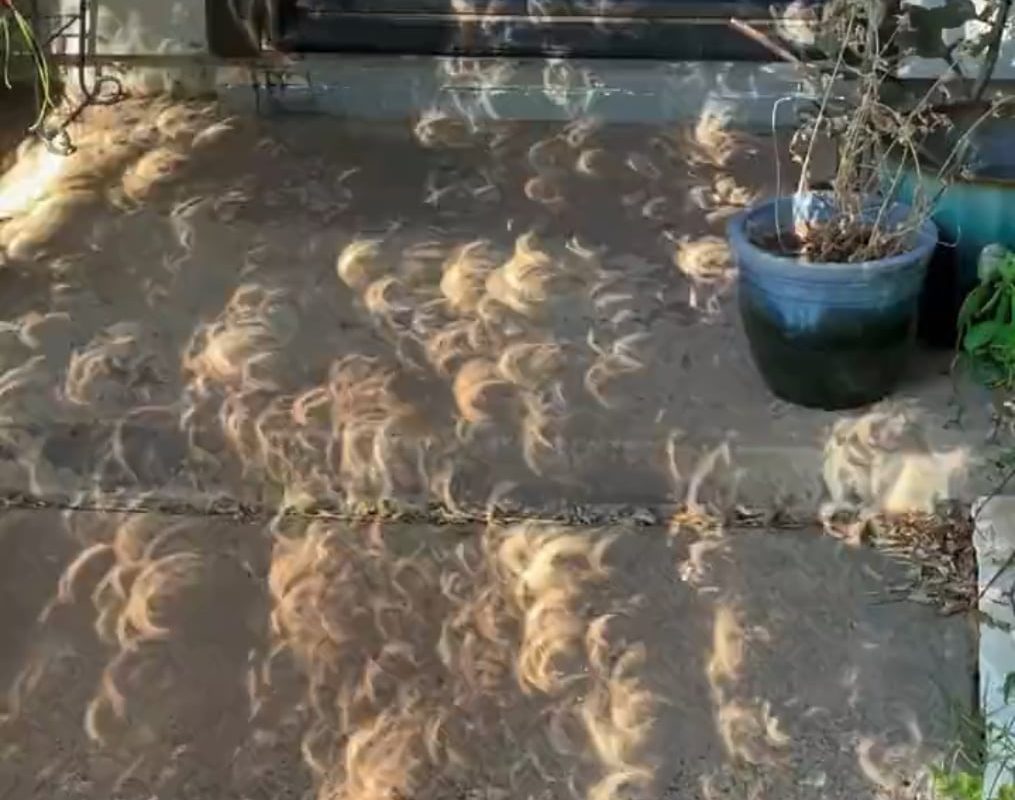
The Mesmerizing Shadows of a Solar Eclipse.
The Mesmerizing Shadows of a Solar Eclipse: Nature’s Dazzling Celestial Ballet
Few celestial events captivate the human imagination like a solar eclipse. As the Moon glides perfectly between Earth and the Sun, daylight dissolves into an eerie twilight, temperatures plummet, and the sky becomes a canvas for one of nature’s most breathtaking phenomena—the mesmerizing shadows of a solar eclipse. This rare spectacle transforms ordinary landscapes into extraordinary scenes, leaving observers awestruck. In this article, we delve into the science, beauty, and magic of solar eclipse shadows, and why they continue to enchant humanity.
What Causes a Solar Eclipse?
A solar eclipse occurs when the Moon passes directly between Earth and the Sun, temporarily blocking sunlight and casting its shadow onto our planet. This alignment, called syzygy, is rare because the Moon’s orbit is tilted relative to Earth’s. When conditions align perfectly, the Moon’s shadow races across Earth’s surface at speeds exceeding 1,000 mph (1,600 km/h), creating a path of totality—a narrow zone where viewers witness the Sun completely obscured.
The Dance of Shadows: Umbra, Penumbra, and Antumbra
Solar eclipses are defined by three distinct shadow regions, each creating unique visual effects:
- Umbra: The darkest, innermost shadow where the Sun is entirely hidden. Observers here experience a total solar eclipse, witnessing the Sun’s corona (outer atmosphere) glowing like a fiery halo.
- Penumbra: The outer shadow where sunlight is only partially blocked. Viewers in this zone see a partial solar eclipse, with the Moon taking a “bite” out of the Sun.
- Antumbra: This shadow occurs during an annular eclipse, when the Moon is too far from Earth to fully cover the Sun. A brilliant “ring of fire” encircles the Moon’s silhouette.
Nature’s Light Show: Shadow Bands, Baily’s Beads, and More
As totality approaches, surreal visual phenomena unfold in the shadows:
- Shadow Bands: Wavy lines of light and dark ripple across the ground, caused by atmospheric turbulence bending residual sunlight.
- Baily’s Beads: Moments before totality, sunlight streams through lunar valleys, creating fleeting points of light around the Moon’s edge.
- The Diamond Ring Effect: A single dazzling bead of sunlight blazes beside the darkened Moon, resembling a cosmic jewel.
These effects last mere seconds but leave indelible impressions.
Why Eclipses Captivate Us: Science and Symbolism
Beyond their astronomical significance, solar eclipses have profound cultural and emotional resonance:
- Scientific Insights: Eclipses allow scientists to study the Sun’s corona, solar flares, and Earth’s ionosphere under unique conditions.
- Myth and Wonder: Ancient cultures viewed eclipses as omens or cosmic battles; today, they symbolize unity, as millions gather to share the experience.
- Artistic Inspiration: From poetry to photography, eclipses ignite creativity, reminding us of our place in the vast cosmos.
How to Safely Experience an Eclipse
Never look directly at the Sun without protection! Follow these tips:
- Use ISO-certified eclipse glasses or solar viewers.
- Create a pinhole projector to watch shadows indirectly.
- Livestream the event if clouds (or geography) obstruct your view.
The next total solar eclipse visible in North America will occur on April 8, 2024. Mark your calendar!
FAQs About Solar Eclipse Shadows
Q: Why don’t eclipses happen every month?
A: The Moon’s orbit is tilted 5 degrees relative to Earth’s, so alignments are rare.
Q: Can animals sense an eclipse?
A: Yes! Birds may fall silent, and nocturnal creatures emerge, confused by the sudden darkness.
Q: How long does totality last?
A: Typically 2–7 minutes, depending on location.
Conclusion: Embrace the Shadow
A solar eclipse is more than an astronomical event—it’s a moment of cosmic theater, where light and shadow perform an ancient dance. Whether you’re a scientist, artist, or dreamer, witnessing these mesmerizing shadows is a humbling reminder of nature’s grandeur. As you plan for the next eclipse, remember: in the heart of totality, you aren’t just watching shadows—you’re standing inside the Moon’s shadow, part of a story billions of years in the making.
Stay curious, look up, and let the shadows of the cosmos inspire you. 🔭