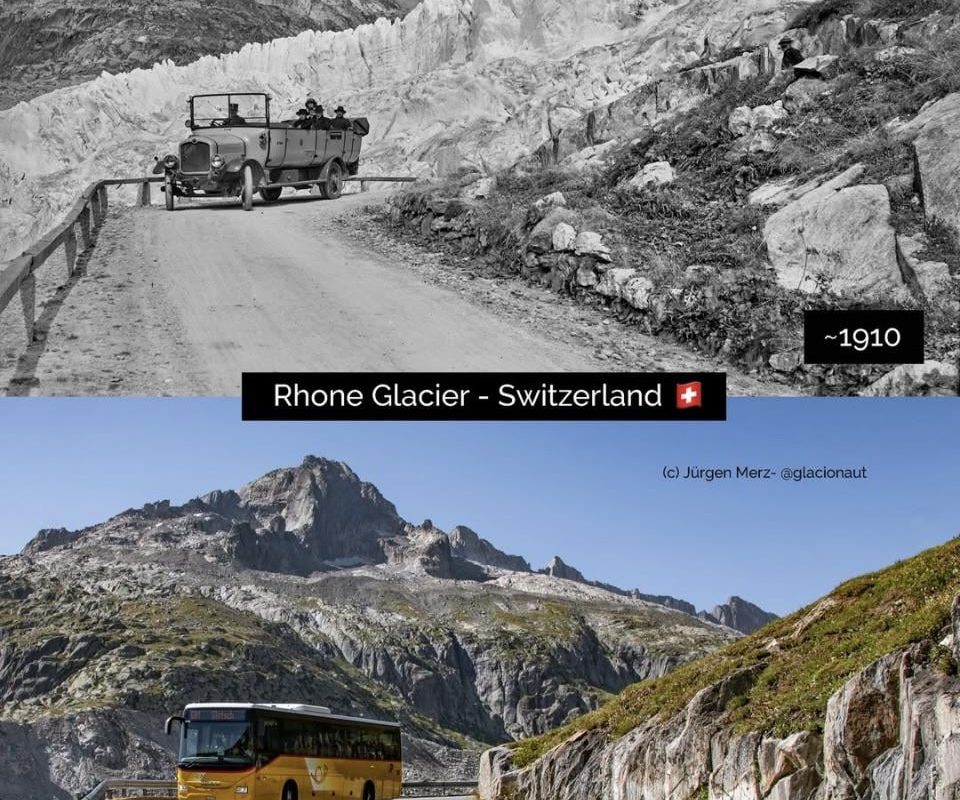
The Rhône Glacier (1910/2025) – In one century this glacier entirely disappeared from the road of Furka Pass!
Title: The Vanishing Giant: Rhône Glacier’s Dramatic Retreat from Furka Pass (1910-2025)
Meta Description: Discover the shocking transformation of Switzerland’s Rhône Glacier, which vanished from the Furka Pass road in just over a century. Explore its past glory, present reality, and urgent climate change implications.
Introduction: A Century of Loss
In 1910, travelers crossing Switzerland’s iconic Furka Pass were greeted by a breathtaking spectacle: the Rhône Glacier, a colossal river of ice spilling toward the valley below. Fast-forward to 2025, and the glacier has retreated so dramatically that it’s no longer visible from the pass—a stark symbol of climate change’s relentless impact. This article explores how one of Europe’s most famous glaciers disappeared from view in just over 100 years and what its vanishing means for our planet.
The Rhône Glacier in 1910: A Frozen Marvel
At the turn of the 20th century, the Rhône Glacier dominated the landscape near Furka Pass:
- Awe-Inspiring Scale: The glacier extended nearly 8 kilometers (5 miles) and fed the mighty Rhône River, a vital water source for Switzerland and France.
- Tourist Magnet: Visitors flocked to hike its crevassed surface or sip drinks at the iconic “Ice Grotto,” carved annually into the glacier’s blue heart.
- Engineering Challenge: Its sheer size forced engineers to reroute the Furka Pass road multiple times to avoid advancing ice.
2025: A Glacier Out of Sight, Out of Mind
A century later, the Rhône Glacier exists only in fragments. Key changes:
- Retreating at Record Speed: Since 1850, the glacier has lost 1.3 kilometers (0.8 miles) in length and 200 meters (650 feet) in thickness—half of that since 2000 alone.
- No Longer Visible from Furka Pass: By 2025, the glacier terminus retreated so far uphill that it vanished from roadside viewpoints.
- Artificial “Survival” Efforts: In a desperate bid to slow melting, parts of the glacier are covered with reflective white tarps each summer—a temporary fix emblematic of our climate crisis.
Why Did the Glacier Disappear? Climate Change Accelerates Collapse
The Rhône Glacier’s fate mirrors global trends:
- Rising Temperatures: The Alps have warmed by 2°C (3.6°F) since 1900—double the global average—melting ice year-round.
- Reduced Snowfall: Warmer winters bring rain instead of snow, depriving glaciers of replenishment.
- Feedback Loops: Exposed dark rock absorbs more heat, accelerating melt in a vicious cycle.
Consequences Beyond the Ice
The glacier’s loss impacts ecosystems and economies:
- Water Stress: The Rhône River supplies water to 4 million people. Seasonal meltwater shortages threaten agriculture and hydropower.
- Erosion & Flooding: Melting ice destabilizes slopes, increasing landslide risks.
- Tourism Decline: The famed Ice Grotto, now just a shrinking tunnel, may vanish entirely by 2030. Furka Pass visitors today see retreat markers instead of glacial majesty.
What’s Next? The Alps Without Ice
Scientists project that 50–90% of Alpine glaciers will disappear by 2100 if emissions remain unchecked. The Rhône Glacier’s retreat is a preview of this future:
- Global Warning: Glaciers worldwide lost 267 gigatonnes of ice annually from 2000–2019—enough to drown Switzerland in 6 meters of water each year.
- A Call to Action: Switzerland’s “Glacier Initiative” pushes for carbon neutrality by 2050, but urgent global cooperation is needed.
How to Visit (Before It’s Too Late)
While the Rhône Glacier is a shadow of its former self, visiting reveals climate change’s raw reality:
- Hike the Glacier Trail: A panoramic path from Furka Pass to the receding tongue.
- Witness the Tarps: See the eerie white blankets draping the glacier in summer.
- Learn at Exhibits: Nearby displays showcase historic photos and model predictions.
Conclusion: A Glacial Warning
The Rhône Glacier’s flight from Furka Pass mirrors our planet’s fragile balance. Once a symbol of natural wonder, its vanishing calls for urgent action before the Alps—and glaciers worldwide—become mere legends of a cooler past. As temperatures rise, saving what remains starts with reducing emissions today.
Keywords for SEO:
Rhône Glacier disappearance, Furka Pass glacier loss, climate change Switzerland, Alpine glaciers melting, Rhône Glacier 1910 vs 2025, glacier retreat tourism, effects of global warming on glaciers, shrinking glaciers Europe
FAQ Section:
Q: How far has the Rhône Glacier retreated?
A: It lost ~1.3 km since 1850, halving in volume since 2000.
Q: Can the Rhône Glacier regrow?
A: Only with decades of consistent cooling—unlikely under current projections.
Q: What replaces the glacier?
A: Barren rock, unstable debris, and glacial lakes prone to outburst floods.
Q: Are other Swiss glaciers disappearing?
A: Yes. Pizol Glacier was declared “dead” in 2019, and the Aletsch Glacier—Switzerland’s largest—is shrinking rapidly.
Call to Action: Share this article to spread awareness. Follow #SaveOurGlaciers or support climate advocacy groups like Protect Our Winters. The Alps are watching—and melting.