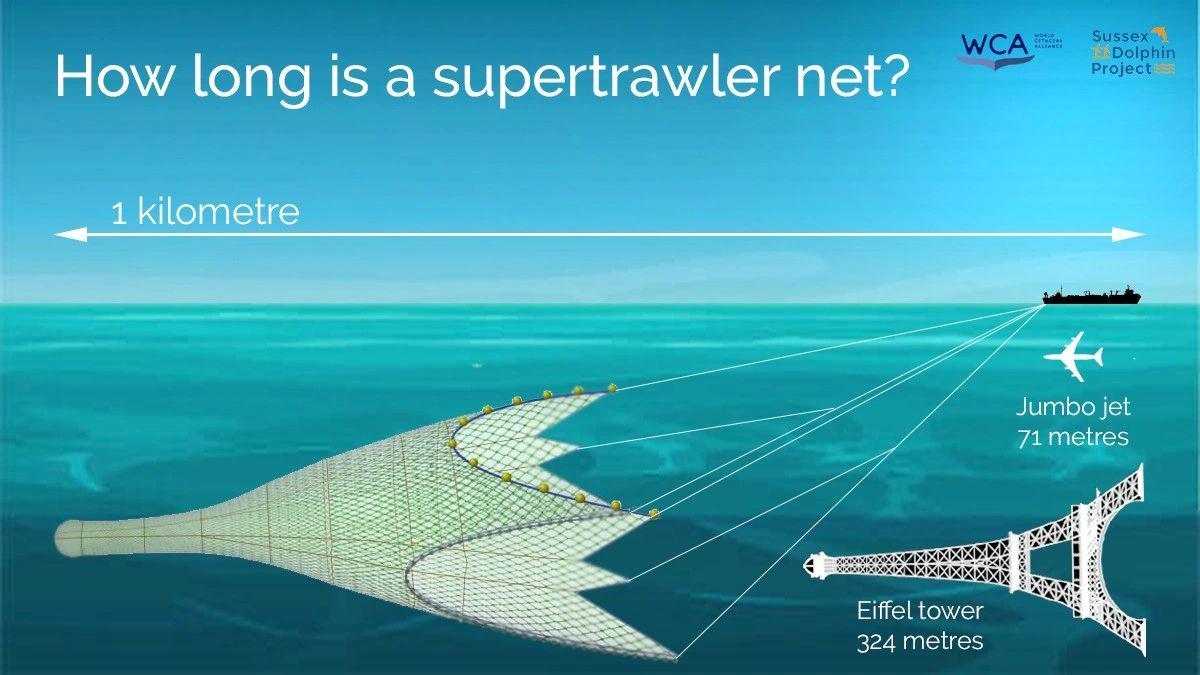
The size of a super trawler net
The Colossal Scale of Super Trawler Nets: Engineering Giants of the Ocean
Super trawlers—massive fishing vessels capable of processing hundreds of tons of fish daily—are synonymous with industrial-scale fishing. But the true marvel (and controversy) lies in their nets: engineering feats so vast they can engulf entire schools of fish and inadvertently reshape marine ecosystems. In this deep dive, we explore the staggering size of super trawler nets, their environmental impact, and the regulations governing their use.
How Big Is a Super Trawler Net? Numbers That Defy Imagination
Super trawler nets are among the largest human-made structures deployed in the ocean. While dimensions vary by vessel and target species, these nets often reach jaw-dropping scales:
- Length & Width: A single net can stretch 200–250 meters (650–820 feet) in length—longer than two football fields. When fully open, the mouth (opening) of the net can span 50–100 meters (164–328 feet) wide, large enough to swallow a Boeing 747.
- Depth: Midwater trawl nets (used for pelagic fish like mackerel or herring) extend 30–60 meters (98–197 feet) deep, while bottom trawl nets can drag even deeper.
- Volume: When deployed, the net forms a conical “bag” capable of holding over 500,000 cubic meters of water—equivalent to 200 Olympic swimming pools.
For comparison, a traditional small fishing boat uses nets measuring 20–50 meters long and 5–10 meters wide—dwarfed by super trawler gear.
Purpose vs. Problem: Why Such Size?
These mega-nets serve one goal: maximize efficiency in open-water fishing. Super trawlers target dense schools of fish across vast migratory routes, relying on massive nets to:
- Cover expansive ocean areas quickly.
- Sustain high-volume catches for canneries, fishmeal, and global markets.
- Operate continuously for months, with onboard factories processing catches instantly.
Vessels like the infamous Annelies Ilena (formerly Margiris), the second-largest trawler in the world, typify this scale—carrying nets that can harvest 250 tons of fish per day.
Environmental Impact: A Net Effect on Marine Life
The sheer size of super trawler nets raises alarming ecological concerns:
- Bycatch Galore: Non-target species—dolphins, sharks, seals, and seabirds—are often trapped and killed. A single haul can include up to 70% bycatch in unregulated fisheries.
- Habitat Destruction: Bottom trawls scrape seabeds, obliterating coral, sponges, and sensitive ecosystems.
- Overfishing Risks: Large nets enable rapid depletion of fish stocks, disrupting food chains (e.g., Namibia’s decline in horse mackerel due to super trawling).
A 2022 Greenpeace report highlighted super trawlers in the Atlantic routinely violating bycatch limits, threatening endangered species.
Regulations: Governing the Ungovernable?
Global regulations struggle to keep pace with super trawlers’ mobility and scale:
- EU Bans: Several European nations, including France and the UK, banned super trawlers from their waters, citing ecological risks.
- Australia’s Restrictions: After public outcry, Australia blocked the Margiris in 2013 from operating in its waters.
- Mesh Size Rules: Many regions enforce minimum mesh sizes (e.g., 40–100mm) to allow juvenile fish to escape. Still, enforcement remains lax.
Critics argue that loopholes—like reflagging vessels to lax jurisdictions—undermine protections.
Technical Innovations & Alternatives
To mitigate harm, scientists and fishing firms are testing:
- Acoustic Sensors: Alert crews to dolphin pods near nets.
- LED Lights: Reduce bycatch by 60% by repelling turtles and seals (as shown in U.S. trials).
- Small-Scale Alternatives: Boycotts and “slow fish” movements advocate for low-impact gear like handlines.
Yet, economic incentives keep super trawlers dominant in global fisheries.
Conclusion: The Net-Necessary Debate
Super trawler nets symbolize humanity’s capacity to exploit the ocean’s abundance—but also its fragility. While these nets feed millions, their unchecked use risks collapsing fisheries and biodiversity. Stricter regulations, technology upgrades, and consumer pressure for sustainable seafood remain critical to balancing scale with stewardship.
FAQ: Super Trawler Nets
Q1: How much can a super trawler net catch in one haul?
A: Up to 300 tons, enough to fill 12 shipping containers.
Q2: What’s the largest super trawler net ever recorded?
A: Nets used by vessels like the Dirk Dirk (4000 GT) exceed 250 meters in length.
Q3: Do larger nets mean greater efficiency?
A: Yes, but often at the cost of ecological disruption—including overfishing and bycatch.
Q4: Are there nets designed to reduce bycatch?
A: Yes. “Excluder devices” allow turtles/sharks to escape, but adoption is slow.
Q5: Where are super trawlers most active?
A: The Atlantic, Pacific, and Indian Oceans, often targeting mackerel, sardines, and krill.
Keywords for SEO: Super trawler net size, super trawler environmental impact, largest fishing nets, bycatch reduction, industrial fishing regulations, pelagic trawling, marine conservation.
By understanding the monumental scale of super trawler nets, we confront a stark choice: continue unchecked extraction or evolve toward a future where fishing respects ecological boundaries. The net, in this case, is far more than gear—it’s a lifeline demanding balance.