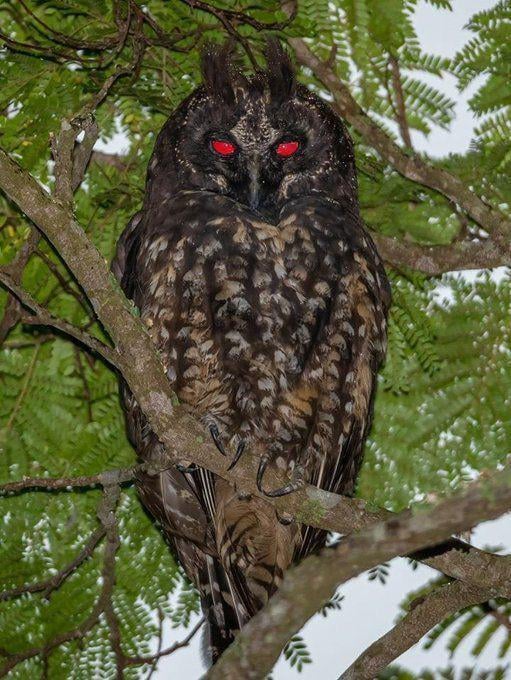
The Stygian Owl (Asio stygius). This owl is know for red reflection of their eyes that are often associated with the Devil. It is therefore also known as the Devil’s Owl.
Title: The Stygian Owl: Unmasking the Mysterious “Devil’s Owl” of the Americas
Meta Description: Discover the secrets of the Stygian Owl (Asio stygius), a nocturnal predator with haunting red eyes that earned it the nickname “Devil’s Owl.” Learn about its habitat, behavior, and eerie folklore.
The Stygian Owl: Eye of the Night, Legend of the Devil
Deep in the forests and mountains of the Americas, a ghostly figure roams the night. With piercing orange-red eyes that glow like embers in the dark and an uncanny, silent flight, the Stygian Owl (Asio stygius) has long been shrouded in superstition. Known as the “Devil’s Owl” in local folklore, this enigmatic bird strikes fear and fascination in equal measure. But beyond the myths lies a remarkable predator perfectly adapted to its shadowy realm.
In this deep dive, we’ll explore the biology, behavior, and chilling legends surrounding one of nature’s most misunderstood raptors.
Meet the Stygian Owl: Physical Traits & Identification
The Stygian Owl is a medium-sized owl (35–43 cm long) with a wingspan of up to 1 meter. Key features include:
- Eerie Eyes: Bright orange-red irises that reflect a blood-red glow in flashlight beams. This rare trait stems from tapetum lucidum, a reflective eye layer that boosts night vision.
- Dark Plumage: Sooty gray-brown feathers with subtle barring, ideal for blending into dense forest canopies.
- “Horns” of Feathers: Long, prominent ear tufts resembling demonic horns, adding to its ominous appearance.
- Voice: A deep, rhythmic “hoo hoo hoo-hoo” call, often compared to a witch’s laugh.
Habitat & Range: Where the Devil’s Owl Lurks
The Stygian Owl inhabits remote, high-altitude forests across:
- Latin America: From Mexico to Argentina (including the Andes).
- The Caribbean: Populations in Cuba, Hispaniola, and the Isle of Pines.
- Elevation: Prefers cloud forests, pine-oak woodlands, and dense montane jungles up to 3,000+ meters.
Unlike many owls, it avoids open areas, staying hidden in tree canopies during the day and hunting at night.
The “Devil’s Owl” Myth: Why the Red-Eyed Reputation?
Folklore often links the Stygian Owl to malevolent forces:
- Red-Eyed Omen: Its glowing eyes, visible in torchlight, were historically seen as a sign of curses, death, or demonic possession. In Cuba, sightings were associated with witchcraft.
- Silent Flight & Ghostly Call: Its near-silent wings and haunting vocalizations fueled tales of lost souls or evil spirits.
- Cultural Impact: In Brazil, legends claim it steals the souls of travelers; in Mexico, it’s called “Lechuza del Diablo.”
Reality Check: The owl’s eyes are an evolutionary adaptation for nocturnal hunting—not a pact with the underworld!
Hunting & Diet: Master of the Night Sky
Don’t let the myths fool you—this owl is an efficient, apex predator:
- Primary Prey: Bats, birds (including smaller owls), rodents, and insects.
- Aerial Ambush Tactics: Uses stealth flights to snatch bats mid-air or pluck birds from roosts.
- Specialized Adaptations: Asymmetric ear openings enable pinpoint accuracy in locating prey, even in pitch darkness.
Conservation Status: A Threatened Phantom
Listed as Least Concern by IUCN, but regional declines are alarming:
- Threats: Deforestation, pesticide use, and human persecution due to superstitions.
- Protected Areas: Survives best in reserves like Costa Rica’s Monteverde Cloud Forest.
- Key Action: Combating myths through ecotourism and education helps safeguard its future.
#DidYouKnow? Wild Facts About the Stygian Owl
- Bat Specialist: One of few owls that actively hunt bats—sometimes catching 10+ in a single night.
- High-Altitude Survivor: Thrives in thin mountain air, where temperatures dip below freezing.
- Mimicry Master: Young Stygian Owls hiss like snakes to deter predators.
Conclusion: Beyond the Devil’s Gaze
The Stygian Owl is not a demonic entity but a marvel of evolution—a stealthy hunter ruling the night with unparalleled senses. By unraveling its ecological role and dispelling centuries of fear, we can ensure this ghostly guardian continues to soar through the Americas’ wild heartlands.
Have you encountered the Stygian Owl? Share your stories respectfully—and remember: the only “evil” it spreads is to pests and parasites!
SEO Keywords:
Stygian Owl, Devil’s Owl, Asio stygius, red-eyed owl, owl with horns, nocturnal birds of prey, rare owls, owl folklore, cloud forest wildlife, bat-hunting owls.
Image Alt Text Suggestions:
- “Stygian Owl perched in tree with glowing red eyes at night”
- “Close-up of Stygian Owl’s dark feathers and ear tufts”
Internal Links (if applicable):
- [Mysterious Nocturnal Birds Around the World]
- [Owls of the Cloud Forest Ecosystem]
Boost your nature blog’s reach with this eerie yet informative dive into the Stygian Owl’s world. Share to spark curiosity and conservation!