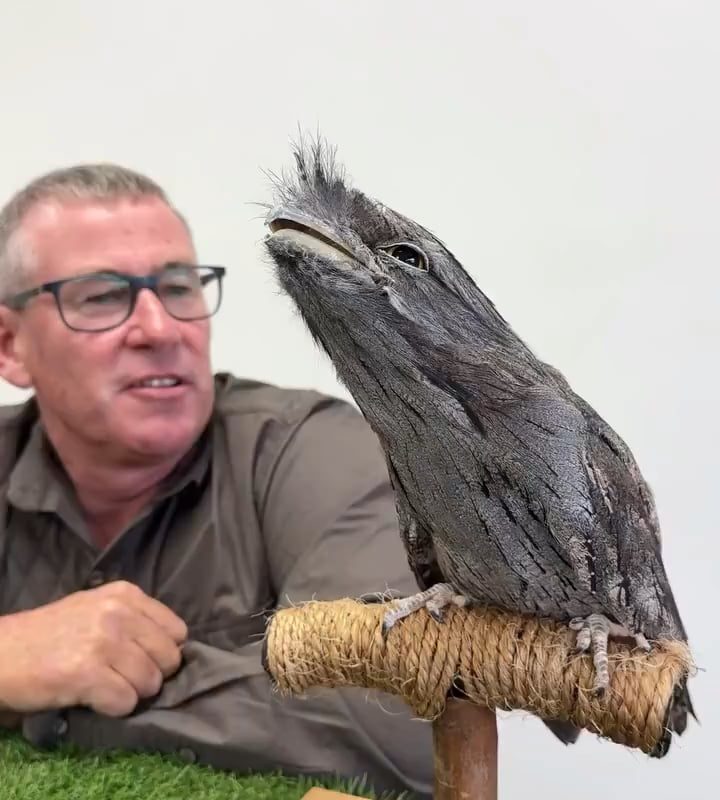
The Tawny Frog-Mouth is family of the Nightjar – native to Australia.
The Tawny Frogmouth: Australia’s Master of Disguise (And Member of the Nightjar Family)
Forget the owl—Australia’s forests and woodlands are ruled by a stealthier, softer-feathered nocturnal wonder: the Tawny Frogmouth. Often mistaken for an owl due to its nocturnal habits and large, forward-facing eyes, this enigmatic bird isn’t an owl at all. It belongs to the Nightjar family (Caprimulgidae), a group famed for their cryptic plumage and insect-hunting prowess. Join us as we explore the secrets of the Tawny Frogmouth, from its unique biology to its vital role in Australia’s ecosystems.
What is a Tawny Frogmouth? Key Facts
- Scientific Name: Podargus strigoides
- Family: Caprimulgidae (Nightjars)
- Habitat: Forests, woodlands, scrublands, and urban gardens across Australia.
- Diet: Carnivorous—insects, spiders, slugs, and occasionally small mammals or reptiles.
- Lifespan: Up to 14 years in the wild.
Debunking Myths: Tawny Frogmouth vs. Owls
While owls hunt with powerful talons and hooked beaks, Tawny Frogmouths use a sit-and-wait strategy. Perched motionless on branches, they rely on perfect camouflage—their grey-brown, mottled feathers mimic tree bark—to ambush prey. Their wide, frog-like mouths (hence the name!) open like nets to snatch insects mid-flight.
Masterful Adaptations: How the Tawny Frogmouth Survives
- Camouflage Kings: When threatened, they adopt a “freeze” pose, stretching their necks upward to resemble a broken tree branch—a trick that fools predators like foxes and snakes.
- Silent Flight: Unlike owls, their wings lack specialized feathers for silencing flight, but they compensate with stealthy glides and minimal movement.
- Family Life: Monogamous pairs mate for life, sharing nest-building (a flimsy platform of sticks) and chick-rearing duties. Chicks fledge in 25–35 days.
Where to Find Tawny Frogmouths in Australia
Tawny Frogmouths thrive nationwide, from Tasmania’s rainforests to the arid outback. They’ve adapted well to urban areas—gardens with mature trees or parks are prime spots to spot them roosting during the day.
Look for them:
- After dusk, when their low, repetitive “oom-oom-oom” call echoes through the trees.
- During daylight hours, camouflaged motionless on tree branches.
Conservation Status: Are Tawny Frogmouths Endangered?
Currently, Tawny Frogmouths are listed as Least Concern by the IUCN. However, habitat loss, vehicle strikes (they hunt near roads at night), and pesticide use threaten local populations. Supporting native bushland conservation and reducing outdoor lighting (which disrupts their hunting) can help protect these birds.
How to Help Tawny Frogmouths Thrive
- Plant native trees: Provide roosting and nesting sites.
- Avoid rodenticides: These chemicals poison Frogmouths when they eat affected prey.
- Drive cautiously at night: Reduce speed in wooded areas to avoid collisions.
Fascinating Tawny Frogmouth Behaviors
- “Gaping”: On hot days, they open their beaks wide to release heat—like avian air conditioners!
- Feigning Injury: Parents may pretend to be injured to lure predators away from nests.
- Tool Use?: Rarely observed, but some individuals use sticks to lure insects closer.
Myth vs. Fact: Quickfire Tawny Frogmouth Trivia
- ❌ Myth: “They can turn their heads 360 degrees like owls.”
✅ Fact: Their neck rotation is limited to 180 degrees. - ❌ Myth: “They’re aggressive birds.”
✅ Fact: Tawny Frogmouths are docile and rarely bite unless handled.
Why the Nightjar Connection Matters
While Tawny Frogmouths share traits with global nightjars (nocturnality, wide mouths), they’ve evolved uniquely. Unlike typical nightjars that nest on the ground, Tawny Frogmouths build nests in trees. They’re also larger (up to 53cm long) and less migratory than their relatives.
Conclusion: Australia’s Gentle Night Guardians
The Tawny Frogmouth is more than just a quirky bird—it’s a symbol of Australia’s ecological ingenuity. By learning about and protecting these masters of disguise, we safeguard a captivating piece of the continent’s natural heritage.
Next time you’re in an Australian woodland after dark, listen closely. You might just hear the soft “oom” of a Tawny Frogmouth—nature’s own feathered whisperer.
Keywords for SEO: Tawny Frogmouth facts, Australian Nightjar birds, Tawny Frogmouth vs owl, where to find Tawny Frogmouth, Nightjar family Australia, bird conservation Australia, nocturnal birds of Australia.