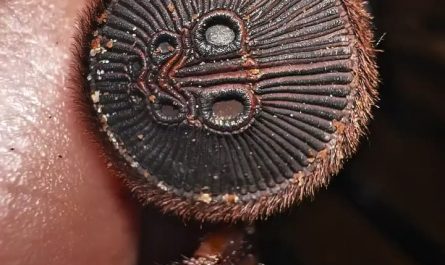
The termite queen lays eggs 24/7 for 25 years. That’s some incredible feat. It’s tough to imagine being built to do that for so long.
Unlocking Nature’s Most Relentless Mother: The Termite Queen’s 25-Year Egg-Laying Marathon
Imagine working nonstop, day and night, for 25 years—no sleep, no holidays, no breaks. While this sounds superhuman (and exhausting), it’s the reality of the humble termite queen, nature’s ultimate reproductive powerhouse. Hidden deep within towering termite mounds, this tiny insect sets a jaw-dropping standard for endurance, laying hundreds of millions of eggs over her lifetime. Here’s why her feat is one of the most astonishing acts of survival in the animal kingdom.
The Termite Queen: A Colony’s Living Engine
Termites thrive in colonies built on rigid social structures, and at the heart of every colony is the queen—a single female responsible for birthing its entire population. Unlike ant or bee queens, who live 3–5 years on average, termite queens reign for decades, with some species clocking lifespans of 25–50 years. But her true superpower lies in a relentless reproductive cycle:
- A Nonstop Egg Factory: A mature queen lays 20,000–30,000 eggs per day, pumping them out 24/7 with no pause.
- Lifetime Output: Over 25 years, that adds up to an eye-watering 273 million eggs—enough to populate cities of termites.
- Biological Immortality: Her cells resist aging, allowing her to reproduce at peak capacity until death.
Anatomy of a Superorganism
How does her body sustain this? The queen transforms into an egg-laying machine through staggering physiological adaptations:
- Enlarged Abdomen: Her abdomen stretches up to 4 inches long (100x her original size), packed with ovaries that dominate her body.
- Royal Treatment: Worker termites feed her a nutrient-rich diet and groom her constantly, allowing her to focus solely on reproduction.
- Symbiotic Survival: She relies on beneficial microbes in her gut to convert wood into energy, sustaining her marathon.
Unlike most insects, termite queens also form lifelong bonds with a king termite, who fertilizes her eggs for decades—another rarity in the insect world.
Why Evolution Designed Her This Way
The queen’s extreme biology serves one purpose: ensuring colony survival. Termites face constant threats—predators, weather, rival colonies—and replenishing lost workers is critical. Her long lifespan stabilizes the colony’s growth, while her genetic consistency preserves its hierarchy.
- Strength in Numbers: A massive colony deters predators and overwhelms rivals.
- Adaptability: With millions of offspring, chances increase that some will survive environmental changes.
Could We Mimic Her Resilience?
The termite queen’s longevity intrigues scientists studying aging and fertility. Her cells resist DNA damage, hinting at anti-aging mechanisms. Could unlocking her secrets help human medicine? While we’re far from reproducing her stamina, she offers lessons in efficiency and resilience.
A Humbling Perspective on Time
A quarter-century of nonstop labor is unfathomable to us—humans fatigue after hours of work. Yet for the termite queen, this is simply her nature. She evolves not by choice, but necessity, embodying life’s drive to endure.
So next time you spot a termite mound, remember the tiny, tireless queen inside—just 1% of her colony by size, but 100% responsible for its existence. Her reign is a testament to nature’s ingenuity: a fragile yet unstoppable force, quietly shaping ecosystems one egg at a time.
Keywords for SEO: termite queen lifespan, termite egg-laying facts, termite colony structure, termite queen reproduction, how long do termites live, insect reproduction, termite queen anatomy, termite hierarchy, termite mound ecosystem.
Immerse yourself in more wildlife marvels—subscribe for weekly deep dives into nature’s most extraordinary engineers!