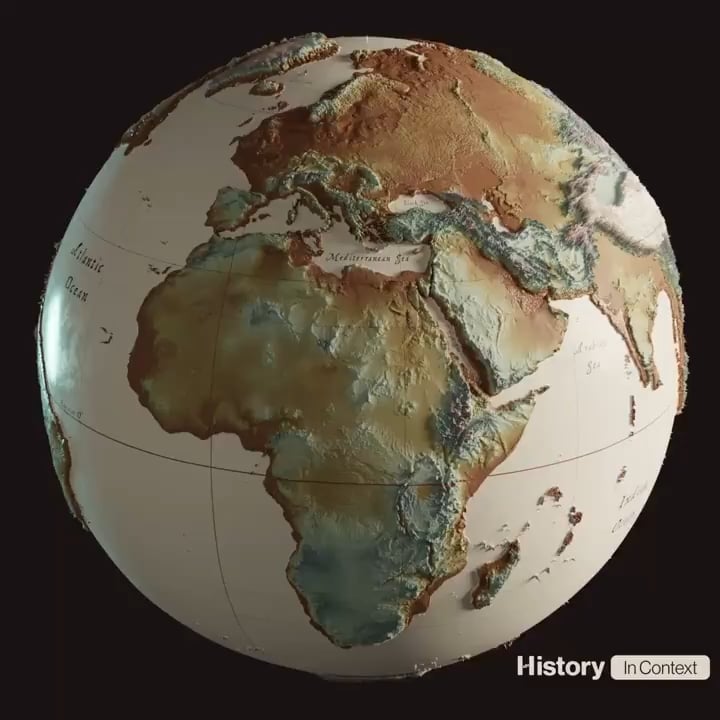
The total history of human migration on earth
Title: The Epic Journey: A Comprehensive History of Human Migration on Earth
Meta Description: Explore the entire history of human migration, from our earliest steps out of Africa to modern global diasporas. Discover how migration shaped civilizations, cultures, and our world.
The Epic Journey: A Complete History of Human Migration on Earth
Human migration is the original story of survival, adaptation, and exploration. From the first steps of Homo sapiens out of Africa to the space-age movement across continents, our species has continually reshaped its footprint on Earth. This article traces the complete history of human migration, revealing how these journeys forged nations, spread cultures, and defined humanity.
1. Early Beginnings: The African Exodus
The story of human migration begins in Africa. Around 300,000–200,000 years ago, modern humans (Homo sapiens) emerged in East Africa. By 70,000–60,000 BCE, climate shifts and resource scarcity drove small groups to venture into new lands.
Key Routes:
- Southern Dispersal Route: Early migrants followed coastlines to Arabia, India, Southeast Asia, and Australia by 50,000 BCE.
- Northern Route: Others moved into the Levant (Middle East), encountering Neanderthals and interbreeding.
Genetic studies confirm all non-Africans today descend from these early explorers.
2. Ice Age Migrations: Crossing Continents
As glaciers expanded and retreated during the Last Glacial Maximum (26,500–19,000 BCE), humans adapted to extreme conditions:
- Into Eurasia: Migrants reached Europe (~45,000 BCE) and Siberia (~30,000 BCE).
- The Americas: Around 20,000–15,000 BCE, hunter-gatherers crossed the Bering Land Bridge (Beringia) from Siberia into Alaska, later spreading southward via ice-free corridors.
- Pacific Islands: By 3,000 BCE, Austronesian seafarers from Taiwan began settling Polynesia, reaching Hawaii and New Zealand by 1200 CE.
3. The Agricultural Revolution: Settling Down and Spreading Out
The rise of farming (~12,000 BCE) transformed migration patterns:
- Fertile Crescent: Early farmers from modern-day Turkey/Iraq spread agriculture, languages, and genes into Europe (Indo-European expansion).
- Asia: Rice cultivation in China fueled expansions into Southeast Asia, Korea, and Japan.
- Africa: Bantu-speaking farmers migrated from West Africa across the continent (~3,000 BCE), displacing hunter-gatherer societies.
Impact: Permanent settlements led to population booms—and new conflicts over land.
4. Classical and Medieval Migrations: Empires and Trade
As empires rose and fell, migration became tied to conquest, trade, and slavery:
- Silk Road: Linking China to the Mediterranean (~200 BCE–1450 CE), this route moved goods, ideas—and people.
- Viking Age: Scandinavian seafarers (793–1066 CE) colonized Iceland, Greenland, and Newfoundland.
- Trans-Saharan Trade: Gold and salt routes enabled migrations of Berbers, Arabs, and Sub-Saharan Africans.
5. The Age of Exploration: Global Collision (15th–18th Century)
European colonization triggered the most significant demographic shift in history:
- Colonialism: Spaniards, Portuguese, English, and French migrated to the Americas, Africa, and Asia.
- Forced Migration: 12.5+ million Africans were enslaved and transported to the Americas.
- Indentured Labor: South Asians and Chinese were sent to work on plantations worldwide.
Result: A connected—but unequal—global economy emerged.
6. Modern Mass Migration (19th–21st Century)
Industrialization, wars, and globalization reshaped migration:
- 1800s–1900s: Over 55 million Europeans migrated to the Americas and Australasia.
- Post-WWII: Refugees fled conflicts in Europe, Asia, and Africa; laborers migrated to booming economies (e.g., Middle East).
- Globalization (1980s–Present):
- Labor migration (e.g., Latin America → U.S., Southeast Asia → Gulf States).
- Climate migration: Rising sea levels and droughts displace millions.
- Urbanization: Over 4.4 billion people now live in cities.
7. Why Migration Matters: Shaping Humanity
- Genetic Diversity: Mixed ancestries trace back to ancient migrations.
- Cultural Exchange: Languages, religions, and cuisines blended (e.g., African, Native American, and European fusion in Latin America).
- Conflict and Innovation: Migrants introduced new technologies (e.g., crops, metallurgy) but also sparked wars over territory.
Conclusion: Our Migratory Future
Human migration never stops. Today, 281 million people live outside their birth countries—more than ever before. As climate change and AI-driven economies redefine borders, our migratory story continues to evolve. Understanding this history helps us navigate the challenges of a mobile world.
Keywords for SEO:
Human migration history, Ancient human migration, Out of Africa theory, Bering Land Bridge, Indo-European migration, Transatlantic slave trade, Modern migration trends, Climate migration.
Internal Links to Consider:
- “The Genetic Evidence of Early Human Migration”
- “Climate Migration: The Next Global Crisis”
- “How the Silk Road Shaped Modern Trade”
By weaving genetics, archaeology, and sociology, this article provides a panoramic view of how migration made us who we are—and where we might go next.