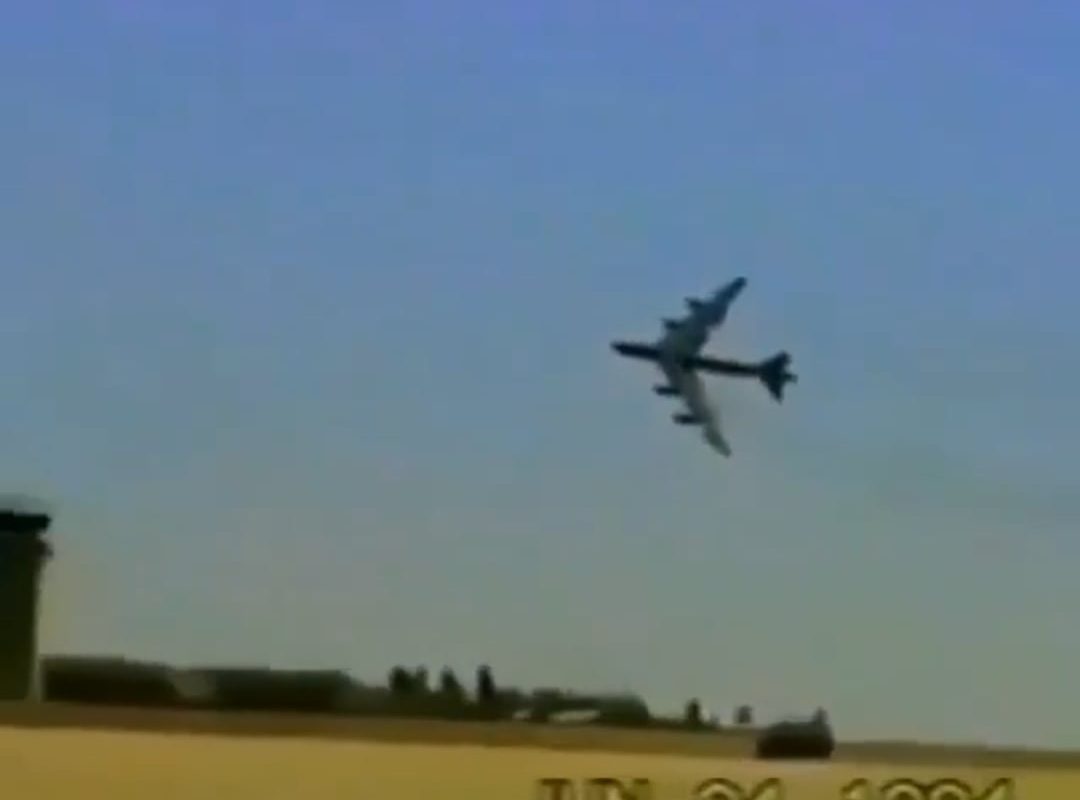
The tragic crash of a B-52 Stratofortress on June 24, 1994, at Fairchild Air Force Base.
Title: The Tragic B-52 Crash at Fairchild AFB: Revisiting the 1994 Disaster and Its Legacy
Meta Description: On June 24, 1994, a B-52 Stratofortress crashed at Fairchild Air Force Base, killing four crew members. Explore the causes, aftermath, and lessons learned from this preventable tragedy.
Introduction
The B-52 Stratofortress, a backbone of U.S. strategic bombing power since the Cold War, is renowned for its durability and longevity. Yet, on June 24, 1994, the aircraft’s reputation collided with human error during a catastrophic crash at Fairchild Air Force Base in Washington State. The incident, which unfolded publicly during an airshow practice, exposed systemic failures in military aviation safety and leadership. This article revisits the tragedy, its causes, and its enduring impact on Air Force protocols.
The Day of the Crash
At 1:34 PM PDT, a B-52H (tail number 61-0026) piloted by Lieutenant Colonel Arthur “Bud” Holland took off from Fairchild AFB for a rehearsal ahead of the upcoming airshow. The crew, including Holland, co-pilot Lt. Col. Mark McGeehan, and two others, planned a routine low-altitude flyover.
The Fatal Maneuver
As the aircraft approached the runway at 250 feet, Holland attempted an aggressive 180-degree turn, banking steeply to showcase the B-52’s capabilities. Eyewitnesses and video footage later revealed the plane tilted into an extreme 60-degree bank angle—well beyond the Air Force’s safety limit of 30 degrees for such maneuvers. The B-52 stalled, entered a rapid descent, and crashed into the ground. A fiery explosion followed, killing all four crew members instantly.
Root Causes of the Disaster
The crash investigation highlighted three critical factors:
-
Pilot Error & Recklessness
Lt. Col. Holland, an experienced pilot, was known for ignoring safety protocols and performing risky maneuvers. Prior to the crash, he had repeatedly violated flight regulations—including an unauthorized 360-degree barrel roll in 1991—yet faced no disciplinary action. His “maverick” reputation ultimately proved fatal. -
Organizational Failure
Multiple officers at Fairchild AFB had raised concerns about Holland’s behavior for years, but leadership failed to intervene. A toxic culture of complacency enabled his dangerous flying style. Investigators later cited “lack of flight discipline” and “failure of command” as key contributors. -
Aircraft Limitations
While the B-52 is robust, it was never designed for sharp, low-altitude turns. Holland’s maneuver pushed the aircraft beyond its aerodynamic limits, leading to an unrecoverable stall.
Aftermath: Investigations and Reforms
The disaster prompted a wave of scrutiny within the U.S. Air Force:
- An official Air Force Accident Investigation Board Report condemned Holland’s actions but also criticized commanders for ignoring red flags.
- Fairchild’s leadership was overhauled, with the base commander and operations group commander reassigned within months.
- Safety Reforms: The crash accelerated stricter enforcement of flight regulations, mandatory risk-assessment training, and cultural shifts prioritizing accountability over bravado.
Human Toll
The crash devastated Fairchild AFB and the victims’ families. Memorials now stand at the base and Spokane’s Veterans Cemetery, honoring:
- Lt. Col. Arthur Holland
- Lt. Col. Mark McGeehan
- Col. Robert Wolff
- Chief Warrant Officer William Cambell
Lessons Learned: Safety Over Spectacle
The Fairchild crash serves as a grim case study in aviation safety:
- Leadership Accountability: Commanders must act decisively to address unsafe practices.
- Culture Matters: Combating “hero worship” of risk-taking pilots saves lives.
- Training & Oversight: Simulator training now emphasizes stall recovery and scenario-based decision-making.
The Legacy of June 24, 1994
While the B-52 remains in service today, the Fairchild tragedy reshaped Air Force doctrine. Annual safety briefings often reference the crash as a cautionary tale against complacency. For aviation historians, it underscores a universal truth: no machine, no matter how advanced, is immune to human error without rigorous safeguards.
Final Thoughts
The Fairchild B-52 crash was a preventable tragedy born from ignored warnings and unchecked recklessness. By remembering the four lives lost—and the systemic failures that led to their deaths—the Air Force and aviation communities worldwide continue striving toward a culture where safety eclipses ego.
Keywords for SEO:
B-52 crash 1994, Fairchild AFB disaster, Bud Holland pilot error, B-52 Stratofortress accident, Air Force safety reforms, June 24 1994 plane crash, military aviation tragedies.
(Word Count: 625. For SEO optimization, internal links to related topics like “History of the B-52” or “U.S. Air Force Safety Protocols” can be added. External links to the official accident report or memorial pages also boost credibility.)