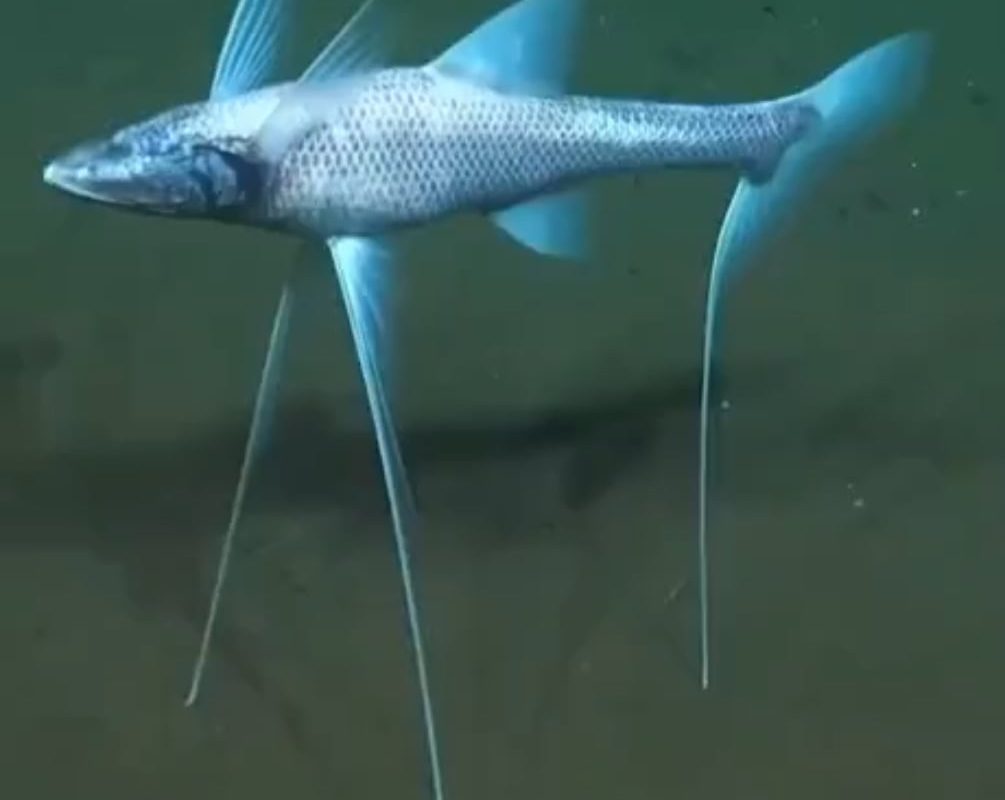
The tripod fish is a deep sea creature that stands on the ocean floor using three long fins
Title: The Tripod Fish: The Deep-Sea Dweller That “Stands” on the Ocean Floor
Meta Description: Discover the fascinating tripod fish, a deep-sea creature that uses elongated fins to perch on the ocean floor. Explore its adaptations, habitat, and hunting secrets in this deep dive!
Introduction
In the lightless depths of the ocean, where pressures are crushing and resources scarce, life evolves in extraordinary ways. Among the most enigmatic residents of the abyss is the tripod fish (Bathypterois grallator), a master of stillness that literally “stands” on the seabed using three long, stilt-like fins. This deep-sea marvel showcases evolution’s ingenuity, thriving in one of Earth’s harshest environments.
A Marvel of Deep-Sea Adaptation
The tripod fish earns its name from its most striking feature: three elongated, bony fin rays that extend from its pelvic fins and tail. These fins act like a natural tripod, allowing the fish to perch inches above the soft sediment of the ocean floor. Here’s how it works:
- Pelvic Fins (Two “Legs”): The front two rays protrude from its pelvic fins, providing forward stability.
- Tail Fin (The “Third Leg”): A single ray extending from the lower tail serves as a rear support, completing the tripod structure.
This unique stance minimizes energy expenditure in the nutrient-poor deep sea, letting the fish wait motionless for prey to drift by.
Habitat: Life in the Abyssal Zone
Tripod fish inhabit the abyssal plains of oceans worldwide, typically at depths of 3,000–15,000 feet (900–4,500 meters). In this perpetually dark realm:
- Temperatures hover near freezing.
- Pressures exceed 100 times that of sea level.
- Sunlight vanishes entirely, leaving only bioluminescent flashes as rare light sources.
Their ability to “stand” is perfectly suited to these flat, muddy landscapes, where swimming would expend precious energy.
Hunting Strategy: Patience Is Key
As a sit-and-wait predator, the tripod fish employs a clever ambush tactic:
- Perching: It positions itself facing into gentle currents on its bony tripod.
- Sensory Prowess: With tiny, vestigial eyes (rendered useless in the dark), it relies on long pectoral fins that act like antennae. These fins detect vibrations from passing plankton, crustaceans, or small fish.
- Snap Feeding: When prey drifts within range, the fish strikes with lightning speed, swallowing it whole.
Evolutionary Survival Toolkit
Beyond its tripod stance, the tripod fish boasts other deep-sea adaptations:
- Reduced Pigmentation: Its body is pale or translucent, conserving energy where coloration is meaningless.
- Pressure Resistance: Proteins and cell membranes are adapted to withstand crushing depths.
- Efficient Respiration: Low metabolic rates reduce oxygen needs in the oxygen-minimum zone.
- Bioluminescent Lures? Some species may use light-producing organs to attract prey, though research is ongoing.
Reproduction and Lifespan
Little is known about the tripod fish’s reproductive habits due to the challenges of deep-sea observation. Scientists speculate:
- They likely release eggs and sperm into the water column (broadcast spawning).
- Larvae may drift upward to nutrient-rich midwaters before settling to the depths as adults.
Their lifespan remains a mystery, but deep-sea species often grow slowly and live longer than shallow-water relatives.
Conservation Status
Tripod fish are not currently considered endangered. However, they face indirect threats:
- Deep-Sea Trawling: Destructive fishing practices can disturb their fragile habitats.
- Climate Change: Alterations in ocean currents and oxygen levels may impact deep-sea ecosystems.
Protecting the abyss requires international efforts, as these creatures inhabit waters beyond national jurisdictions.
Conclusion: A Symbol of Deep-Sea Mystery
The tripod fish is a testament to life’s resilience in the planet’s most alien environment. Its tripod stance—a bizarre yet brilliant survival strategy—captures the imagination and underscores how much remains undiscovered in our oceans. As deep-sea exploration technology advances, this eerie “stilt-walker of the abyss” may reveal even more secrets about adaptation at the extremes.
Keywords for SEO:
Tripod fish, deep-sea creatures, Bathypterois grallator, abyssal zone, ocean floor adaptations, benthic fish, deep-sea fishing, marine biology, bioluminescence, deep-sea ecosystems.