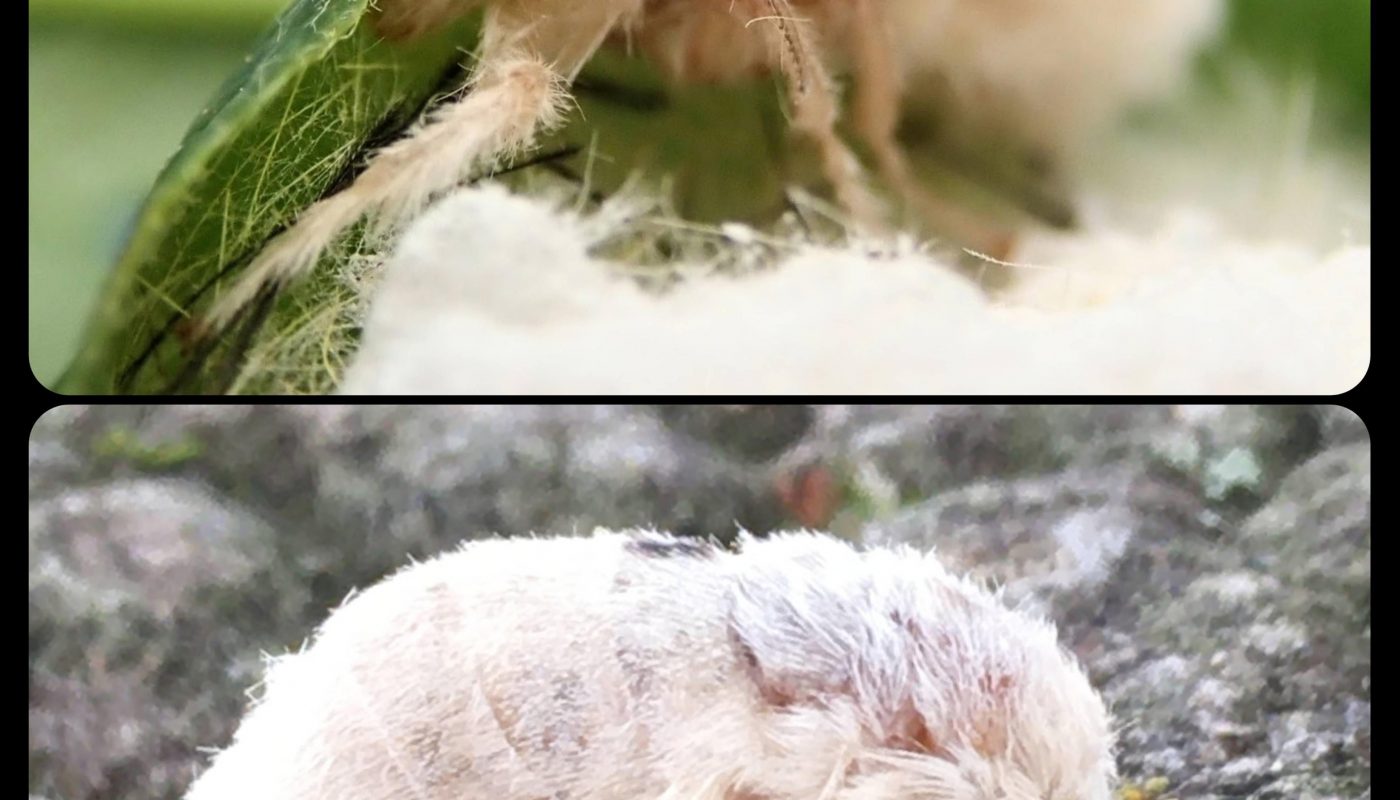
The White-Marked Tussock Moth: the females of this species are essentially wingless, and they have plump, grub-like bodies that are covered in fuzz
Title: The White-Marked Tussock Moth: Unveiling the Wingless Wonders of North America
Meta Description: Discover the fascinating White-Marked Tussock Moth! Learn why females are wingless, their fuzzy caterpillar stage, lifecycle, and ecological role. Essential reading for nature enthusiasts.
Meet the White-Marked Tussock Moth: A Study in Unusual Adaptation
The White-Marked Tussock Moth (Orgyia leucostigma) is a common but enigmatic resident of North American forests and urban landscapes. While its striking caterpillar stage—decked in bold tufts of hair and colors—often steals the spotlight, it’s the adult female moth that truly stands out in the insect world. Unlike most moths, she’s virtually wingless, relying on other extraordinary traits to ensure the survival of her species. Let’s explore this unique creature and its surprising biology.
Appearance: A Tale of Two Sexes
-
Sexual Dimorphism on Display:
The White-Marked Tussock Moth exhibits extreme differences between males and females:- Females: Wingless, with plump, grub-like bodies covered in dense white or yellow fuzz. Their reduced wings are vestigial nubs, making flight impossible. They measure 10–15 mm long and resemble hairy beads crawling on tree bark or cocoons.
- Males: Classic moth appearance with gray-brown wings (15–20 mm wingspan), feathery antennae, and strong flight capabilities.
-
The Caterpillar: Fuzzy and Fiery
Before adulthood, the caterpillar stage is impossible to overlook:- Vibrant red head, yellow stripes, and four dense white “tussocks” (hair tufts).
- Two long, black hair pencils at the rear and irritant spines hidden in its fuzz (handle with care!).
Life Cycle: From Fuzzy Larvae to Flightless Females
-
Egg Masses (Winter):
Females lay 150–300 eggs directly on their cocoon in late summer/fall, covering them with protective fuzz. These overwinter and hatch in spring. -
Caterpillar Stage (Spring–Summer):
Larvae feed voraciously on broadleaf trees (oak, maple, apple, elm) for 4–6 weeks. Their bold colors warn predators of their toxic spines. -
Pupation:
Caterpillars spin gray, hairy cocoons on host trees or structures, transitioning to adults in 1–2 weeks. -
Adulthood & Reproduction (Summer):
- Females: Emerge wingless and release pheromones to attract flying males. After mating, they lay eggs on their cocoon and die within days.
- Males: Take flight at night to locate females by scent.
Habitat & Range
These moths thrive across eastern North America, from Canada (Ontario, Quebec) to Florida and Texas. They favor deciduous forests, orchards, parks, and even backyard trees. Urban areas host outbreaks when natural predators (wasps, beetles, birds) are scarce.
Ecological Impact: Friend or Foe?
- Defoliators: Caterpillars can strip trees during outbreaks, stressing or killing young plants.
- Food Web Role: They nourish birds, predatory insects, and parasitoids.
- Human Interaction: Caterpillar spines cause skin irritation (rash, itching). Avoid direct contact!
3 Fascinating Facts About This Moth
- Pheromone Pioneers: Flightless females pioneered the study of insect pheromones. Their irresistible scent attracts males from miles away.
- One-Winged Family: The genus Orgyia includes other wingless female moths—all reliant on chemical signals.
- Urban Survivors: Fluctuating outbreaks make them a useful indicator of ecosystem balance (or imbalance).
FAQs
Q: Are White-Marked Tussock Moths harmful?
A: Caterpillars can defoliate trees and trigger allergic reactions via spines. Adults are harmless.
Q: Why are females wingless?
A: Evolutionarily, flightlessness conserves energy for egg production when mobility isn’t needed.
Q: How to manage infestations?
A: Prune egg masses, encourage predators (birds/parasitoid wasps), or use Bt (Bacillus thuringiensis) spray for severe cases.
Conclusion
The White-Marked Tussock Moth exemplifies nature’s creativity. Its flightless females—fuzzy, grounded, and resilient—showcase an ingenious reproductive strategy perfected over millennia. While their caterpillars may test gardeners’ patience, these moths remain vital threads in North America’s ecological tapestry. Next time you spot a hairy tuft on a tree, look closer: you might witness one of nature’s most extraordinary survival stories.
Further Reading:
- iNaturalist Observations
- Caterpillars of Eastern North America (David L. Wagner, Princeton Press)
Target Keywords:
white-marked tussock moth female, wingless moth species, fuzzy tussock moth caterpillar, orgyia leucostigma, hairy caterpillar rash, flightless moth adaptation