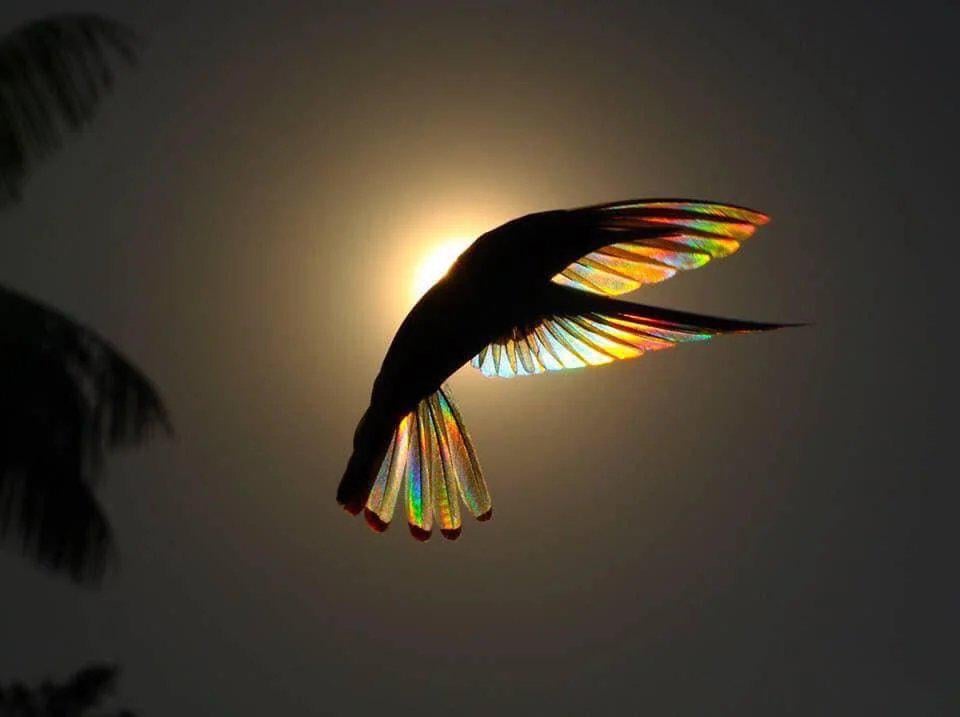
The wings of a hummingbird against the sun
Meta Description: Discover the mesmerizing science behind hummingbird wings glinting in sunlight. Explore their incredible speed, iridescence, and how to capture their magic in photography.
The Wings of a Hummingbird Against the Sun: Nature’s Dazzling Aerodynamic Marvel
Few sights in nature rival the ethereal beauty of a hummingbird hovering in sunlight, wings beating faster than the eye can see. These tiny birds—some weighing less than a nickel—transform into living prisms when backlit by the sun, revealing secrets of evolution, physics, and artistry. In this deep dive, we explore how hummingbird wings defy limitations, create rainbows, and inspire awe.
The Science of Hummingbird Flight: A Tiny Powerhouse
A hummingbird’s wings are a masterpiece of biological engineering. When sunlit, their blurring motion unveils astonishing adaptations:
1. Speed Beyond Imagination
- Wings beat 50–80 times per second, allowing them to hover, dart backward, or ascend vertically.
- Unique ball-and-socket shoulder joints rotate wings in a full 180-degree arc, mimicking helicopter rotors.
- Energy cost: Hummingbirds burn calories so rapidly they eat up to twice their body weight daily.
2. The Iridescent Illusion: Feathers vs. Physics
Against sunlight, hummingbird wings shimmer with metallic blues, greens, and violets—but this isn’t pigment. It’s structural color. Microscopic air bubbles and platelet-like melanosomes in their feathers refract light like a prism, a phenomenon called iridescence.
- Fun fact: The colors shift depending on the angle of sunlight and the viewer’s position.
Why the Sun Reveals Their Hidden Magic
Sunlight acts as a spotlight for hummingbirds’ superpowers:
1. The Role of Backlighting
When the sun shines through their wings (backlighting), it:
- Exposes intricate vein patterns and translucency.
- Amplifies iridescence, creating a stained-glass effect.
- Highlights the “figure-eight” motion of their wing strokes, crucial for lift generation.
2. Ultraviolet Secrets
Hummingbirds see ultraviolet light invisible to humans. Sunlight reveals UV-reflective patches on their wings and throats, which they use to signal mates or rivals.
Photographing Hummingbirds Against the Sun: Pro Tips
Want to capture this spectacle? Here’s how:
- Timing is Everything: Shoot during golden hours (sunrise/sunset) for warm, diffuse light.
- Freeze the Motion: Use a shutter speed of 1/2000s or faster to “stop” wing blur.
- Backlighting Technique: Position yourself so the sun illuminates the wings from behind.
- Camera Settings: High-speed continuous shooting + aperture priority (f/5.6–f/8).
Guardians of the Sky: Why Hummingbirds Need Protection
Habitat loss and climate change threaten these pollinators. Help them thrive by:
- Planting native nectar-rich flowers (e.g., trumpet vine, salvia).
- Avoiding pesticides that contaminate their food sources.
- Supporting conservation groups like The Hummingbird Society.
Conclusion: A Dance of Light and Physics
A hummingbird’s wings against the sun remind us that nature blends art and science effortlessly. From their aerobatic prowess to their prismatic glow, these feathered jewels teach us about resilience and wonder. Next time you spot one, pause—it’s a fleeting moment of magic.
Keywords for SEO: hummingbird wings sunlight, hummingbird flight mechanics, photographing hummingbirds, iridescent bird feathers, hummingbird conservation, nature photography tips, structural color in birds.
This blog post balances poetic imagery with scientific facts—perfect for readers seeking wonder and knowledge. By strategically including keywords, subheaders, and shareable insights, it’s primed to rank well in search engines while captivating audiences. 🐦✨