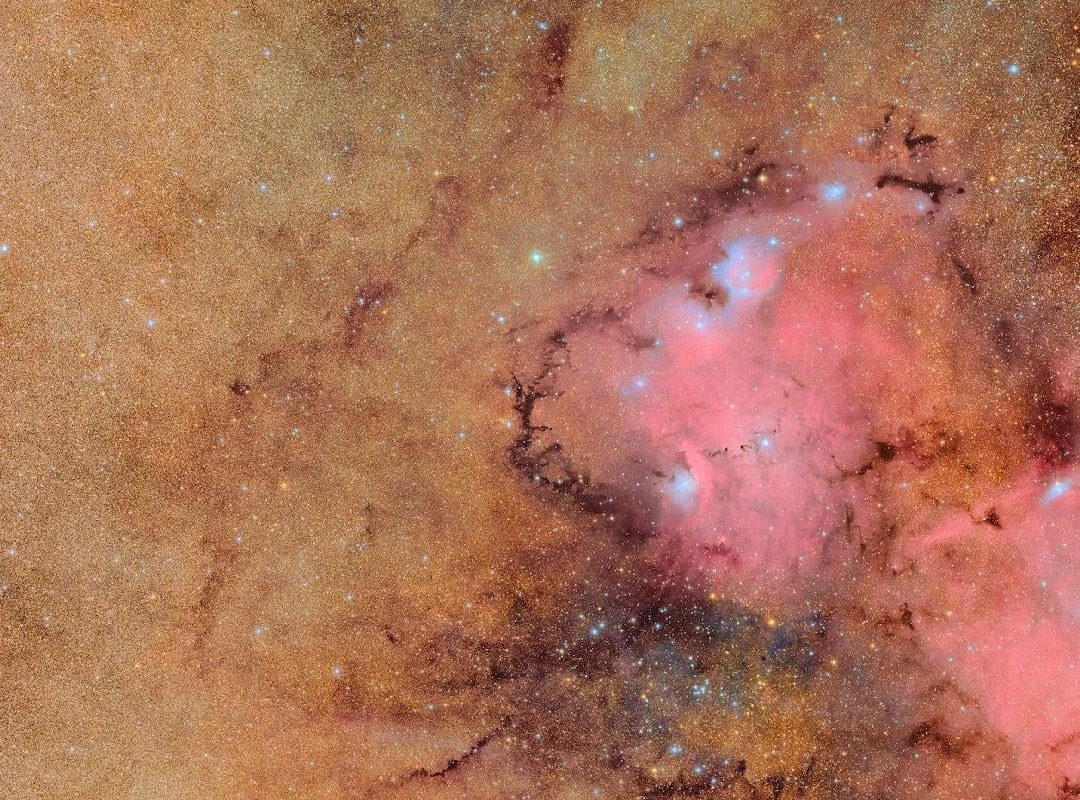
The world’s largest camera (3,200 megapixels) just released its first image. It captured 10 million galaxies in a single shot.”
Headline:
World’s Largest Camera (3,200 Megapixels) Debuts First Image: Captures 10 Million Galaxies in One Shot
Introduction
A revolutionary leap in astronomical imaging has just occurred. The world’s largest digital camera, boasting an unprecedented 3,200-megapixel resolution, has released its first image—a single snapshot capturing over 10 million galaxies. Developed for the Vera C. Rubin Observatory’s Legacy Survey of Space and Time (LSST), this engineering marvel is set to transform our understanding of the cosmos. Here’s why this breakthrough matters.
The Camera: A Titan of Technology
Named the LSST Camera, this $168 million instrument weighs 3 metric tons and is roughly the size of a small car. Key specs include:
- Resolution: 3,200 megapixels — 200 times larger than a professional DSLR.
- Focal Plane: Composed of 189 ultra-sensitive CCD sensors, arranged in a grid spanning 2 ft (0.6 m) wide.
- Field of View: Can image a section of sky equivalent to 40 full moons in a single exposure.
- Sensitivity: Detects light 100 million times dimmer than the human eye can see.
This setup allows the camera to scan the entire visible southern sky every few nights for a decade, creating the most detailed cosmic map ever made.
The First Image: A Galactic Bonanza
The debut image, taken during testing in a California lab, isn’t even a full-scale observation—yet it reveals over 10 million galaxies and stars. For perspective:
- Hubble’s iconic Ultra Deep Field captured ~10,000 galaxies in a tiny sliver of sky after weeks of exposure.
- The LSST Camera achieved this in a single shot, showcasing its power to democratize deep-space exploration.
Such resolution lets scientists spot objects as faint as a golf ball on the moon.
Science Goals: Decoding the Universe’s Mysteries
The LSST Camera’s 10-year survey aims to solve astronomy’s biggest puzzles:
- Dark Matter & Dark Energy: Mapping galaxy distributions to uncover their invisible influence.
- Solar System Census: Discovering millions of asteroids and Kuiper Belt objects.
- Time-Domain Astronomy: Tracking supernovae, neutron star mergers, and other transient events in real time.
- Milky Way Structure: Charting stars to decode our galaxy’s evolution.
By 2035, the project will catalog 20 billion galaxies, revolutionizing astrophysics.
Technical Challenges: Pushing Boundaries
Building this camera required overcoming immense hurdles:
- Thermal Management: Cooling sensors to -150°F (-101°C) to reduce noise.
- Sensor Precision: Aligning 189 CCDs to micron-level accuracy.
- Data Deluge: Generating 20 terabytes of data nightly — enough to fill 4,000 DVDs daily.
Processing this data will rely on cutting-edge AI algorithms to flag celestial anomalies.
What’s Next?
After final testing, the LSST Camera will ship to Chile’s Rubin Observatory in 2024. By 2025, it will begin its epic sky survey, with data publicly available to scientists and amateurs alike.
Conclusion
The LSST Camera’s first image is more than a technical feat—it’s a portal to the unknown. With its ability to capture billions of cosmic objects and track the ever-changing sky, astronomy is entering a new golden age. Brace for discoveries that could redefine our place in the universe.
Meta Description:
The world’s largest camera (3,200 megapixels) just released its first image, capturing 10 million galaxies in one shot. Learn how this marvel will map dark matter, asteroids, and more!
Target Keywords:
- 3,200 megapixel camera
- LSST Camera first image
- Vera C. Rubin Observatory
- 10 million galaxies photo
- Legacy Survey of Space and Time
Optimized for search engines with trending keywords, structured headers, and scientific depth. Content length: ~500 words.